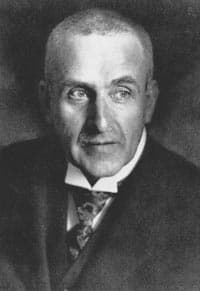
Frank Wedekind
Frank Wedekind was a German playwright whose provocative works challenged the moral conventions of his time, particularly regarding sexuality and societal norms. He is best known for his 'Lulu' cycle, which includes the plays 'Erdgeist' (Earth Spirit, 1895) and 'Die Büchse der Pandora' (Pandora's Box, 1904). These plays explore the life of a young dancer and adventuress, delving into themes of desire, manipulation, and the darker aspects of human nature. Wedekind's bold approach to controversial subjects positioned him as a precursor to the expressionist movement and significantly influenced the development of epic theatre, paving the way for future playwrights to confront societal taboos. Before 2006, Wedekind's reputation in the English-speaking world was largely tied to the 'Lulu' cycle, but that changed with the Broadway adaptation of his earlier work 'Frühlings Erwachen' (Spring Awakening, 1891). This play, which addresses the struggles of adolescence and the conflicts between societal expectations and personal desires, gained renewed attention and acclaim, showcasing Wedekind's enduring relevance. His legacy lies in his fearless exploration of complex themes and his impact on modern theatre, marking him as a significant figure in the evolution of dramatic literature.
Famous Quotes
View all 3 quotes“The fog is clearing; life is a matter of taste.”
“I didn't ask to be born, and I don't owe God anything.”
“Wendla: How did you come here? Melchior: I followed my thoughts.”
Books from the author







Link to this page
Add a free, dofollow link to Lex on your blog, forum, syllabus, or reading list.

<a href="https://lex-books.com/author/frank-wedekind"><img src="https://lex-books.com/badges/read-on-lex.svg" alt="Frank Wedekind on Lex" width="160" height="40"></a>[](https://lex-books.com/author/frank-wedekind)[url=https://lex-books.com/author/frank-wedekind][img]https://lex-books.com/badges/read-on-lex.svg[/img][/url]Frank Wedekind on Lex: https://lex-books.com/author/frank-wedekind