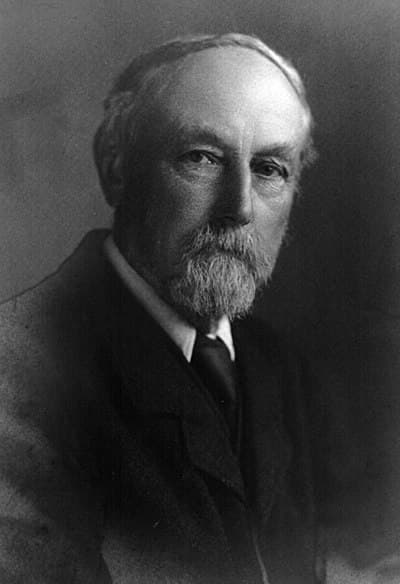
Henry S. Salt
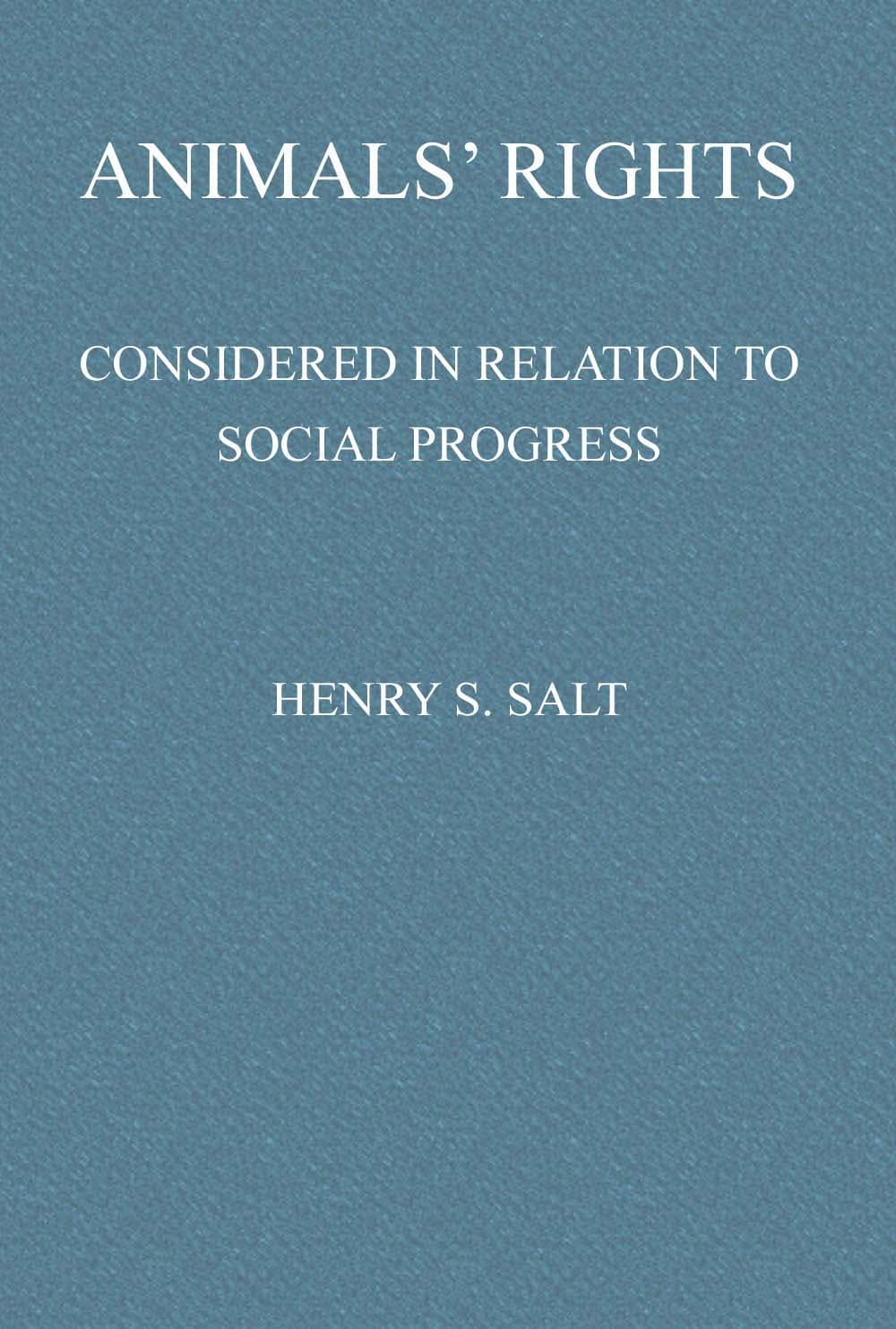
Henry S. Salt was a British writer and social reformer renowned for his advocacy in various social issues, including the treatment of animals, education, and prison reform. A prominent ethical vegetarian, anti-vivisectionist, socialist, and pacifist, Salt's influence extended beyond literature into the realm of social justice. His notable works include 'Animals' Rights: Considered in Relation to Social Progress,' published in 1892, where he argued for the rights of animals, positioning himself as a pioneering figure in the animal rights movement. Salt's writings not only addressed the ethical treatment of animals but also critiqued the societal structures that perpetuated injustice and suffering. In addition to his advocacy, Salt was a literary critic, biographer, and classical scholar. He played a significant role in introducing Mohandas Gandhi to the works of Henry David Thoreau, which profoundly impacted Gandhi's philosophy of non-violence and vegetarianism. Salt's contributions to literature and social reform have left a lasting legacy, influencing future generations of activists and writers who continue to champion the rights of both humans and animals. His work remains a cornerstone in discussions surrounding ethical treatment and social progress, marking him as a pivotal figure in the evolution of social reform movements in the early 20th century.
Famous Quotes
View all 7 quotes“Standing in the courtyard with a glass eye; only half the world is intelligible. The stones are wet and mossy and in the crevices are black toads. A big door bars the entrance to the cellar; the steps are slippery and soiled with bat dung. The door bulges and sags, the hinges are falling off, but there is an enameled sign on it, in perfect condition, which says: “Be sure to close the door.” Why close the door? I can’t make it out. I look again at the sign but it is removed; in it’s place there is a pane of colored glass. I take out my artificial eye, spit on it and polish it with my handkerchief. A woman is sitting on a dais above an immense carven desk; she has a snake around her neck. The entire room is lined with books and strange fish swimming in colored globes; there are maps and charts on the wall, maps of Paris before the plague, maps of the antique world, of Knossos and Carthage, of Carthage before and after the salting. In the corner of the room I see an iron bedstead and on it a corpse is lying; the woman gets up wearily, removes the corpse from the bed and absent mindedly throws it out the window. She returns to the huge carven desk, takes a goldfish from the bowl and swallows it. Slowly the room begins to revolve and one by one the continents slide into the sea; only the woman is left, but her body is a mass of geography. I lean out the window and the Eiffle Tower is fizzing champagne; it is built entirely of numbers and shrouded in black lace. The sewers are gurgling furiously. There are nothing but roofs everywhere, laid out with execrable geometric cunning.””
“He had trouble with his eyes and his lungs, and with insomnia and asthma; suffered from gout and rheumatoid arthritis; experienced dropsy, emphysema and at least one fainting fit; and in his seventies developed a malignant tumour on his left testicle. To combat these problems, he consumed a vast quantity of medicines: opium, oil of terebinth, valerian, ipecacuanha, dried orange peel in hot red port, salts of hartshorn, musk, dried squills, and Spanish fly. He was frequently bled, for complaints as disparate as flatulence and an eye infection. Yet Johnson’s most enduring malady was mental. Throughout his life he suffered from a profound melancholy which periodically surged towards madness. It was this, much more than any other ailment, that blighted his middle years. No””
“What I have observed of the pond is no less true in ethics. Such a rule of the two diameters not only guides us toward the sun in the system and the heart in man, but draws lines through the length and breadth of the aggregate of a man’s particular daily behaviors and waves of life into his coves and inlets, and where they intersect will be the height and depth of his character. Perhaps we only need to know how his shores trend, and his adjacent country or circumstances, to infer his depth and concealed bottom. If he is surrounded by mountainous circumstances, an Achillean shore, whose peaks overshadow and are reflected in his bosom, they suggest a corresponding depth to him. But a low and smooth shore proves him shallow on that side. Also there is a bar across the entrance of our every cove, or particular inclination; each is a harbor for a season, in which we are detained and partially landlocked. These inclinations are not whimsical usually, but their form, size, and direction are determined by the promontories of the shore, the ancient axes of elevation. When this bar is gradually increased by storms, tides, or currents, or there is a subsidence of waters…It becomes an individual lake, cut off from the ocean, wherein the thought secures its own conditions, changes, perhaps, from salt to fresh, becomes a sweet sea, dead sea, or a marsh.””
Books from the author












Link to this page
Add a free, dofollow link to Lex on your blog, forum, syllabus, or reading list.

<a href="https://lex-books.com/author/henry-s-salt"><img src="https://lex-books.com/badges/read-on-lex.svg" alt="Henry S. Salt on Lex" width="160" height="40"></a>[](https://lex-books.com/author/henry-s-salt)[url=https://lex-books.com/author/henry-s-salt][img]https://lex-books.com/badges/read-on-lex.svg[/img][/url]Henry S. Salt on Lex: https://lex-books.com/author/henry-s-salt