
Henry Jones Ford
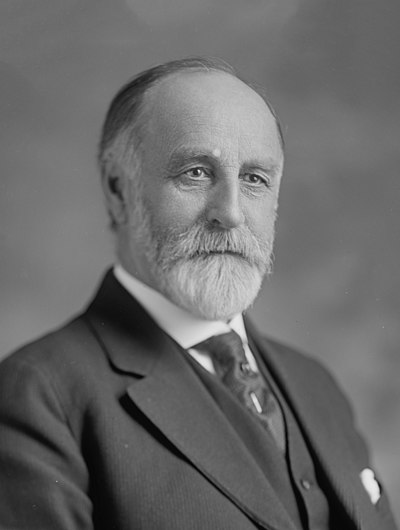
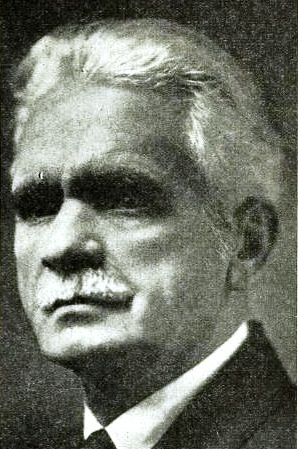
Henry Jones Ford was an influential American political scientist, journalist, and educator whose work significantly shaped the field of political science in the early 20th century. He served as a professor at several universities, where he dedicated himself to the study and teaching of political theory and public administration. Ford's contributions to the discipline were recognized when he became the president of the American Political Science Association, a role that underscored his prominence in the academic community. His scholarly pursuits were complemented by his practical experience in government, notably when he was appointed by President Woodrow Wilson as the Banking and Insurance Commissioner of New Jersey in 1912, where he applied his expertise to real-world policy issues. Ford's writings and lectures emphasized the importance of empirical research in political science, advocating for a more scientific approach to the study of governance and public policy. His legacy lies in his efforts to professionalize the field and promote the relevance of political science in addressing contemporary societal challenges. Through his academic and governmental roles, Ford left an indelible mark on American political thought and the evolution of political science as a discipline, influencing future generations of scholars and practitioners alike.
Famous Quotes
View all 1 quotes“I would like to introduce a wonderful word to you, which will mean a great deal to your happiness. The word is "consciousness." It means the sum total of all your beliefs. Add up every thought or idea which you have ever accepted as true and that adds up to your state of beingness or consciousness. If you have accepted thoughts in the past which are not true, regarding who you are and what your relationship to other people is, then you have a consciousness of inferiority. You have that consciousness because you have accepted certain untrue things as though they were true. If you knew the truth about yourself you would not feel inferior, but you would jump up and down and shout. You would know that your Creator is richer than Henry Ford, and he is smarter than Einstein, and he is constantly looking after you day and night. You would know that you are very important. Now, how does one change his consciousness from a consciousness of inferiority to a consciousness of confidence in one's self. We must learn who we are and that we have an important role to play in the game of life. We must realize that we are indispensable channels of service to humanity. That we have both a conscious mind in a subconscious mind and that we reason both deductively and inductively””
Books from the author









Link to this page
Add a free, dofollow link to Lex on your blog, forum, syllabus, or reading list.

<a href="https://lex-books.com/author/henry-jones-ford"><img src="https://lex-books.com/badges/read-on-lex.svg" alt="Henry Jones Ford on Lex" width="160" height="40"></a>[](https://lex-books.com/author/henry-jones-ford)[url=https://lex-books.com/author/henry-jones-ford][img]https://lex-books.com/badges/read-on-lex.svg[/img][/url]Henry Jones Ford on Lex: https://lex-books.com/author/henry-jones-ford