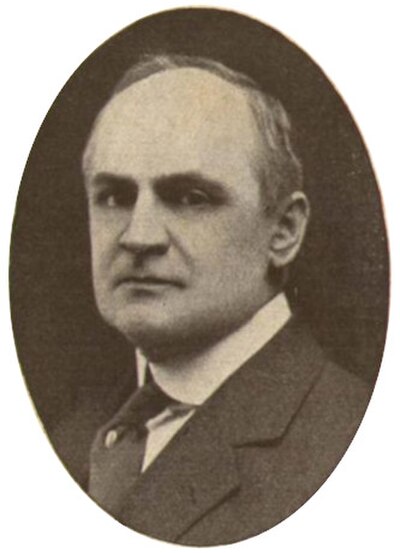
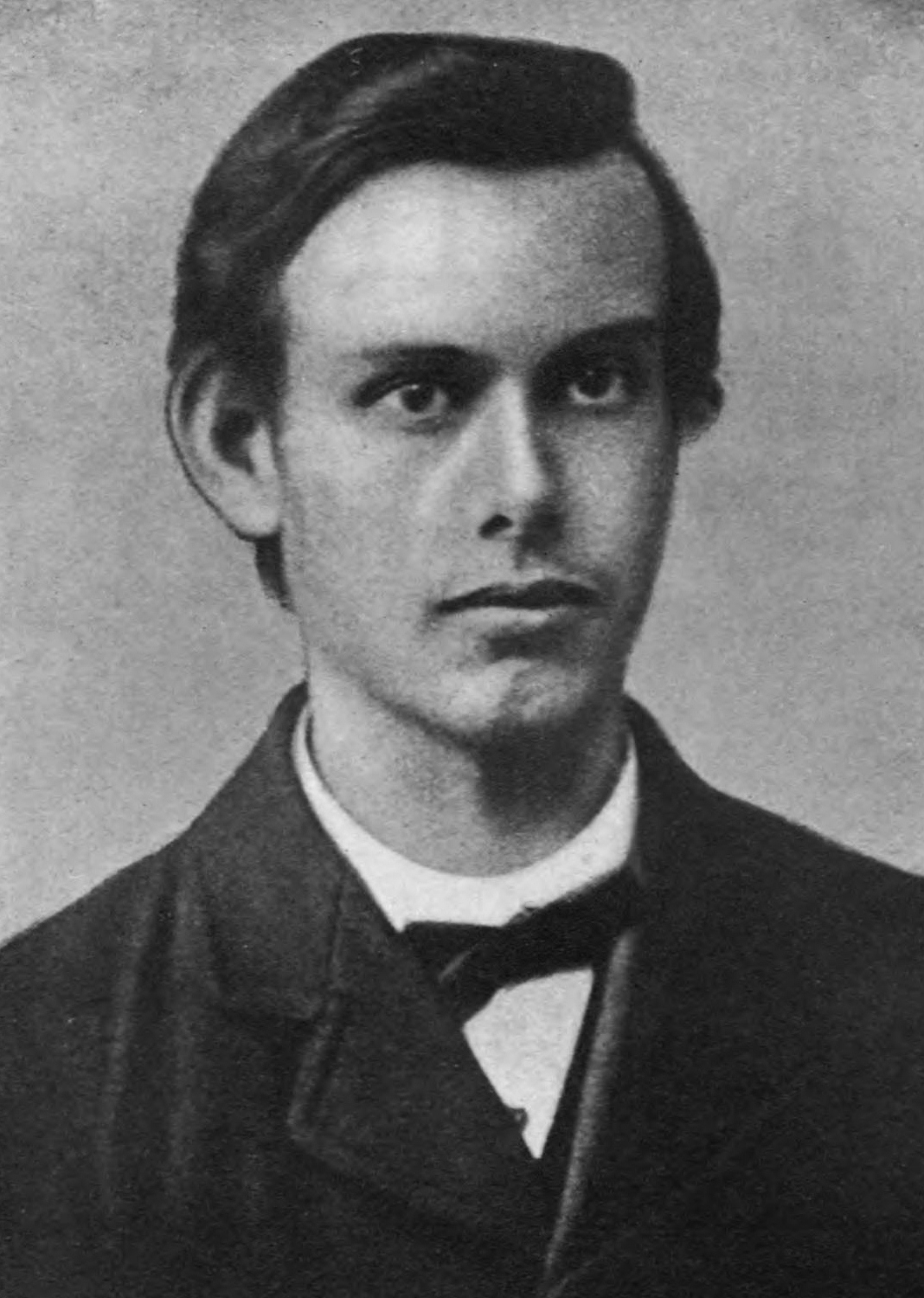
Henry Churchill King
Henry Churchill King was an influential American Congregationalist theologian, educator, and author known for his contributions to religious thought and higher education. He served as the president of Oberlin College from 1902 to 1927, where he played a pivotal role in shaping the institution's curriculum and fostering a progressive educational environment. King's theological perspectives were marked by a commitment to social ethics and the integration of faith with intellectual inquiry, which he articulated in several significant works, including 'The Ethical System of the New Testament' and 'The Reconstruction of Religion'. King's legacy extends beyond his administrative achievements; he was a prominent figure in the early 20th-century theological landscape, advocating for a modern understanding of Christianity that addressed contemporary social issues. His writings explored the intersections of faith, morality, and society, influencing both religious thought and educational practices. King's work not only contributed to the development of Congregationalist theology but also left a lasting impact on the broader discourse surrounding religion and ethics in America.
Famous Quotes
View all 4 quotes“This battle fares like to the morning’s war, When dying clouds contend with growing light; What time the shepherd, blowing of his nails, Can neither call it perfect day, nor night. Nor sways it this way, like a mighty sea Forc’d by the tide to combat with the wind; Nor sways it that way, like the self-same sea Forc’d to retire by fury of the wind: Sometime, the flood prevails, and then, the wind: Now, one the better; then, another, best; Both tugging to be victors, breast to breast, Yet neither conqueror, nor conquerèd: So is the equal poise of this fell war.’”
“In the eleventh century however the Papacy had been reinvigorated under Pope Gregory VII and his successors. Rome now began to make claims which were hardly compatible with the traditional notions of the mixed sovereignty of the King in all matters temporal and spiritual. The Gregorian movement held that the government of the Church ought to be in the hands of the clergy, under the supervision of the Pope. According to this view, the King was a mere layman whose one religious function was obedience to the hierarchy. The Church was a body apart, with its own allegiance and its own laws. By the reign of Henry II the bishop was not only a spiritual officer; he was a great landowner, the secular equal of earls; he could put forces in the field; he could excommunicate his enemies, who might be the King’s friends. Who, then, was to appoint the bishop? And, when once appointed, to whom, if the Pope commanded one thing and the King another, did he owe his duty? If the King and his counsellors agreed upon a law contrary to the law of the Church, to which authority was obedience due? Thus there came about the great conflict between Empire and Papacy symbolised in the question of Investiture, of which the dispute between Henry II and Becket is the insular counterpart.””
“In 1188 Richard, his eldest surviving son, after the death of young Henry, was making war upon him in conjunction with King Philip of France. Already desperately ill, Henry was defeated at Le Mans and recoiled into Touraine. When he saw in the list of conspirators against him the name of his son John, upon whom his affection had strangely rested, he abandoned the struggle with life. “Let things go as they will,” he gasped. “Shame, shame on a conquered King.” So saying, this hard, violent, brilliant, and lonely man expired at Chinon on July 6, 1189.””
Books from the author



Link to this page
Add a free, dofollow link to Lex on your blog, forum, syllabus, or reading list.

<a href="https://lex-books.com/author/henry-churchill-king"><img src="https://lex-books.com/badges/read-on-lex.svg" alt="Henry Churchill King on Lex" width="160" height="40"></a>[](https://lex-books.com/author/henry-churchill-king)[url=https://lex-books.com/author/henry-churchill-king][img]https://lex-books.com/badges/read-on-lex.svg[/img][/url]Henry Churchill King on Lex: https://lex-books.com/author/henry-churchill-king