George Thomas,Love
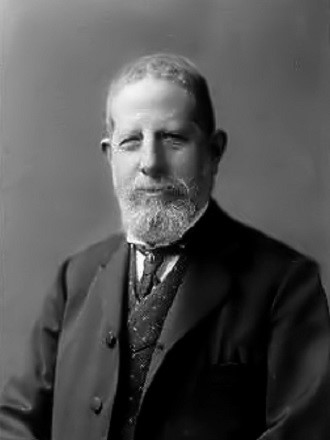
George Thomas Love was a British author and traveler known for his detailed observations of South America during the early 19th century. His most notable work, "A Five Years' Residence in Buenos Ayres, During the Years 1820 to 1825," offers a vivid account of life in Buenos Aires and its surroundings, providing insights into the culture, society, and politics of the region during a time of significant change. Love's narrative is marked by its keen observations and reflections on the local inhabitants, making it a valuable resource for understanding the complexities of Argentine society in the post-colonial period. Through his writings, Love contributed to the growing body of travel literature that emerged in the 19th century, which often aimed to inform and educate readers about distant lands. His work not only serves as a historical document but also illustrates the challenges and experiences faced by expatriates in a foreign land. Love's legacy lies in his ability to capture the essence of Buenos Aires during a transformative era, making his observations relevant for both historians and literary scholars alike.
Famous Quotes
View all 9 quotes“Which is the true? a loving, caring father, or the grinding of cruel poverty and the naked exposure to heedless chance? How is it that, while the former seems the only right, reasonable, and all-sufficing thing, it should yet come more naturally to believe in the latter? And yet, when I think of it, I never did come closer to believing in the latter than is indicated by terror of its possible truth”
“Call to mind how Jesus used to forgive men's sins, thus lifting from their hearts the crushing load that paralyzed all their efforts. Recall the tenderness with which he received those from whom the religious of his day turned aside”
“I dreamed once that I had committed a terrible crime. Carried beyond myself by passion, I knew not at the moment HOW evil was the thing I did. But I knew it was evil. And suddenly I became aware, when it was too late, of the nature of that which I had done. The horror that came with the knowledge was of the things that belong only to the secret soul. I was the same man as before I did it, yet was I now a man of whom my former self could not have conceived the possibility as dwelling within it. The former self seemed now by contrast lovely in purity, yet out of that seeming purity this fearful, foul I of the present had just been born! The face of my fellow-man was an avenging law, the face of a just enemy. Where, how, should the frightful face be hidden? The conscious earth must take it into its wounded bosom, and that before the all-seeing daylight should come. But it would come, and I should stand therein pointed at by every ray that shot through the sunny atmosphere! "The agony was of its own kind, and I have no word to tell what it was like. An evil odour and a sickening pain combined, might be a symbol of the torture. As is in the nature of dreams, possibly I lay but a little second on the rack, yet an age seemed shot through and through with the burning meshes of that crime, while, cowering and terror-stricken, I tossed about the loathsome fact in my mind. I had DONE it, and from the done there was no escape: it was for evermore a thing done.”
Books from the author




Link to this page
Add a free, dofollow link to Lex on your blog, forum, syllabus, or reading list.

<a href="https://lex-books.com/author/george-thomaslove"><img src="https://lex-books.com/badges/read-on-lex.svg" alt="George Thomas,Love on Lex" width="160" height="40"></a>[](https://lex-books.com/author/george-thomaslove)[url=https://lex-books.com/author/george-thomaslove][img]https://lex-books.com/badges/read-on-lex.svg[/img][/url]George Thomas,Love on Lex: https://lex-books.com/author/george-thomaslove