
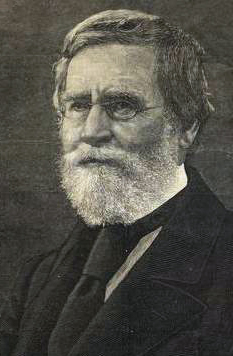
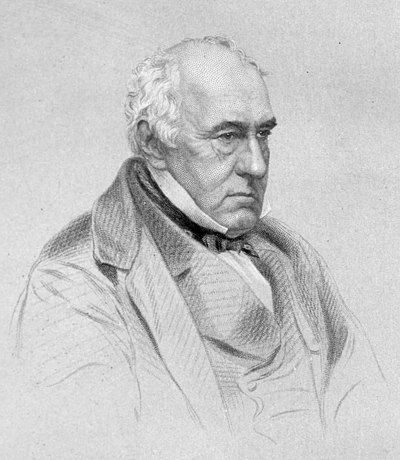
George Biddell Airy
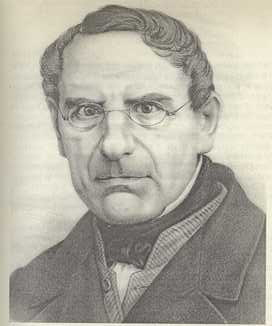
Sir George Biddell Airy was a prominent English mathematician and astronomer, renowned for his significant contributions to the fields of mathematics and astronomy during the 19th century. He served as the Lucasian Professor of Mathematics at Cambridge University from 1826 to 1828 and later became the seventh Astronomer Royal, a position he held from 1835 to 1881. Airy's work encompassed a range of topics, including the study of planetary orbits and the measurement of the Earth's mean density, which advanced the understanding of gravitational forces and planetary motion. One of Airy's most notable achievements was his role in establishing Greenwich as the prime meridian, a decision that had lasting implications for global navigation and timekeeping. His innovative methods in solid mechanics also contributed to the mathematical community, particularly in solving two-dimensional problems. Airy's legacy is marked by his dedication to scientific inquiry and his influence on future generations of mathematicians and astronomers, solidifying his place as a key figure in the development of modern science.
Famous Quotes
View all 1 quotes“In the hands of Science and indomitable energy, results the most gigantic and absorbing may be wrought out by skilful combinations of acknowledged data and the simplest means.”
Books from the author


Link to this page
Add a free, dofollow link to Lex on your blog, forum, syllabus, or reading list.

<a href="https://lex-books.com/author/george-biddell-airy"><img src="https://lex-books.com/badges/read-on-lex.svg" alt="George Biddell Airy on Lex" width="160" height="40"></a>[](https://lex-books.com/author/george-biddell-airy)[url=https://lex-books.com/author/george-biddell-airy][img]https://lex-books.com/badges/read-on-lex.svg[/img][/url]George Biddell Airy on Lex: https://lex-books.com/author/george-biddell-airy