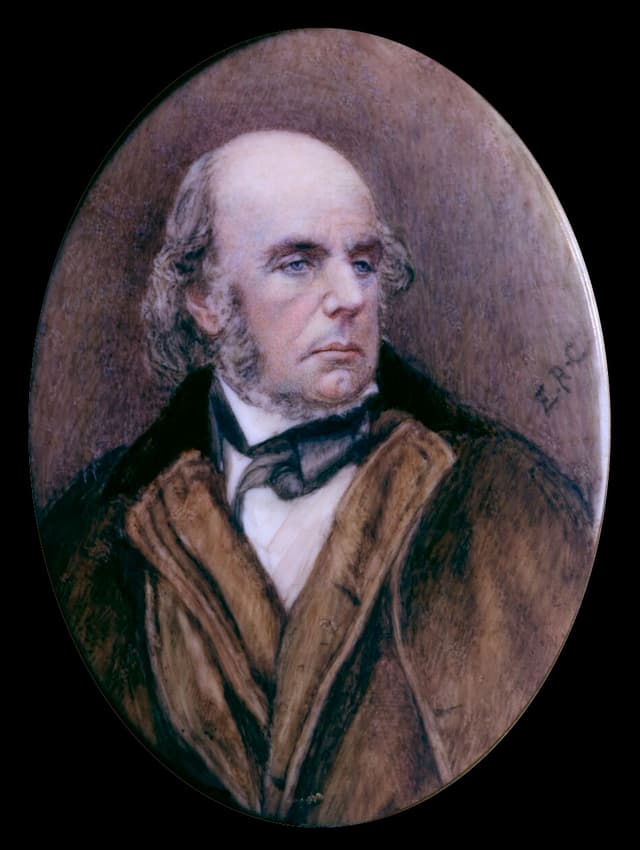
Edward FitzGerald
Edward FitzGerald was an English poet and writer best known for his translation of 'The Rubaiyat of Omar Khayyam,' which introduced Persian poetry to a Western audience. His rendition, published in 1859, captured the essence of Khayyam's philosophical musings on life, love, and the passage of time, and it quickly gained popularity for its lyrical beauty and depth. FitzGerald's work was notable not only for its poetic merit but also for its role in shaping the Western perception of Eastern literature, influencing countless writers and poets in the years that followed. FitzGerald's literary career extended beyond his translation of Khayyam; he also wrote original poetry and essays, though none achieved the same level of acclaim. His unique style combined a deep appreciation for classical literature with a personal touch, reflecting his own contemplations on existence. Despite his relatively small body of work, FitzGerald's impact on the literary world was significant, as he bridged cultural divides and brought Eastern thought into the Western literary canon. His legacy endures, particularly through 'The Rubaiyat,' which remains a beloved text and a testament to his skill as a translator and poet.
Famous Quotes
View all 3 quotes“Oh, come with old Khayyám, and leave the Wise To talk; one thing is certain, that Life flies; One thing is certain, and the Rest is Lies; The Flower that once blown for ever dies.”
“Ah, make the most of what we yet may spend, Before we too into Dust descend; Dust into Dust, and under Dust to lie, Sans Wine, sans Song, sans Singer, and - sans End!”
“Tis all a Checkerboard of Nights and Days Where Destiny with Men for Pieces plays: Hither and thither moves, and mates, and stays, And one by one back in the Closet lays.”
Books from the author

Link to this page
Add a free, dofollow link to Lex on your blog, forum, syllabus, or reading list.

<a href="https://lex-books.com/author/edward-fitzgerald"><img src="https://lex-books.com/badges/read-on-lex.svg" alt="Edward FitzGerald on Lex" width="160" height="40"></a>[](https://lex-books.com/author/edward-fitzgerald)[url=https://lex-books.com/author/edward-fitzgerald][img]https://lex-books.com/badges/read-on-lex.svg[/img][/url]Edward FitzGerald on Lex: https://lex-books.com/author/edward-fitzgerald