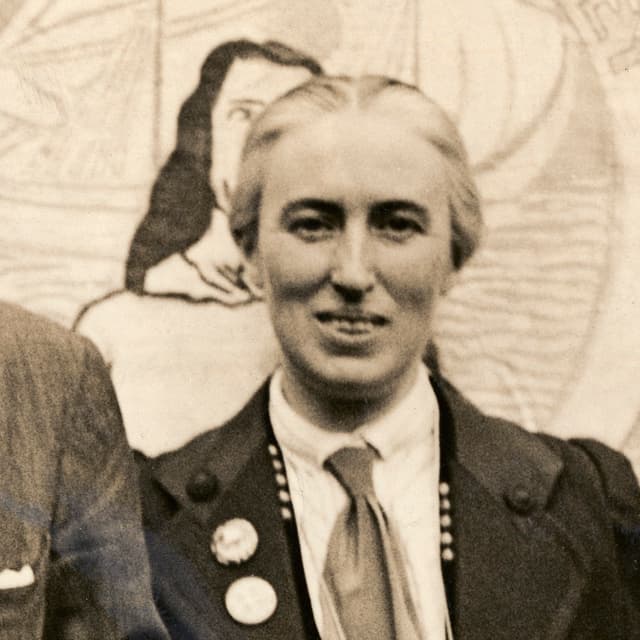
Clemence Housman
Clemence Annie Housman was an influential author, illustrator, and activist known for her contributions to literature and the women's suffrage movement. Born into a literary family, she was the sister of renowned poets A. E. Housman and Laurence Housman. Clemence's writing often blended elements of fantasy and social commentary, with notable works including 'The Were-Wolf,' a pioneering tale that explored themes of identity and transformation, and 'Unknown Sea,' which showcased her imaginative storytelling. Her novel 'The Life of Sir Aglovale De Galis' further demonstrated her ability to weave rich narratives with historical and mythical elements. In addition to her literary achievements, Housman was a prominent figure in the suffragette movement, advocating for women's rights and social reform. Her activism paralleled her literary pursuits, as she sought to challenge societal norms through both her writing and her public life. Housman's legacy endures not only through her imaginative works but also through her commitment to advancing women's rights, making her a significant figure in both literary and social history.
Famous Quotes
View all 3 quotes“So they went running together, silent, toward the vast wastes of snow where no living thing but they two moved under the stars of night.”
“The clear stars before him took to shuddering and he knew why; they shuddered at sight of what was behind him. He had never divined before that strange Things hid themselves from men, under pretence of being snow-clad mounds of swaying trees; but now they came slipping out from their harmless covers to follow him, and mock at his impotence to make a kindred Thing resolve to truer form. He knew the air behind him was thronged; he heard the hum of innumerable murmurings together; but his eyes could never catch them - they were too swift and nimble; but he knew they were there, because, on a backward glance, he saw the snow mounds surge as they grovelled flatlings out of sight; he saw the trees reel as they screwed themselves rigid past recognition among the boughs.”
“His own true hidden reality that he had desired to know grew palpable, recognizable. It seemed to him just this: a great, glad, abounding hope that he had saved his brother; too expansive to be contained by the limited form of a sole man, it yearned for a new embodiment infinite as the stars. What did it matter to that true reality that the man's brain shrank, shrank, till it was nothing; that the man's body could not retain the huge pain of his heart, and heaved it out through the red exit riven at the neck: that hurtling blackness blotted out forever the man's sight, hearing, sense?”
Books from the author

Link to this page
Add a free, dofollow link to Lex on your blog, forum, syllabus, or reading list.

<a href="https://lex-books.com/author/clemence-housman"><img src="https://lex-books.com/badges/read-on-lex.svg" alt="Clemence Housman on Lex" width="160" height="40"></a>[](https://lex-books.com/author/clemence-housman)[url=https://lex-books.com/author/clemence-housman][img]https://lex-books.com/badges/read-on-lex.svg[/img][/url]Clemence Housman on Lex: https://lex-books.com/author/clemence-housman