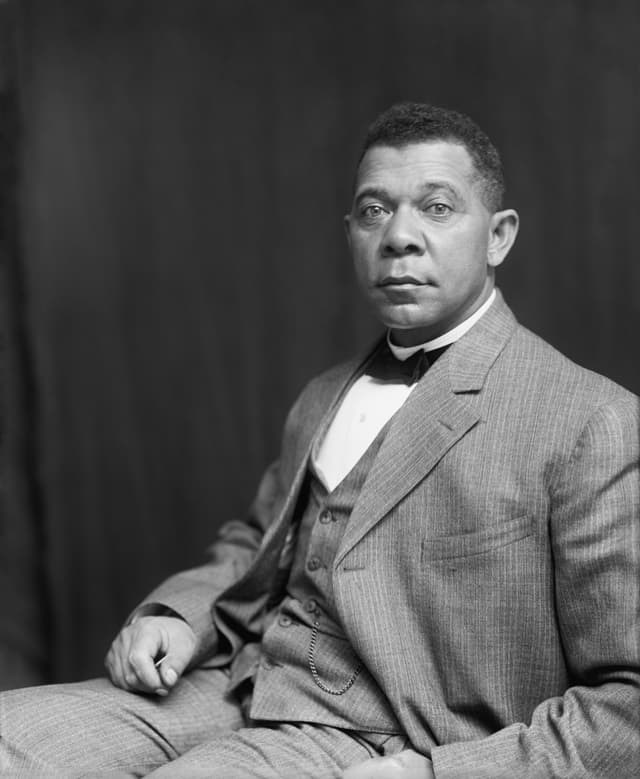
Booker T. Washington
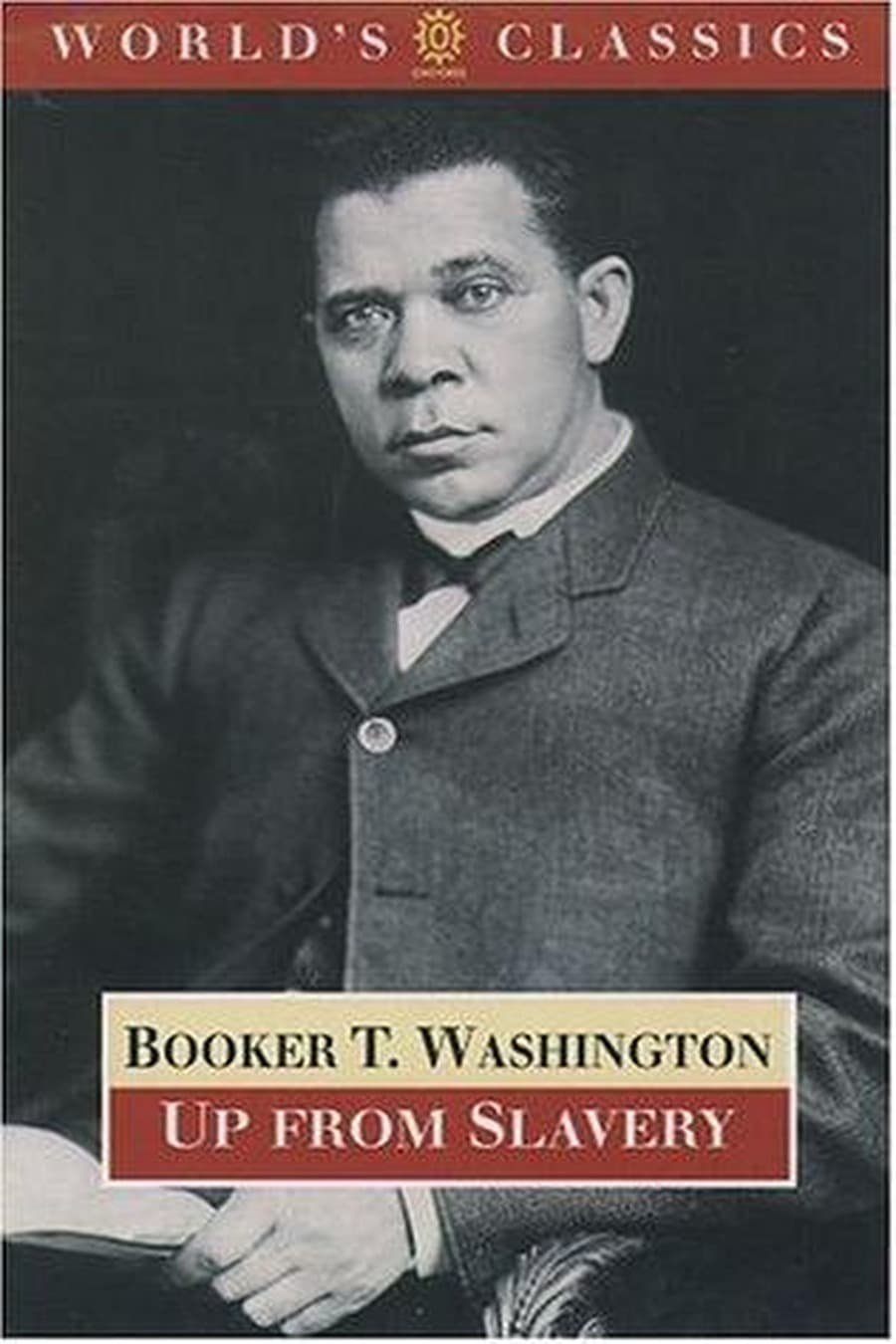
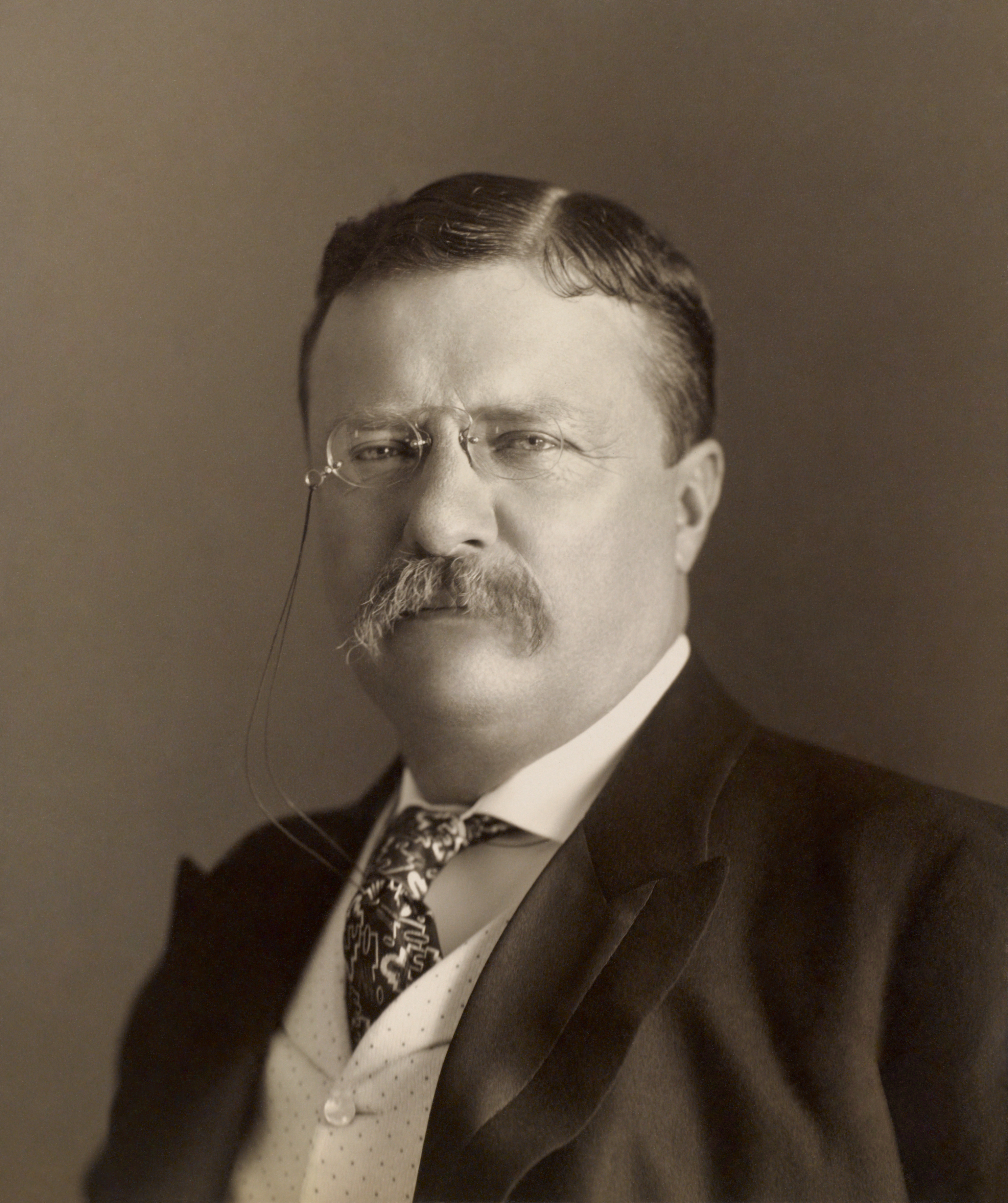
Booker T. Washington was an influential American educator, author, and orator who emerged as a leading figure in the African-American community during the late 19th and early 20th centuries. Born into slavery in Virginia, he gained his freedom during the Civil War and pursued education at Hampton Normal and Agricultural Institute and Wayland Seminary. In 1881, Washington became the first leader of the Tuskegee Institute in Alabama, where he emphasized vocational training and self-help as pathways to economic independence for African Americans. His Atlanta Address in 1895 garnered national attention, advocating for a strategy of accommodation and gradual progress rather than direct confrontation with the systemic racism of the time. Washington's autobiography, "Up from Slavery," published in 1901, became a seminal work that articulated his philosophy of education and self-improvement. His meeting with President Theodore Roosevelt at the White House marked a significant moment in American history, as it was the first time a black individual was received on equal terms by a sitting president. Throughout his life, Washington championed the establishment of African-American businesses and was a co-founder of the National Negro Business League. While he sought to uplift the black community through education and economic empowerment, his approach was met with criticism from contemporaries like W. E. B. Du Bois, who advocated for more direct political action. Despite the controversies surrounding his methods, Washington's legacy as a leader during a pivotal era for African Americans endures, and his influence shaped the discourse on race and education in America for generations to come.
Famous Quotes
View all 3 quotes“I have learned that success is to be measured not so much by the position that one has reached in life as by the obstacles which he has overcome while trying to succeed.”
“I will permit no man to narrow and degrade my soul by making me hate him.”
“Those who are happiest are those who do the most for others.”
Books from the author







Link to this page
Add a free, dofollow link to Lex on your blog, forum, syllabus, or reading list.

<a href="https://lex-books.com/author/booker-t-washington"><img src="https://lex-books.com/badges/read-on-lex.svg" alt="Booker T. Washington on Lex" width="160" height="40"></a>[](https://lex-books.com/author/booker-t-washington)[url=https://lex-books.com/author/booker-t-washington][img]https://lex-books.com/badges/read-on-lex.svg[/img][/url]Booker T. Washington on Lex: https://lex-books.com/author/booker-t-washington