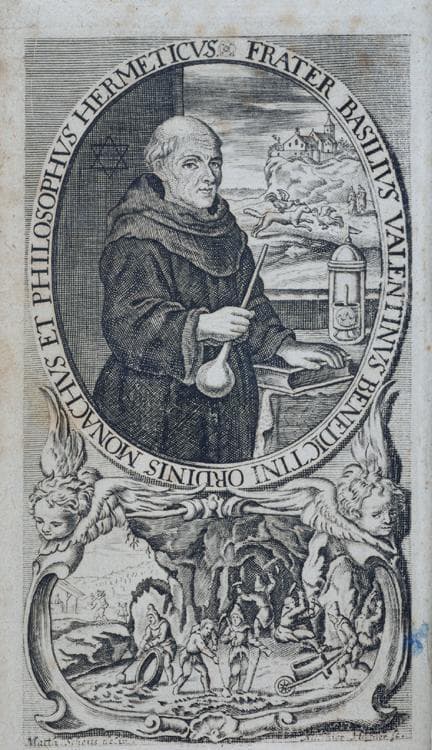
Basilius Valentinus
Basilius Valentinus was a 16th-century alchemist and physician, often regarded as a pivotal figure in the development of Western alchemical thought. Though little is known about his early life, he is believed to have been a German scholar who contributed significantly to the field of alchemy through his writings, which blended practical techniques with philosophical insights. His most notable work, the 'Twelve Keys of Basil Valentine,' is a seminal text that outlines the processes of alchemical transformation and the quest for the philosopher's stone, a symbol of ultimate knowledge and enlightenment. Valentinus's influence extended beyond his own time, as his works were widely circulated and translated, impacting both alchemical practices and the broader scientific discourse of the Renaissance. His emphasis on the spiritual dimensions of alchemy, alongside its practical applications, helped to shape the mystical and philosophical underpinnings of the discipline. Today, he is remembered not only for his contributions to alchemical literature but also for his role in bridging the gap between medieval and modern scientific thought, marking a significant transition in the history of chemistry and natural philosophy.
Books from the author







Link to this page
Add a free, dofollow link to Lex on your blog, forum, syllabus, or reading list.

<a href="https://lex-books.com/author/basilius-valentinus"><img src="https://lex-books.com/badges/read-on-lex.svg" alt="Basilius Valentinus on Lex" width="160" height="40"></a>[](https://lex-books.com/author/basilius-valentinus)[url=https://lex-books.com/author/basilius-valentinus][img]https://lex-books.com/badges/read-on-lex.svg[/img][/url]Basilius Valentinus on Lex: https://lex-books.com/author/basilius-valentinus