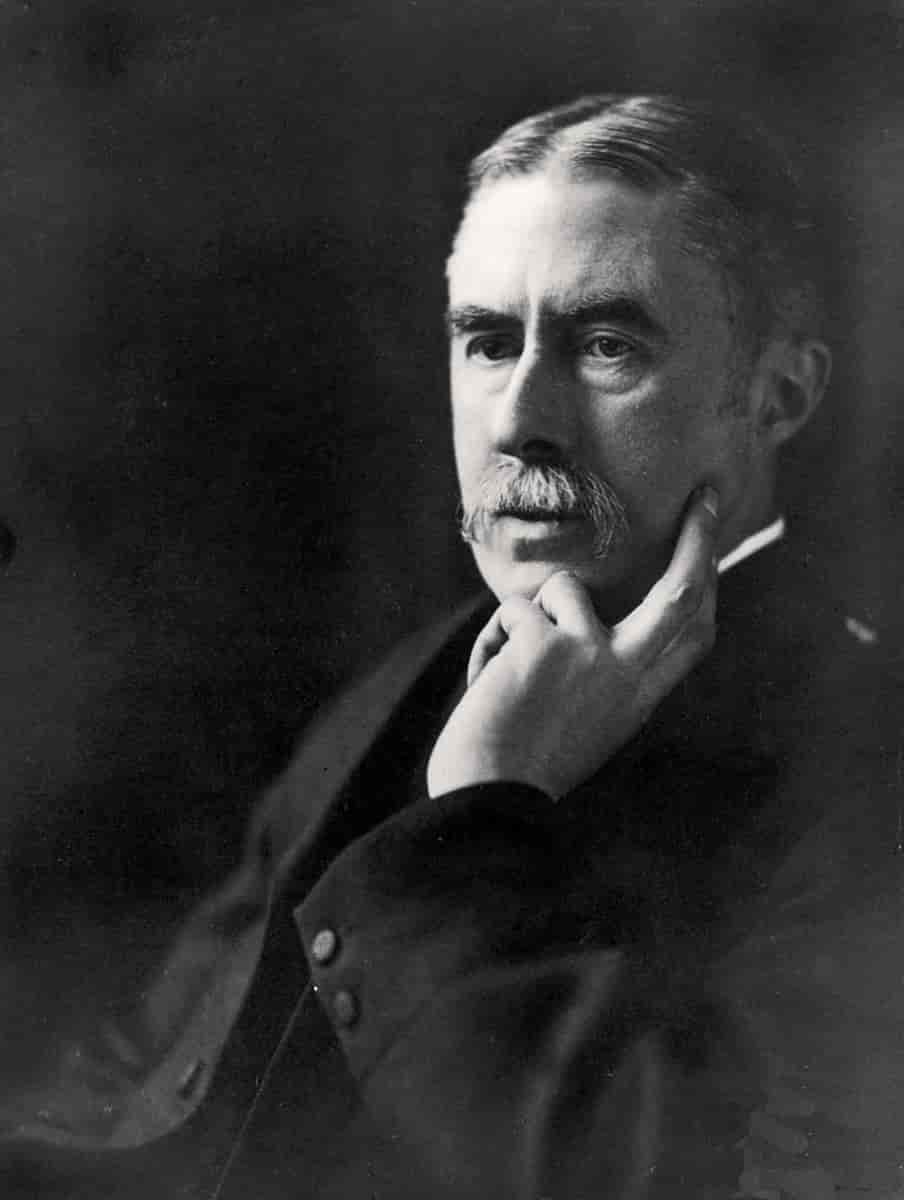
A. E. Housman
Alfred Edward Housman was an influential English classical scholar and poet, renowned for his contributions to both literature and classical studies. Despite showing early academic promise at the University of Oxford, Housman faced setbacks when he failed his final examinations. This led him to a career as a patent examiner in London, where he simultaneously pursued his passion for classical texts. His meticulous work in textual criticism garnered him a reputation as a leading scholar, ultimately earning him a professorship in Latin at University College London in 1892 and later the prestigious position of Kennedy Professor of Latin at the University of Cambridge in 1911. Housman's poetic legacy is perhaps best encapsulated in his collection "A Shropshire Lad," which reflects themes of love, loss, and the passage of time, resonating deeply with readers and influencing subsequent generations of poets. His work is characterized by its lyrical quality and poignant exploration of human emotions, making him a significant figure in English poetry. Housman's dual legacy as a classical scholar and a poet solidified his place in literary history, as he bridged the worlds of rigorous academic scholarship and evocative poetic expression.
Famous Quotes
View all 20 quotes“Because I liked you betterThan suits a man to say,It irked you, and I promisedI'd throw the thought away.To put the world between usWe parted stiff and dry:'Farewell,' said you, 'forget me.''Fare well, I will,' said I.If e'er, where clover whitensThe dead man's knoll, you pass,And no tall flower to meet youStarts in the trefoiled grass,Halt by the headstone shadingThe heart you have not stirred,And say the lad that loved youWas one that kept his word.””
“Stars, I have seen them fall,But when they drop and dieNo star is lost at allFrom all the star-sown sky.The toil of all that beHelps not the primal fault;It rains into the seaAnd still the sea is salt.””
“How clear, how lovely bright,How beautiful to sight Those beams of morning play;How heaven laughs out with gleeWhere, like a bird set free,Up from the eastern sea Soars the delightful day.To-day I shall be strong,No more shall yield to wrong, Shall squander life no more;Days lost, I know not how,I shall retrieve them now;Now I shall keep the vow I never kept before.Ensanguining the skiesHow heavily it dies Into the west away;Past touch and sight and soundNot further to be found,How hopeless under ground Falls the remorseful day.””
Books from the author

Link to this page
Add a free, dofollow link to Lex on your blog, forum, syllabus, or reading list.

<a href="https://lex-books.com/author/a-e-housman"><img src="https://lex-books.com/badges/read-on-lex.svg" alt="A. E. Housman on Lex" width="160" height="40"></a>[](https://lex-books.com/author/a-e-housman)[url=https://lex-books.com/author/a-e-housman][img]https://lex-books.com/badges/read-on-lex.svg[/img][/url]A. E. Housman on Lex: https://lex-books.com/author/a-e-housman