Winesburg, Ohio: A Group of Tales of Ohio Small Town Life
1919
Winesburg, Ohio: A Group of Tales of Ohio Small Town Life
1919
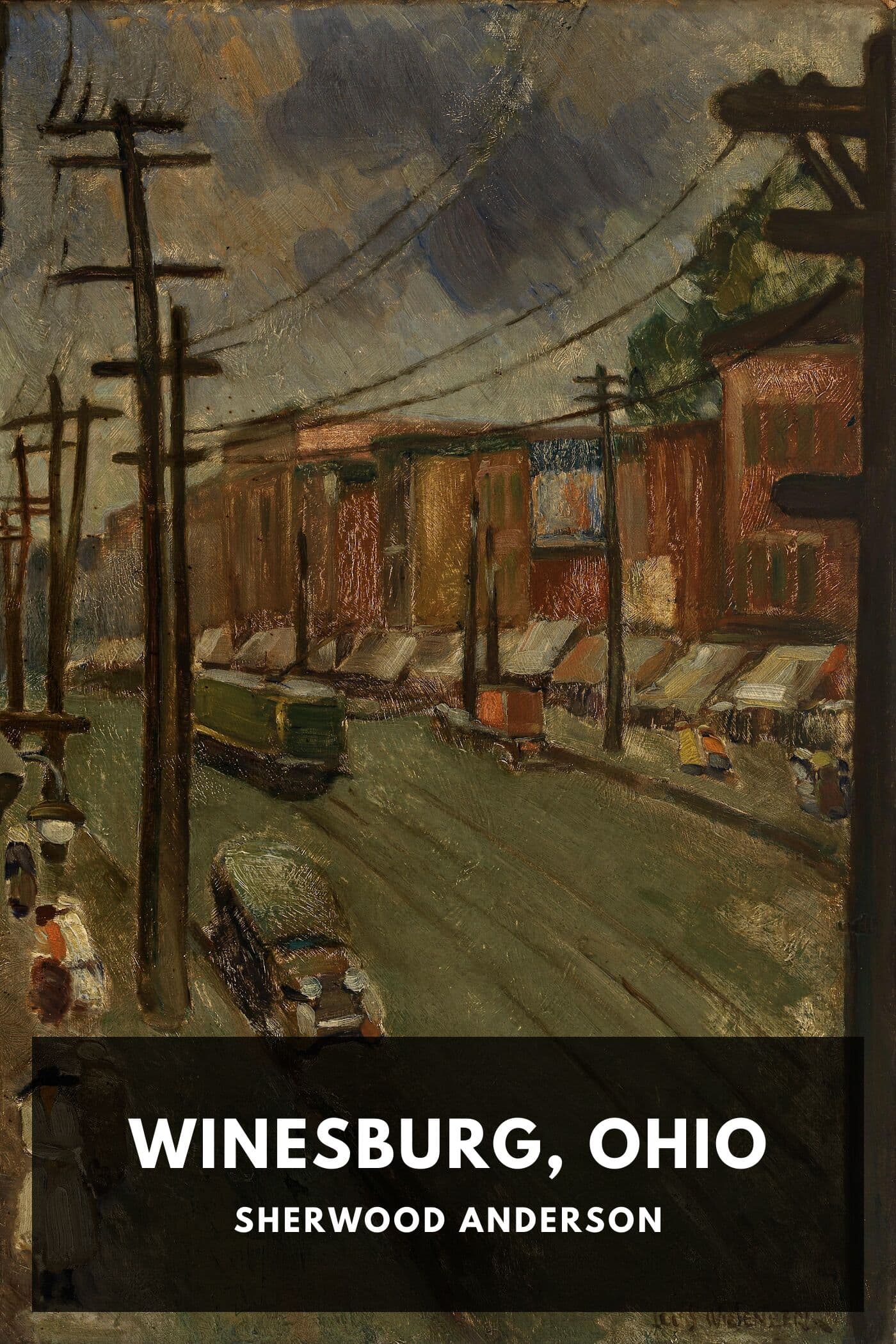
The grotesques of Winesburg, Ohio are waiting to show you their wounds. Sherwood Anderson's revolutionary 1919 collection tore open the thin skin of small-town American life to reveal the desperate, secret lives beating underneath. Here is Wing Biddlebaum, a schoolteacher whose hands once touched boys in ways that got him banished from Pennsylvania, now kept forever in his pockets. Here is Alice Hindman, two years without a man, who walks naked into the night rain looking for something she cannot name. Here is Doctor Reefy, who lost his mind composing endless ribbons of paper covered in tiny, meaningless words. Young reporter George Willard moves among them all, listening, witness, soon to escape. These twenty-two interlinked stories cracked American literature apart. Before Anderson, nobody had written about the interior lives of ordinary people with such raw, unblinking empathy. He taught Hemingway and Faulkner how to find tragedy in the everyday. A century later, these stories still ache with the same terrible truth: most people live and die unheard, clutching truths too fragile or strange to share.
Editions
X-Ray
“Love is like a wind stirring the grass beneath trees on a black night,' he had said. 'You must not try to make love definite. It is the divine accident of life. If you try to be definite and sure about it and to live beneath the trees, where soft night winds blow, the long hot day of disappointment comes swiftly and the gritty dust from passing wagons gathers upon lips inflamed and made tender by kisses.””
— Sherwood Anderson
“There is a time in the life of every boy when he for the first time takes the backward view of life. Perhaps that is the moment when he crosses the line into manhood. The boy is walking through the street of his town. He is thinking of the future and of the figure he will cut in the world. Ambitions and regrets awake within him. Suddenly something happens; he stops under a tree and waits as for a voice calling his name. Ghosts of old things creep into his consciousness; the voices outside of himself whisper a message concerning the limitations of life. From being quite sure of himself and his future he becomes not at all sure. If he be an imaginative boy a door is torn open and for the first time he looks out upon the world, seeing, as though they marched in procession before him, the countless figures of men who before his time have come out of nothingness into the world, lived their lives and again disappeared into nothingness. The sadness of sophistication has come to the boy. With a little gasp he sees himself as merely a leaf blown by the wind through the streets of his village. He knows that in spite of all the stout talk of his fellows he must live and die in uncertainty, a thing blown by the winds, a thing destined like corn to wilt in the sun.””
— Sherwood Anderson
“You must try to forget all you have learned,' said the old man. 'You must begin to dream. From this time on you must shut your ears to the roaring of the voices.””
— Sherwood Anderson
“In that high place in the darkness the two oddly sensitive human atoms held each other tightly and waited. In the mind of each was the same thought. "I have come to this lonely place and here is this other," was the substance of the thing felt.””
— Sherwood Anderson
“Only the few know the sweetness of the twisted apples.””
— Sherwood Anderson
“I am a lover and have not found my thing to love. That is a big point if you know enough to realize what I mean. It makes my destruction inevitable, you see. There are few who understand that.””
— Sherwood Anderson
“Dare to be strong and courageous. That is the road. Venture anything. Be brave enough to dare to be loved. Be something more than man or woman. Be Tandy.””
— Sherwood Anderson
“I wanted to run away from everything but I wanted to run towards something too. Don't you see, dear, how it was?””
— Sherwood Anderson
“In youth there are always two forces fighting in people. The warm unthinking little animal struggles against the thing that reflects and remembers””
— Sherwood Anderson
Link to this book
Add a free, dofollow link to Lex on your blog, forum, syllabus, or reading list.

<a href="https://lex-books.com/book/winesburg-ohio-a-group-of-tales-of-ohio-small-town-life-a40e7f7c-2e11-4acc-9914-227b064d7cfb"><img src="https://lex-books.com/badges/read-on-lex.svg" alt="Read Winesburg, Ohio: A Group of Tales of Ohio Small Town Life by Sherwood Anderson free on Lex" width="160" height="40"></a>[](https://lex-books.com/book/winesburg-ohio-a-group-of-tales-of-ohio-small-town-life-a40e7f7c-2e11-4acc-9914-227b064d7cfb)[url=https://lex-books.com/book/winesburg-ohio-a-group-of-tales-of-ohio-small-town-life-a40e7f7c-2e11-4acc-9914-227b064d7cfb][img]https://lex-books.com/badges/read-on-lex.svg[/img][/url]Read Winesburg, Ohio: A Group of Tales of Ohio Small Town Life by Sherwood Anderson free on Lex: https://lex-books.com/book/winesburg-ohio-a-group-of-tales-of-ohio-small-town-life-a40e7f7c-2e11-4acc-9914-227b064d7cfbCite this book
Reading this edition for a paper or guide? Copy a citation.
Anderson, Sherwood. Winesburg, Ohio: A Group of Tales of Ohio Small Town Life. Lex, lex-books.com/book/winesburg-ohio-a-group-of-tales-of-ohio-small-town-life-a40e7f7c-2e11-4acc-9914-227b064d7cfb.Anderson, S. (1919). Winesburg, Ohio: A Group of Tales of Ohio Small Town Life. Lex. https://lex-books.com/book/winesburg-ohio-a-group-of-tales-of-ohio-small-town-life-a40e7f7c-2e11-4acc-9914-227b064d7cfbAnderson, Sherwood. Winesburg, Ohio: A Group of Tales of Ohio Small Town Life. Lex. https://lex-books.com/book/winesburg-ohio-a-group-of-tales-of-ohio-small-town-life-a40e7f7c-2e11-4acc-9914-227b064d7cfb.