Utopia
1516
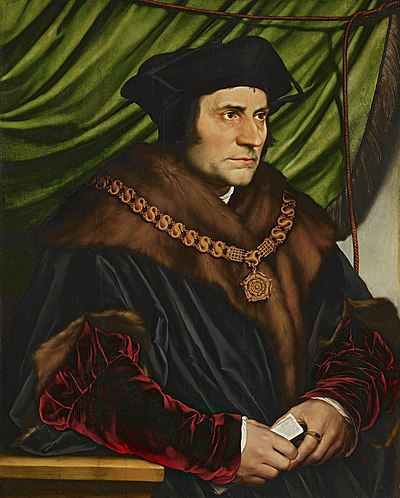
Thomas More invented a word and a genre with this uncanny, quietly radical book. Written in 1516 as a dialogue between the traveler Raphael Hythloday and More himself, Utopia describes an island nation where property is communal, workers labor just six hours a day, and gold is used for chamber pots. Women are educated. Leaders are elected. Religious tolerance prevails. It sounds like paradise, but More plants something unsettling in the reader's mind: the creeping suspicion that this perfect society might also be utterly alien, even repressive in its own way. The genius lies in the frame. More presents himself as a curious humanist chatting with a friend, then lets Hythloday's impossible ideal spill out, never quite endorsing it. The result is a book that works simultaneously as genuine blueprint for social reform and as savage satire of European corruption, greedy monarchs, and the senseless wars fought over land. Five centuries later, every imagined perfect society traces back to this slender volume. It remains essential reading for anyone who has dared to ask: what if we got it all wrong?
Editions
X-Ray
“For if you suffer your people to be ill-educated, and their manners to be corrupted from their infancy, and then punish them for those crimes to which their first education disposed them, what else is to be concluded from this, but that you first make thieves and then punish them.””
— Thomas, Saint More
“A pretty face may be enough to catch a man, but it takes character and good nature to hold him.””
— Thomas, Saint More
“[how can anyone] be silly enough to think himself better than other people, because his clothes are made of finer woolen thread than theirs. After all, those fine clothes were once worn by a sheep, and they never turned it into anything better than a sheep.””
— Thomas, Saint More
“You wouldn't abandon ship in a storm just because you couldn't control the winds.””
— Thomas, Saint More
“Instead of inflicting these horrible punishments, it would be far more to the point to provide everyone with some means of livelihood, so that nobody's under the frightful necessity of becoming first a thief and then a corpse.””
— Thomas, Saint More
“Nobody owns anything but everyone is rich - for what greater wealth can there be than cheerfulness, peace of mind, and freedom from anxiety?””
— Thomas, Saint More
“Pride thinks it's own happiness shines the brighter by comparing it with the misfortunes of others.””
— Thomas, Saint More
“Kindness and good nature unite men more effectually and with greater strength than any agreements whatsoever, since thereby the engagements of men's hearts become stronger than the bond and obligation of words.””
— Thomas, Saint More
“Why do you suppose they made you king in the first place?' I ask him. 'Not for your benefit, but for theirs. They meant you to devote your energies to making their lives more comfortable, and protecting them from injustice. So your job is to see that they're all right, not that you are - just as a shepherd's job, strictly speaking, is to feed his sheep, not himself.””
— Thomas, Saint More
Link to this book
Add a free, dofollow link to Lex on your blog, forum, syllabus, or reading list.

<a href="https://lex-books.com/book/utopia-317667d0-deb1-40ef-bb4f-2dace8c8cfcd"><img src="https://lex-books.com/badges/read-on-lex.svg" alt="Read Utopia by Thomas, Saint More free on Lex" width="160" height="40"></a>[](https://lex-books.com/book/utopia-317667d0-deb1-40ef-bb4f-2dace8c8cfcd)[url=https://lex-books.com/book/utopia-317667d0-deb1-40ef-bb4f-2dace8c8cfcd][img]https://lex-books.com/badges/read-on-lex.svg[/img][/url]Read Utopia by Thomas, Saint More free on Lex: https://lex-books.com/book/utopia-317667d0-deb1-40ef-bb4f-2dace8c8cfcdCite this book
Reading this edition for a paper or guide? Copy a citation.
Thomas, Saint More. Utopia. Lex, lex-books.com/book/utopia-317667d0-deb1-40ef-bb4f-2dace8c8cfcd.Thomas, S. M. (1516). Utopia. Lex. https://lex-books.com/book/utopia-317667d0-deb1-40ef-bb4f-2dace8c8cfcdThomas, Saint More. Utopia. Lex. https://lex-books.com/book/utopia-317667d0-deb1-40ef-bb4f-2dace8c8cfcd.