Typee
1846
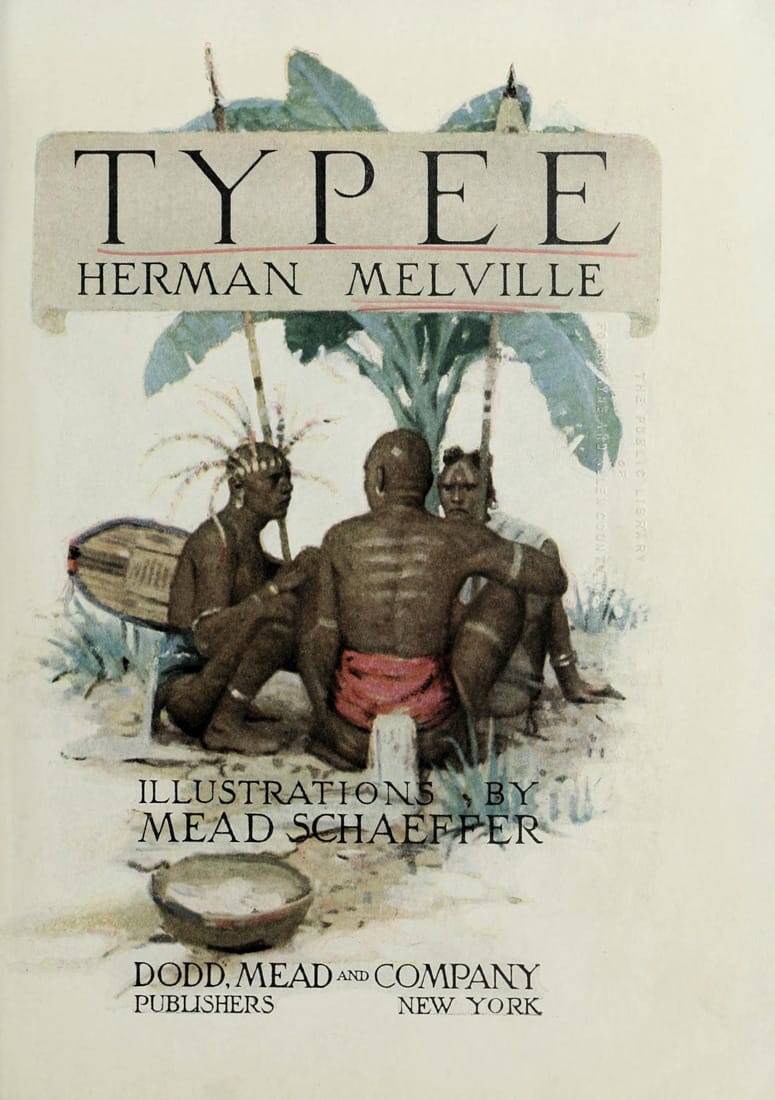
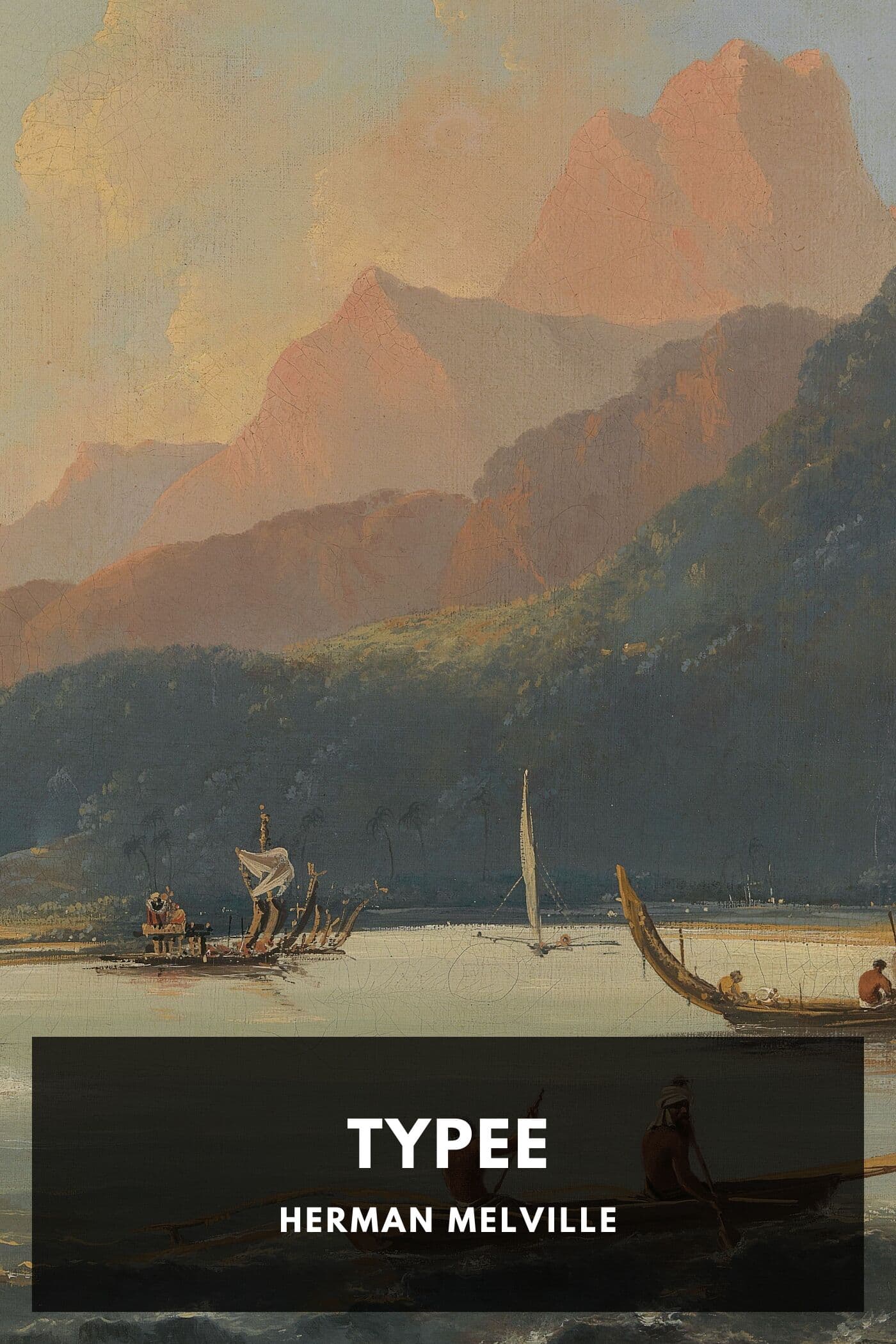
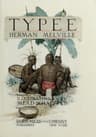
In 1842, a young sailor named Herman Melville jumped ship in the Marquesas Islands and spent a month living among the Typee people, an experience that would become America s first great adventure novel. The unnamed narrator of Typee escapes the brutal conditions aboard a whaling vessel with his companion Toby, fleeing into the mountains of Nuku Hiva where they discover a valley of surprising abundance and strange customs. The Typee people, tattooed and tattooing, neither harm nor fully trust these strange white men who have arrived among them. The narrator finds himself caught between two worlds: the repressive, dehumanizing grind of industrial whaling and a paradise that may or may not hide darker secrets. Melville wrote this book at twenty-six, flush with the audacity of youth, and it made him famous as the man who lived among cannibals. The novel crackles with his hunger for freedom, his eye for the exotic, and his uneasy awareness that paradise always comes with a price. It remains a extraordinary document of first contact, a meditation on what civilization costs us, and one hell of a sea story.
Editions


X-Ray
“Now, I knew not, that there was any thing in my own appearance calculated to disarm ridicule; and, indeed, to have looked at all heroic, under the circumstances, would have been rather difficult. Still, I could not but feel exceedingly annoyed at the prospect of being screamed at in turn, by this mischievous young witch, even though she were but an islander. And, to tell a secret, her beauty had something to do with this sort of feeling; and, pinioned as I was, to a log, and clad most unbecomingly, I began to grow sentimental. Ere her glance fell upon me, I had, unconsciously, thrown myself into the most graceful attitude I could assume, leaned my head upon my hand, and summoned up as abstracted an expression as possible. Though my face was averted, I soon felt it flush,””
— Herman Melville
“We dropped in one evening, and found the ladies at home. My long friend engaged his favourites, the two younger girls, at the game of "Now," or hunting a stone under three piles of tappa. For myself, I lounged on a mat with Ideea the eldest, dallying with her grass fan, and improving my knowledge of Tahitian. The occasion was well adapted to my purpose, and I began. "Ah, Ideea, mickonaree oee?" the same as drawling out”
— Herman Melville
“Speaking of bones recalls an ugly custom of theirs, now obsolete”
— Herman Melville
“Now, contempt is as frequently produced at first sight as love; and thus was it with respect to Wilson. No one could look at him without conceiving a strong dislike, or a cordial desire to entertain such a feeling the first favourable opportunity. There was such an intolerable air of conceit about this man that it was almost as much as one could do to refrain from running up and affronting him.””
— Herman Melville
“Once in a while, we came in at the death of a chief ’s pig; the noise of whose slaughtering was generally to be heard at a great distance. An occasion like this gathers the neighbors together, and they have a bit of a feast, where a stranger is always welcome. A good loud squeal, therefore, was music in our ears. It showed something going on in that direction.””
— Herman Melville
Link to this book
Add a free, dofollow link to Lex on your blog, forum, syllabus, or reading list.

<a href="https://lex-books.com/book/typee-13d08760-2fc3-4cad-affb-1aa8e6a24afd"><img src="https://lex-books.com/badges/read-on-lex.svg" alt="Read Typee by Herman Melville free on Lex" width="160" height="40"></a>[](https://lex-books.com/book/typee-13d08760-2fc3-4cad-affb-1aa8e6a24afd)[url=https://lex-books.com/book/typee-13d08760-2fc3-4cad-affb-1aa8e6a24afd][img]https://lex-books.com/badges/read-on-lex.svg[/img][/url]Read Typee by Herman Melville free on Lex: https://lex-books.com/book/typee-13d08760-2fc3-4cad-affb-1aa8e6a24afdCite this book
Reading this edition for a paper or guide? Copy a citation.
Melville, Herman. Typee. Lex, lex-books.com/book/typee-13d08760-2fc3-4cad-affb-1aa8e6a24afd.Melville, H. (1846). Typee. Lex. https://lex-books.com/book/typee-13d08760-2fc3-4cad-affb-1aa8e6a24afdMelville, Herman. Typee. Lex. https://lex-books.com/book/typee-13d08760-2fc3-4cad-affb-1aa8e6a24afd.