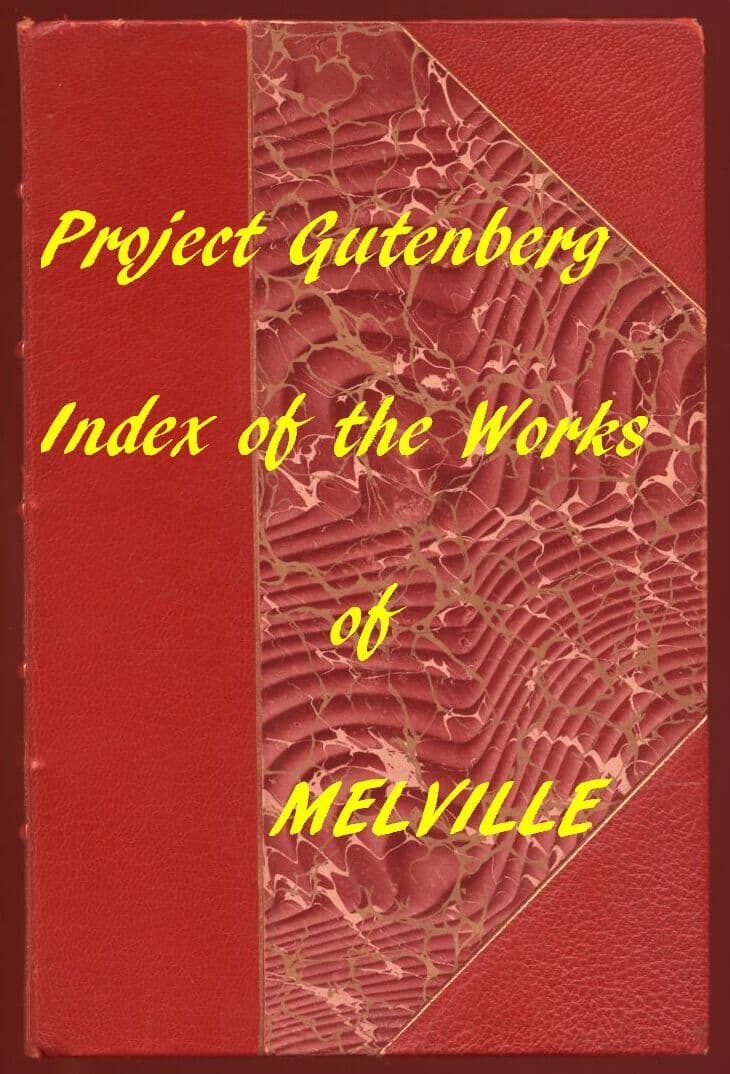
Mardi, and a Voyage Thither, Vol. 1 (of 2)
1849
Before Moby-Dick consumed him, Herman Melville wrote something stranger: a novel that refuses to stay still. Mardi opens on the whaling ship Arcturion, where a restless sailor named Taji has already grown weary of the sea's endless monotony. He craves conversation that matches his intellect, but finds his shipmates crude and dull. When he persuades the weathered old sailor Jarl to join him, the two make a audacious escape into the Pacific, seeking something Taji cannot name but desperately needs. What begins as adventure gradually transforms into something more elusive and profound, as Melville abandons the factual precision of his earlier South Sea narratives and spreads his wings toward pure symbol. This is Melville unmoored, hungry, reaching toward the visionary work that would soon redefine American literature. For readers who want to witness a great writer finding his voice, this is where the transformation begins.
Editions
X-Ray
“For backward or forward, eternity is the same; already have we been the nothing we dread to be.””
— Herman Melville
“Are not half our lives spent in reproaches for foregone actions, of the true nature and consequences of which we were wholly ignorant at the time?””
— Herman Melville
“Better to sink in boundless deeps, than float on vulgar shoals; and give me, ye Gods, an utter wreck, if wreck I do.””
— Herman Melville
“Evil is the chronic malady of the universe, and checked in one place, breaks forth in another. ””
— Herman Melville
“The stillness of the calm is awful. His voice begins to grow strange and portentous. He feels it in him like something swallowed too big for the esophagus. It keeps up a sort of involuntary interior humming in him, like a live beetle. His cranium is a dome full of reverberations. The hollows of his very bones are as whispering galleries. He is afraid to speak loud, lest he be stunned; like the man in the bass drum.””
— Herman Melville
“All of us have monarchs and sages for kinsmen; nay, angels and archangels for cousins; since in antediluvian days, the sons of God did verily wed with our mothers, the irresistible daughters of Eve. Thus all generations are blended: and heaven and earth of one kin: the hierarchies of seraphs in the uttermost skies; the thrones and principalities in the zodiac; the shades that roam throughout space; the nations and families, flocks and folds of the earth; one and all, brothers in essence”
— Herman Melville
“Better be an old maid, a woman with herself for a husband, than the wife of a fool; and Solomon more than hints that all men are fools; and every wise man knows himself to be one.””
— Herman Melville
“We know not what we do when we hate.””
— Herman Melville
“Wherein, he resembled my Right Reverend friend, Bishop Berkeley - truly, one of your lords spiritual - who, metaphysically speaking, holding all objects to be mere optical delusions, was, notwithstanding, extremely matter-of-fact in all matters touching matter itself. Besides being pervious to the points of pins, and possessing a palate capable of appreciating plum-puddings: - which sentence reads off like a pattering of hailstones.””
— Herman Melville
Link to this book
Add a free, dofollow link to Lex on your blog, forum, syllabus, or reading list.

<a href="https://lex-books.com/book/mardi-and-a-voyage-thither-vol-1-of-2-e22e0eb6-35c0-4891-a0fd-24a2a0a924ba"><img src="https://lex-books.com/badges/read-on-lex.svg" alt="Read Mardi, and a Voyage Thither, Vol. 1 (of 2) by Herman Melville free on Lex" width="160" height="40"></a>[](https://lex-books.com/book/mardi-and-a-voyage-thither-vol-1-of-2-e22e0eb6-35c0-4891-a0fd-24a2a0a924ba)[url=https://lex-books.com/book/mardi-and-a-voyage-thither-vol-1-of-2-e22e0eb6-35c0-4891-a0fd-24a2a0a924ba][img]https://lex-books.com/badges/read-on-lex.svg[/img][/url]Read Mardi, and a Voyage Thither, Vol. 1 (of 2) by Herman Melville free on Lex: https://lex-books.com/book/mardi-and-a-voyage-thither-vol-1-of-2-e22e0eb6-35c0-4891-a0fd-24a2a0a924baCite this book
Reading this edition for a paper or guide? Copy a citation.
Melville, Herman. Mardi, and a Voyage Thither, Vol. 1 (of 2). Lex, lex-books.com/book/mardi-and-a-voyage-thither-vol-1-of-2-e22e0eb6-35c0-4891-a0fd-24a2a0a924ba.Melville, H. (1849). Mardi, and a Voyage Thither, Vol. 1 (of 2). Lex. https://lex-books.com/book/mardi-and-a-voyage-thither-vol-1-of-2-e22e0eb6-35c0-4891-a0fd-24a2a0a924baMelville, Herman. Mardi, and a Voyage Thither, Vol. 1 (of 2). Lex. https://lex-books.com/book/mardi-and-a-voyage-thither-vol-1-of-2-e22e0eb6-35c0-4891-a0fd-24a2a0a924ba.