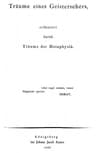
Träume Eines Geistersehers, Erläutert Durch Träume Der Metaphysik
1766

Träume Eines Geistersehers, Erläutert Durch Träume Der Metaphysik
1766
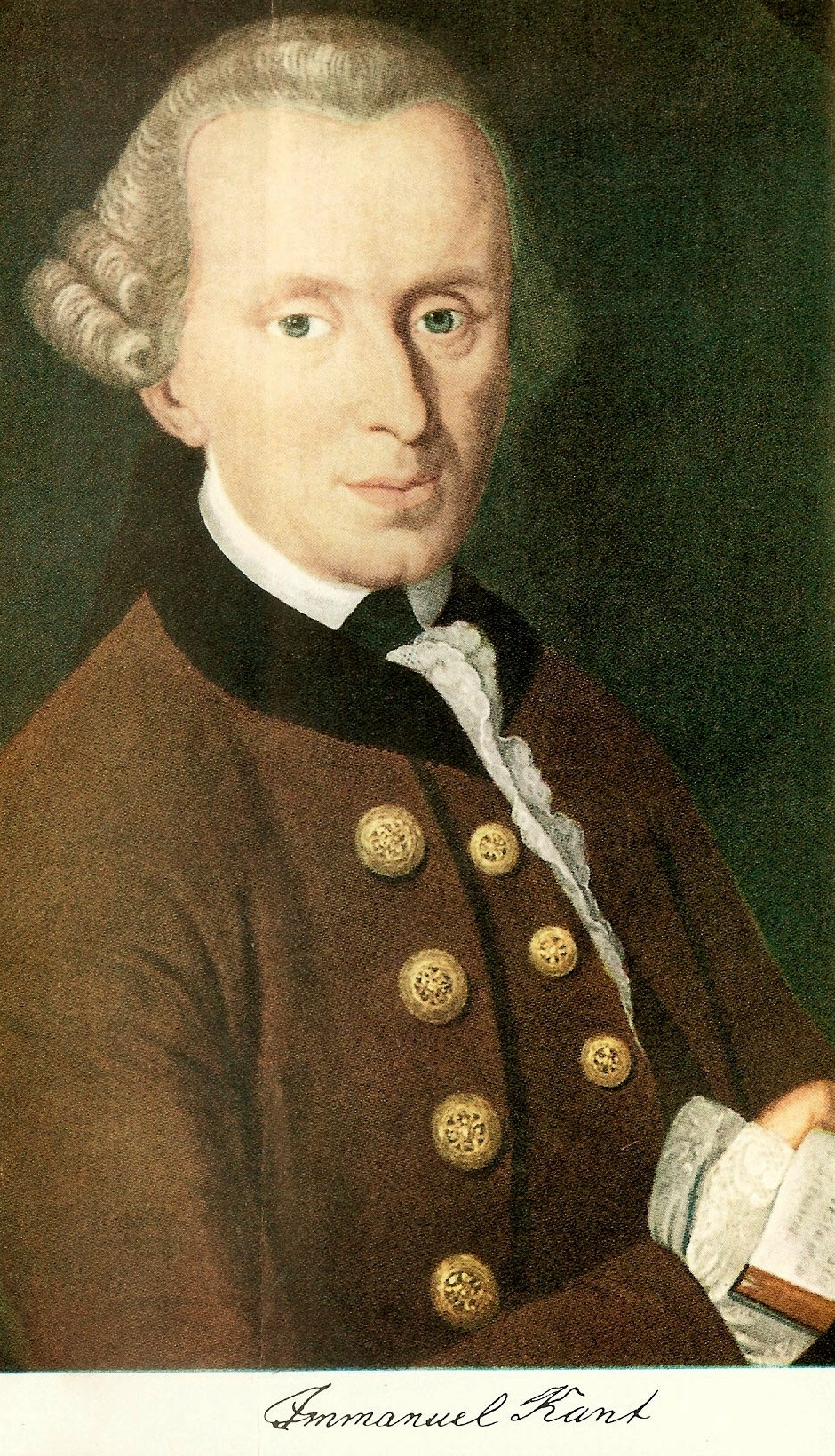
Long before he revolutionized philosophy with his critiques of reason, a young Immanuel Kant turned his incisive mind to one of the era's most fashionable obsessions: ghosts. Written in 1766, this startling little work takes Swedenborgian spiritualism as its target and dismantles it with scalpel precision, yet what emerges is far more than a mere debunking. Kant probes the very limits of what human reason can claim to know about invisible beings, laying groundwork that would later flower into his masterworks on epistemology and metaphysics. The title itself carries gentle irony: if we cannot verify spirits through experience or logic, then talk of them is merely dreaming. What makes this slender volume remarkable is its tone. Rather than the dense, systematic Kant of the critical period, we find a philosopher still experimenting with voice, capable of dry humor and genuine metaphysical puzzlement. He asks: even if spirits existed, how would we distinguish true vision from madness, hallucination from fraud? The questions feel remarkably contemporary, anticipating modern debates about evidence, credentialing, and the boundaries of the knowable. For readers curious about Kant's intellectual origins, or anyone who enjoys watching a brilliant mind dissect a popular delusion, this is essential reading.
Editions
Link to this book
Add a free, dofollow link to Lex on your blog, forum, syllabus, or reading list.

<a href="https://lex-books.com/book/tr-ume-eines-geistersehers-erl-utert-durch-tr-ume-der-metaphysik-346291de-c41b-437c-b8c5-8dd56d6db006"><img src="https://lex-books.com/badges/read-on-lex.svg" alt="Read Träume Eines Geistersehers, Erläutert Durch Träume Der Metaphysik by Immanuel Kant free on Lex" width="160" height="40"></a>[](https://lex-books.com/book/tr-ume-eines-geistersehers-erl-utert-durch-tr-ume-der-metaphysik-346291de-c41b-437c-b8c5-8dd56d6db006)[url=https://lex-books.com/book/tr-ume-eines-geistersehers-erl-utert-durch-tr-ume-der-metaphysik-346291de-c41b-437c-b8c5-8dd56d6db006][img]https://lex-books.com/badges/read-on-lex.svg[/img][/url]Read Träume Eines Geistersehers, Erläutert Durch Träume Der Metaphysik by Immanuel Kant free on Lex: https://lex-books.com/book/tr-ume-eines-geistersehers-erl-utert-durch-tr-ume-der-metaphysik-346291de-c41b-437c-b8c5-8dd56d6db006Cite this book
Reading this edition for a paper or guide? Copy a citation.
Kant, Immanuel. Träume Eines Geistersehers, Erläutert Durch Träume Der Metaphysik. Lex, lex-books.com/book/tr-ume-eines-geistersehers-erl-utert-durch-tr-ume-der-metaphysik-346291de-c41b-437c-b8c5-8dd56d6db006.Kant, I. (1766). Träume Eines Geistersehers, Erläutert Durch Träume Der Metaphysik. Lex. https://lex-books.com/book/tr-ume-eines-geistersehers-erl-utert-durch-tr-ume-der-metaphysik-346291de-c41b-437c-b8c5-8dd56d6db006Kant, Immanuel. Träume Eines Geistersehers, Erläutert Durch Träume Der Metaphysik. Lex. https://lex-books.com/book/tr-ume-eines-geistersehers-erl-utert-durch-tr-ume-der-metaphysik-346291de-c41b-437c-b8c5-8dd56d6db006.