Kritik Der Reinen Vernunft: Zweite Hin Und Wieder Verbesserte Auflage (1787)
Kritik Der Reinen Vernunft: Zweite Hin Und Wieder Verbesserte Auflage (1787)
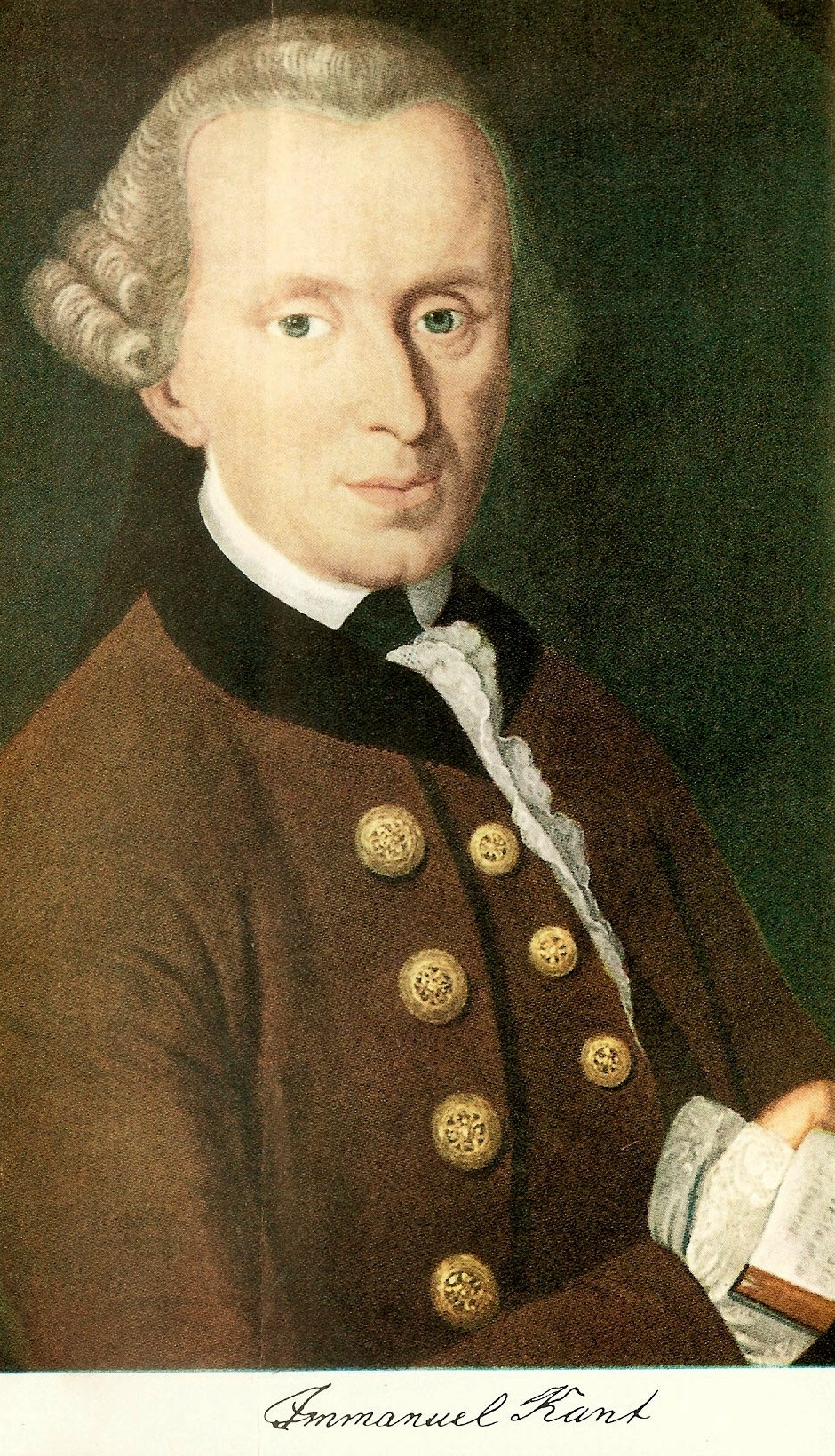
Kant's Critique of Pure Reason asks a question every thinking person has faced: what can we actually know, and what lies beyond the reach of the human mind? Written in 1781 and radically revised in 1787, this book doesn't merely answer that question, it transforms how we think about knowledge itself. Kant argues that we cannot know things as they truly are in themselves; we can only know them as they appear through the filter of our own mental categories. This so-called Copernican Revolution in philosophy puts the knowing subject at the center, arguing that objects must conform to our concepts rather than the reverse. The work systematically dismantles traditional metaphysics while simultaneously opening entirely new possibilities for understanding what philosophy and science can legitimately achieve. For anyone who has ever wondered whether our minds passively reflect the world or actively construct it, this demanding and endlessly influential text remains the essential starting point.
Editions
X-Ray
“I had to deny knowledge in order to make room for faith.””
— Immanuel Kant
“All our knowledge begins with the senses, proceeds then to the understanding, and ends with reason. There is nothing higher than reason.””
— Immanuel Kant
“Whereas the beautiful is limited, the sublime is limitless, so that the mind in the presence of the sublime, attempting to imagine what it cannot, has pain in the failure but pleasure in contemplating the immensity of the attempt””
— Immanuel Kant
“Thoughts without content are empty, intuitions without concepts are blind.””
— Immanuel Kant
“Man must be disciplined, for he is by nature raw and wild..””
— Immanuel Kant
“Skepticism is thus a resting-place for human reason, where it can reflect upon its dogmatic wanderings and make survey of the region in which it finds itself, so that for the future it may be able to choose its path with more certainty. But it is no dwelling-place for permanent settlement. Such can be obtained only through perfect certainty in our knowledge, alike of the objects themselves and of the limits within which all our knowledge of objects is enclosed.””
— Immanuel Kant
“The light dove, in free flight cutting through the air the resistance of which it feels, could get the idea that it could do even better in airless space. Likewise, Plato abandoned the world of the senses because it posed so many hindrances for the understanding, and dared to go beyond it on the wings of the ideas, in the empty space of pure understanding.””
— Immanuel Kant
“it was the duty of philosophy to destroy the illusions which had their origin in misconceptions, whatever darling hopes and valued expectations may be ruined by its explanations.””
— Immanuel Kant
“Two things fill the mind with renewed and increasing awe and reverence the more often and the more steadily that they are meditated on: the starry skies above me and the moral law inside me. I have not to search for them and conjecture them as though they were veiled in darkness or were in the transcendent region beyond my horizon; I see them before me and connect them directly with the consciousness of my existence””
— Immanuel Kant
Link to this book
Add a free, dofollow link to Lex on your blog, forum, syllabus, or reading list.

<a href="https://lex-books.com/book/kritik-der-reinen-vernunft-zweite-hin-und-wieder-verbesserte-auflage-1787-6029c984-11e7-41ea-a86b-f84d569e2a40"><img src="https://lex-books.com/badges/read-on-lex.svg" alt="Read Kritik Der Reinen Vernunft: Zweite Hin Und Wieder Verbesserte Auflage (1787) by Immanuel Kant free on Lex" width="160" height="40"></a>[](https://lex-books.com/book/kritik-der-reinen-vernunft-zweite-hin-und-wieder-verbesserte-auflage-1787-6029c984-11e7-41ea-a86b-f84d569e2a40)[url=https://lex-books.com/book/kritik-der-reinen-vernunft-zweite-hin-und-wieder-verbesserte-auflage-1787-6029c984-11e7-41ea-a86b-f84d569e2a40][img]https://lex-books.com/badges/read-on-lex.svg[/img][/url]Read Kritik Der Reinen Vernunft: Zweite Hin Und Wieder Verbesserte Auflage (1787) by Immanuel Kant free on Lex: https://lex-books.com/book/kritik-der-reinen-vernunft-zweite-hin-und-wieder-verbesserte-auflage-1787-6029c984-11e7-41ea-a86b-f84d569e2a40Cite this book
Reading this edition for a paper or guide? Copy a citation.
Kant, Immanuel. Kritik Der Reinen Vernunft: Zweite Hin Und Wieder Verbesserte Auflage (1787). Lex, lex-books.com/book/kritik-der-reinen-vernunft-zweite-hin-und-wieder-verbesserte-auflage-1787-6029c984-11e7-41ea-a86b-f84d569e2a40.Kant, I. (n.d.). Kritik Der Reinen Vernunft: Zweite Hin Und Wieder Verbesserte Auflage (1787). Lex. https://lex-books.com/book/kritik-der-reinen-vernunft-zweite-hin-und-wieder-verbesserte-auflage-1787-6029c984-11e7-41ea-a86b-f84d569e2a40Kant, Immanuel. Kritik Der Reinen Vernunft: Zweite Hin Und Wieder Verbesserte Auflage (1787). Lex. https://lex-books.com/book/kritik-der-reinen-vernunft-zweite-hin-und-wieder-verbesserte-auflage-1787-6029c984-11e7-41ea-a86b-f84d569e2a40.