Deutschland. Ein Wintermärchen
1844
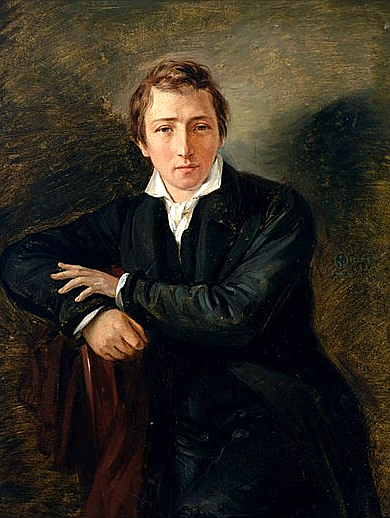
Heinrich Heine returned to Germany in 1843 after thirteen years of Parisian exile, and what he found so horrified him that he called it a winter's tale. This brilliant satirical poem records his journey through a land he barely recognizes: a kingdom of censors and sentries, where students are arrested for reading forbidden books and priests bless the swords that slit the people's throat. Heine's wit cuts like a blade through every page. He mocks the petty princes, the bloated bureaucracy, the false patriotism that substitutes flags for freedom. Yet beneath the satire lies a poet's anguish: Heine loves Germany, but cannot forgive it for betraying its own promise. The result is a work that manages to be funny, furious, and heartbreaking all at once. Written in accessible verse that anyone could read (and that the censors nonetheless tried to suppress), it remains a masterwork of political poetry: a poem that understands how laughter can be a revolutionary act, and how the truest love of country is sometimes indistinguishable from its bitterest critique.
Editions
X-Ray
“Aufmunternd sprach ich: »Ihr lieben Leut', Ihr müßt nicht jammern und flennen; Troja war eine bessere Stadt Und mußte doch verbrennen.””
— Heinrich Heine
“Fatal ist mir das Lumpenpack,Das, um die Herzen zu rühren,Den Patriotismus trägt zur SchauMit allen seinen Geschwüren.””
— Heinrich Heine
“Im Kopfe trage ich Bijouterien,Der Zukunft Krondiamanten,Die Tempelkleinodien des neuen Gotts,Des grossen Unbekannten.””
— Heinrich Heine
Link to this book
Add a free, dofollow link to Lex on your blog, forum, syllabus, or reading list.

<a href="https://lex-books.com/book/deutschland-ein-winterm-rchen-03ce4005-69dd-48c4-9cf4-aa2d310bd75d"><img src="https://lex-books.com/badges/read-on-lex.svg" alt="Read Deutschland. Ein Wintermärchen by Heinrich Heine free on Lex" width="160" height="40"></a>[](https://lex-books.com/book/deutschland-ein-winterm-rchen-03ce4005-69dd-48c4-9cf4-aa2d310bd75d)[url=https://lex-books.com/book/deutschland-ein-winterm-rchen-03ce4005-69dd-48c4-9cf4-aa2d310bd75d][img]https://lex-books.com/badges/read-on-lex.svg[/img][/url]Read Deutschland. Ein Wintermärchen by Heinrich Heine free on Lex: https://lex-books.com/book/deutschland-ein-winterm-rchen-03ce4005-69dd-48c4-9cf4-aa2d310bd75dCite this book
Reading this edition for a paper or guide? Copy a citation.
Heine, Heinrich. Deutschland. Ein Wintermärchen. Lex, lex-books.com/book/deutschland-ein-winterm-rchen-03ce4005-69dd-48c4-9cf4-aa2d310bd75d.Heine, H. (1844). Deutschland. Ein Wintermärchen. Lex. https://lex-books.com/book/deutschland-ein-winterm-rchen-03ce4005-69dd-48c4-9cf4-aa2d310bd75dHeine, Heinrich. Deutschland. Ein Wintermärchen. Lex. https://lex-books.com/book/deutschland-ein-winterm-rchen-03ce4005-69dd-48c4-9cf4-aa2d310bd75d.