Beantwortung Der Frage: Was Ist Aufklärung?
1784
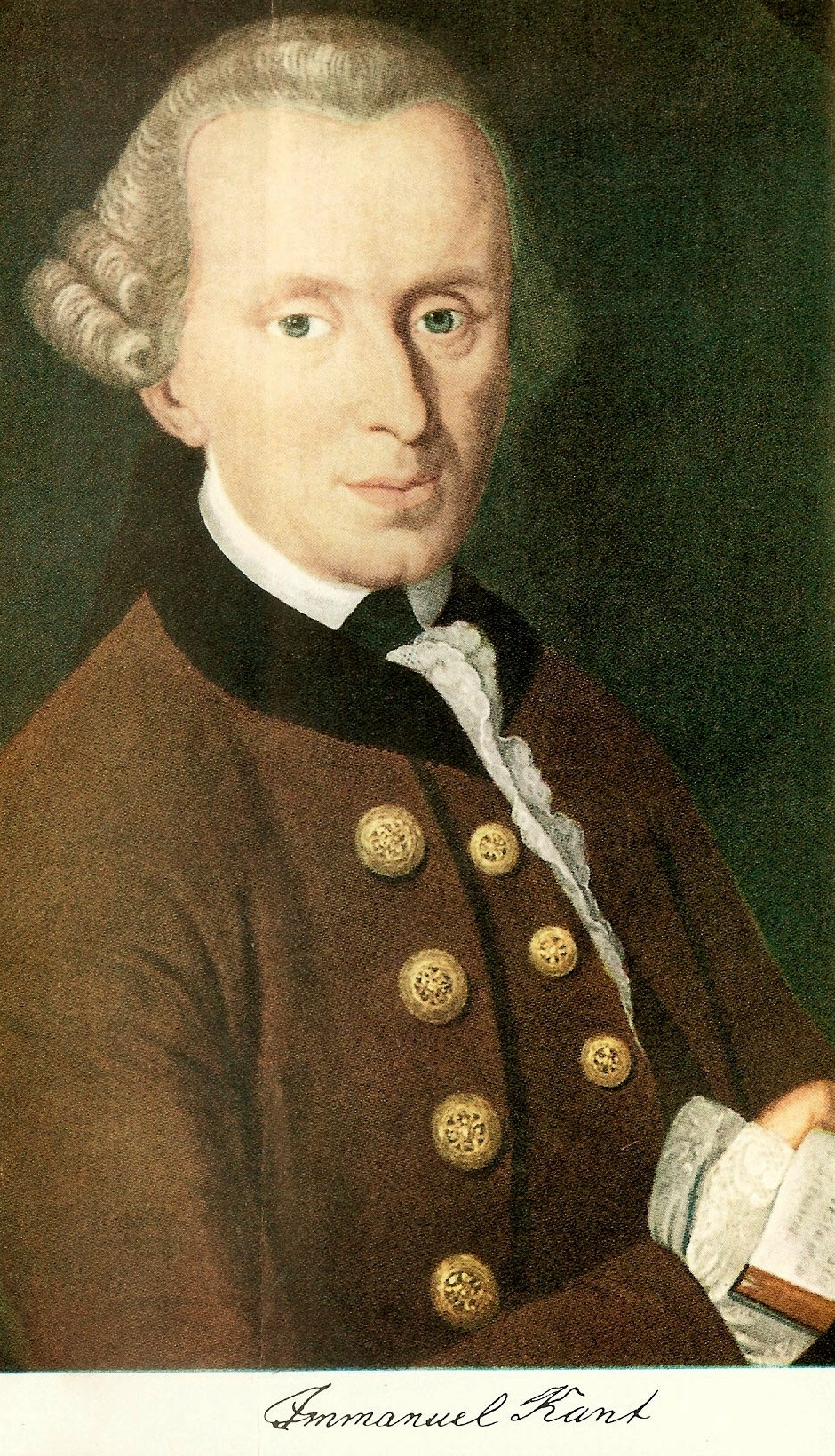
Kant opens with a definition that still reverberates: enlightenment is "man's emergence from his self-imposed immaturity." Written in 1784 as a response to a Berlin journal's question, this brief essay became a foundational text of modern intellectual life. Kant argues that most people stay immature not because they lack capacity, but because they lack the courage to think for themselves. He distinguishes between the private use of reason (which can be constrained by one's social role) and the public use (which must remain free if a society is to advance). The essay is both a philosophical argument and a practical manifesto: without the liberty to question and critique, humanity remains in a comfortable dependency on authority. Kant famously concludes that a society cannot be fully enlightened, but it can be on the cusp - if enough individuals cultivate the audacity to use their own understanding. For readers who have ever felt the tension between received wisdom and honest inquiry, this essay remains a provocation worth confronting.
Editions
X-Ray
“Enlightenment is man's release from his self-incurred tutelage. Tutelage is man's inability to make use of his understanding without direction from another. Self-incurred is this tutelage when its cause lies not in lack of reason but in lack of resolution and courage to use it without direction from another. Sapere aude! 'Have courage to use your own reason!'- that is the motto of enlightenment.””
— Immanuel Kant
“Dare to think!””
— Immanuel Kant
“Laziness and cowardice are the reasons why so great a portion of mankind, after nature has long since discharged them from external direction (naturaliter maiorennes), nevertheless remains under lifelong tutelage, and why it is so easy for others to set themselves up as their guardians. It is so easy not to be of age. If I have a book which understands for me, a pastor who has a conscience for me, a physician who decides my diet, and so forth, I need not trouble myself. I need not think, if I can only pay - others will easily undertake the irksome work for me.That the step to competence is held to be very dangerous by the far greater portion of mankind...””
— Immanuel Kant
“But only he who, himself enlightened, is not afraid of shadows.””
— Immanuel Kant
“But to unite in a permanent religious institution which is not to be subject to doubt before the public even in the lifetime of one man, and thereby to make a period of time fruitless in the progress of mankind toward improvement, thus working to the disadvantage of posterity - that is absolutely forbidden. .””
— Immanuel Kant
“...new prejudices will serve as well as old ones to harness the great unthinking masses.For this enlightenment, however, nothing is required but freedom, and indeed the most harmless among all the things to which this term can properly be applied. It is the freedom to make public use of one's reason at every point. But I hear on all sides, 'Do not argue!' The Officer says: 'Do not argue but drill!' The tax collector: 'Do not argue but pay!' The cleric: 'Do not argue but believe!' Only one prince in the world says, 'Argue as much as you will, and about what you will, but obey!' Everywhere there is restriction on freedom.””
— Immanuel Kant
“An age cannot bind itself and ordain to put the succeeding one into such a condition that it cannot extend its (at best very occasional) knowledge , purify itself of errors, and progress in general enlightenment. That would be a crime against human nature, the proper destination of which lies precisely in this progress and the descendants would be fully justified in rejecting those decrees as having been made in an unwarranted and malicious manner..””
— Immanuel Kant
“As nature has uncovered from under this hard shell the seed for which she most tenderly cares - the propensity and vocation to free thinking - this gradually works back upon the character of the people, who thereby gradually become capable of managing freedom; finally, it affects the principles of government, which finds it to its advantage to treat men, who are now more than machines, in accordance with their dignity.””
— Immanuel Kant
“Enlightenment is man's emergence from his self-imposed immaturity. Immaturity is the inability to use one's understanding without guidance from another.””
— Immanuel Kant
Link to this book
Add a free, dofollow link to Lex on your blog, forum, syllabus, or reading list.

<a href="https://lex-books.com/book/beantwortung-der-frage-was-ist-aufkl-rung-37fe14ce-c5b1-4a42-9026-a2a4512d826a"><img src="https://lex-books.com/badges/read-on-lex.svg" alt="Read Beantwortung Der Frage: Was Ist Aufklärung? by Immanuel Kant free on Lex" width="160" height="40"></a>[](https://lex-books.com/book/beantwortung-der-frage-was-ist-aufkl-rung-37fe14ce-c5b1-4a42-9026-a2a4512d826a)[url=https://lex-books.com/book/beantwortung-der-frage-was-ist-aufkl-rung-37fe14ce-c5b1-4a42-9026-a2a4512d826a][img]https://lex-books.com/badges/read-on-lex.svg[/img][/url]Read Beantwortung Der Frage: Was Ist Aufklärung? by Immanuel Kant free on Lex: https://lex-books.com/book/beantwortung-der-frage-was-ist-aufkl-rung-37fe14ce-c5b1-4a42-9026-a2a4512d826aCite this book
Reading this edition for a paper or guide? Copy a citation.
Kant, Immanuel. Beantwortung Der Frage: Was Ist Aufklärung?. Lex, lex-books.com/book/beantwortung-der-frage-was-ist-aufkl-rung-37fe14ce-c5b1-4a42-9026-a2a4512d826a.Kant, I. (1784). Beantwortung Der Frage: Was Ist Aufklärung?. Lex. https://lex-books.com/book/beantwortung-der-frage-was-ist-aufkl-rung-37fe14ce-c5b1-4a42-9026-a2a4512d826aKant, Immanuel. Beantwortung Der Frage: Was Ist Aufklärung?. Lex. https://lex-books.com/book/beantwortung-der-frage-was-ist-aufkl-rung-37fe14ce-c5b1-4a42-9026-a2a4512d826a.