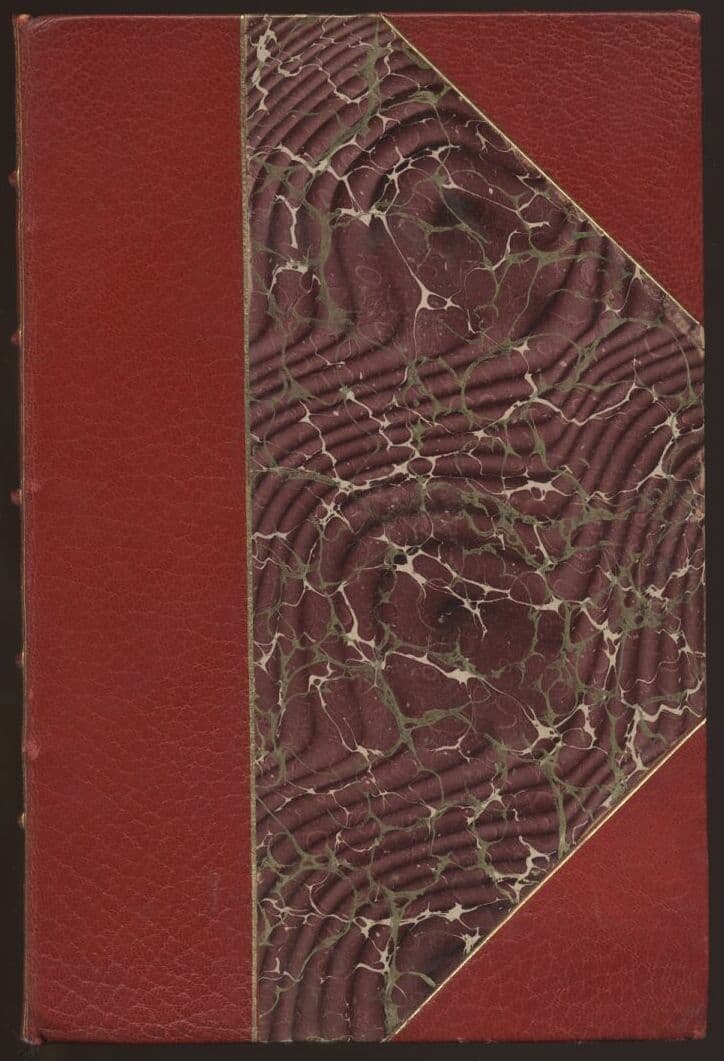
There & Back
A baronet's cold heart steals everything he was too proud to cherish. When Sir Wilton Lestrange's wife dies in childbirth, his disdain for fatherhood triggers the novel's devastating act: the nurse Jane Tuke kidnaps the infant Richard, spiriting him away from a home where he would be unloved. MacDonald traces the rippling consequences of this one cruel moment across years, as Sir Wilton confronts the emptiness his own hardness has wrought. The story moves through grief, regret, and the tangled obligations of family against the rigid expectations of Victorian society. At its heart is a question that still haunts: can a man who failed his family ever find his way back to it? MacDonald's psychological depth and moral seriousness elevate this beyond simple domestic drama into something like a 19th-century study of the damage we do to those closest to us, and the terrifying possibility of making amends.
Editions
X-Ray
“What is called a good conscience is often but a dull one that gives no trouble when it ought to bark loudest;””
— George MacDonald
“No one, however strong he may feel his obligations, will ever be manenough to fulfill them except that he be a Christian-that is,one who,like Christ, cares first for the will of the Father.””
— George MacDonald
“But this part of my dream, the most lovely of all, I can find no words to describe; nor can I even recall to my own mind the half of what I felt. I only know that something was given me then, some spiritual apprehension, to be again withdrawn, but to be given to us all, I believe, some day, out of his infinite love, and withdrawn no more. Every heart that had ever ached, or longed, or wandered, I knew was there, folded warm and soft, safe and glad. And it seemed in my dream that to know this was the crown of all my bliss”
— George MacDonald
“When I am out of sight, he may think of me again and want to see me”
— George MacDonald
“She began to learn that nothing is dead, that there cannot be a physical abstraction, that nothing exists for the sake of the laws of its phenomena.””
— George MacDonald
“Things that we are right in thinking bad, must be bad to God as well as to us; but may there not be things so far above us, that we cannot take them in, and they seem bad because they are so far above us in goodness that we see them partially and untruly? There must be room in his wisdom for us to mistake! He would try to trust! He would say, "If thou art my father, be my father, and comfort thy child. Perhaps thou hast some way! Perhaps things are not as thou wouldst have them, and thou art doing what can be done to set them right! If thou art indeed true to thy own, it were hard not to be believed”
— George MacDonald
“He rebelled against the highest as if the highest were the lowest”
— George MacDonald
“heaven is high and deep, and its lower air is music; in the upper regions the music may pass, who knows, merging unlost, into something endlessly better!””
— George MacDonald
“It is always the way. Until a man knows God, he seeks to obey him by doing things he neither commands nor cares about;””
— George MacDonald
Link to this book
Add a free, dofollow link to Lex on your blog, forum, syllabus, or reading list.

<a href="https://lex-books.com/book/there-back-4daf0a2a-83e1-45d6-9607-027bf514bb79"><img src="https://lex-books.com/badges/read-on-lex.svg" alt="Read There & Back by George MacDonald free on Lex" width="160" height="40"></a>[](https://lex-books.com/book/there-back-4daf0a2a-83e1-45d6-9607-027bf514bb79)[url=https://lex-books.com/book/there-back-4daf0a2a-83e1-45d6-9607-027bf514bb79][img]https://lex-books.com/badges/read-on-lex.svg[/img][/url]Read There & Back by George MacDonald free on Lex: https://lex-books.com/book/there-back-4daf0a2a-83e1-45d6-9607-027bf514bb79Cite this book
Reading this edition for a paper or guide? Copy a citation.
MacDonald, George. There & Back. Lex, lex-books.com/book/there-back-4daf0a2a-83e1-45d6-9607-027bf514bb79.MacDonald, G. (n.d.). There & Back. Lex. https://lex-books.com/book/there-back-4daf0a2a-83e1-45d6-9607-027bf514bb79MacDonald, George. There & Back. Lex. https://lex-books.com/book/there-back-4daf0a2a-83e1-45d6-9607-027bf514bb79.