The Hope of the Gospel
1892
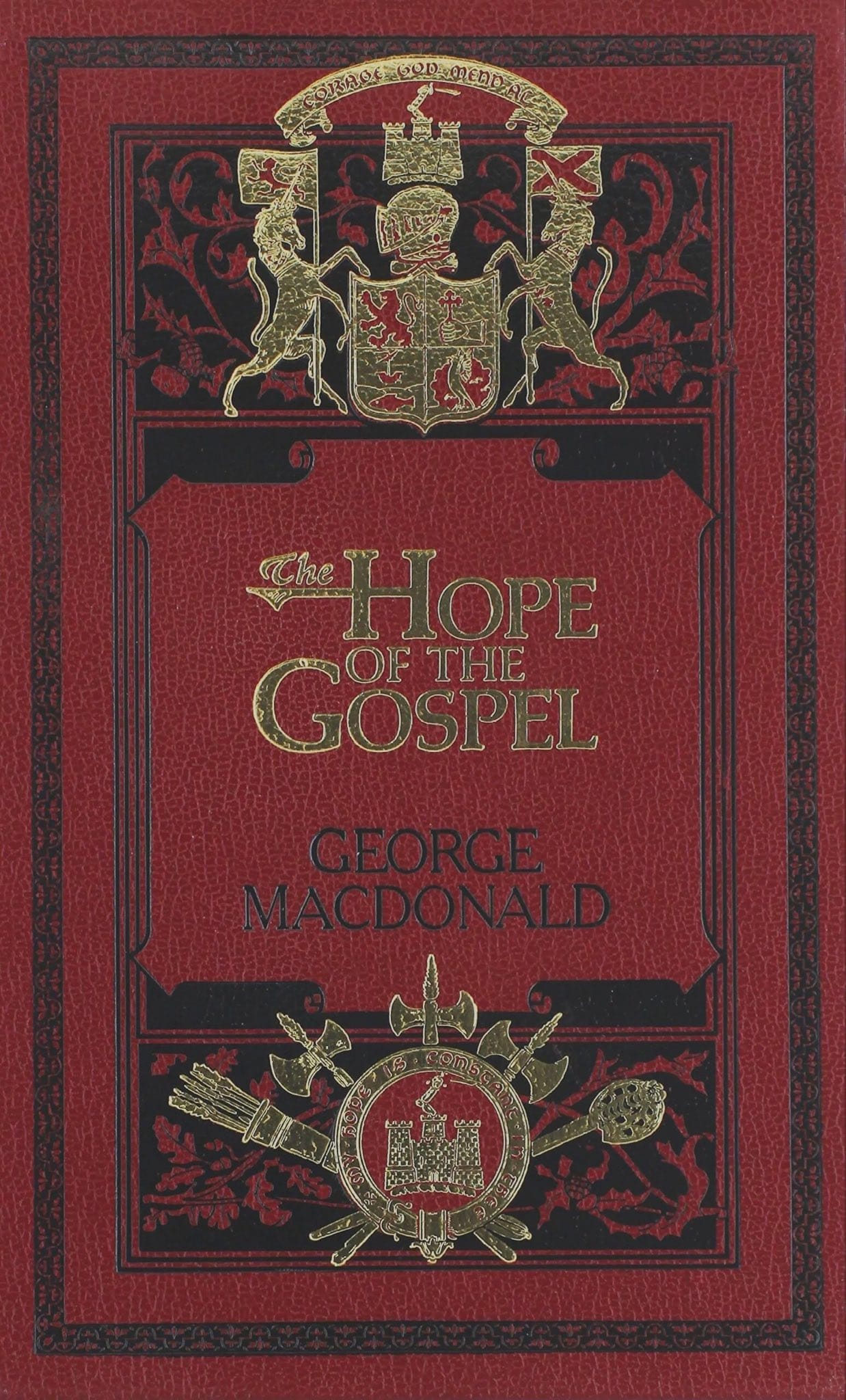
The Hope of the Gospel, written by George MacDonald and first published in 1892, is a theological exposition that addresses sin, repentance, and redemption. MacDonald emphasizes the importance of a personal relationship with God and the transformative power of faith in Christ, arguing that true salvation requires an active transformation of one's being. The work critiques the human struggle with inner discomfort and the pursuit of relief through external means, ultimately revealing that genuine fulfillment comes from understanding and aligning with God's will.
Editions

X-Ray
“It is vain to think that any weariness, however caused, any burden, however slight, may be got rid of otherwise than by bowing the neck to the yoke of the Father's will. There can be no other rest for heart and soul than He has created. From every burden, from every anxiety, from all dread of shame or loss, even loss of love itself, that yoke will set us free.””
— George MacDonald
“As the love of him who is love transcends ours as the heavens are higher than the earth, so must he desire in his child infinitely more than the most jealous love of the best mother can desire in hers. He would have him rid of all discontent, all fear, all grudging, all bitterness in word or thought, all gauging and measuring of his own with a different rod from that he would apply to another's. He will have no curling of the lip; no indifference in him to the man whose service in any form he uses; no desire to excel another, no contentment at gaining by his loss. He will not have him receive the smallest service without gratitude; would not hear from him a tone to jar the heart of another, a word to make it ache, be the ache ever so transient.””
— George MacDonald
“Foolish is the man, and there are many such men, who would rid himself or his fellows of discomfort by setting the world right, by waging war on the evils around him, while he neglects that integral part of the world where lies his business, his first business, namely, his own character and conduct.””
— George MacDonald
“A candle is not lighted for itself; neither is a man. The light that serves self only, is no true light; its one virtue is that it will soon go out.””
— George MacDonald
“There is no way of making three men right but by making right each one of the three; but a cure in one man who repents and turns, is a beginning of the cure of the whole human race.””
— George MacDonald
“The man who takes no count of what is fair, friendly, pure, unselfish, lovely, gracious,”
— George MacDonald
“Light unshared is darkness. To be light indeed, it must shine out. It is of the very essence of light, that it is for others.””
— George MacDonald
“The main practical difficulty, with some at least of the Peace-makers, is how to carry themselves toward the undoers of peace, the disuniters of souls. Perhaps the most potent of these are not those powers of the church visible who care for canon and dogma more than for truth, and for the church more than for Christ; who take uniformity for unity; who strain at a gnat and swallow a camel, nor knowing what spirit they are of; such men, I say, are perhaps neither the most active nor the most potent force working for the disintegration of the body of Christ.I imagine also that neither are the party-liars of politics the worst foes to divine unity, ungenerous, and often knowingly falseas they are t their opponents, to whom they seem to have no desire to be honest and fair.I think rather, they must be the babbling lairs of the social circle, and the faithless brothers and unloving sisters of disunited human families.But why inquire?Every self-assertion, every form of self-seeking however small or poor, world-noble or grotesque, is a separating and scattering force. And these forces are multitudinous, these points of radial repulsion are innumerable, because of the prevailing passion of mean souls to seem great, and feel important.…the partisan of self will sometimes gnaw asunder the most precious of bonds, poisen whole broods of infant loves.Such real schismatics go about, where not inventing evil, yet rejoicing in iniquity; mishearing; misrepresenting; paralyzing affection; separating hearts.””
— George MacDonald
“In the Perfect, would familiarity ever destroy wonder at things essentially wonderful because essentially divine? To cease to wonder is to fall plumb-down from the childlike to the commonplace - the most undivine of all the moods intellectual. Our nature can never be at home among things that are not wonderful to us.””
— George MacDonald
Link to this book
Add a free, dofollow link to Lex on your blog, forum, syllabus, or reading list.

<a href="https://lex-books.com/book/the-hope-of-the-gospel-ebda3bf2-23ce-44c5-83b3-8c7a793f58ff"><img src="https://lex-books.com/badges/read-on-lex.svg" alt="Read The Hope of the Gospel by George MacDonald free on Lex" width="160" height="40"></a>[](https://lex-books.com/book/the-hope-of-the-gospel-ebda3bf2-23ce-44c5-83b3-8c7a793f58ff)[url=https://lex-books.com/book/the-hope-of-the-gospel-ebda3bf2-23ce-44c5-83b3-8c7a793f58ff][img]https://lex-books.com/badges/read-on-lex.svg[/img][/url]Read The Hope of the Gospel by George MacDonald free on Lex: https://lex-books.com/book/the-hope-of-the-gospel-ebda3bf2-23ce-44c5-83b3-8c7a793f58ffCite this book
Reading this edition for a paper or guide? Copy a citation.
MacDonald, George. The Hope of the Gospel. Lex, lex-books.com/book/the-hope-of-the-gospel-ebda3bf2-23ce-44c5-83b3-8c7a793f58ff.MacDonald, G. (1892). The Hope of the Gospel. Lex. https://lex-books.com/book/the-hope-of-the-gospel-ebda3bf2-23ce-44c5-83b3-8c7a793f58ffMacDonald, George. The Hope of the Gospel. Lex. https://lex-books.com/book/the-hope-of-the-gospel-ebda3bf2-23ce-44c5-83b3-8c7a793f58ff.