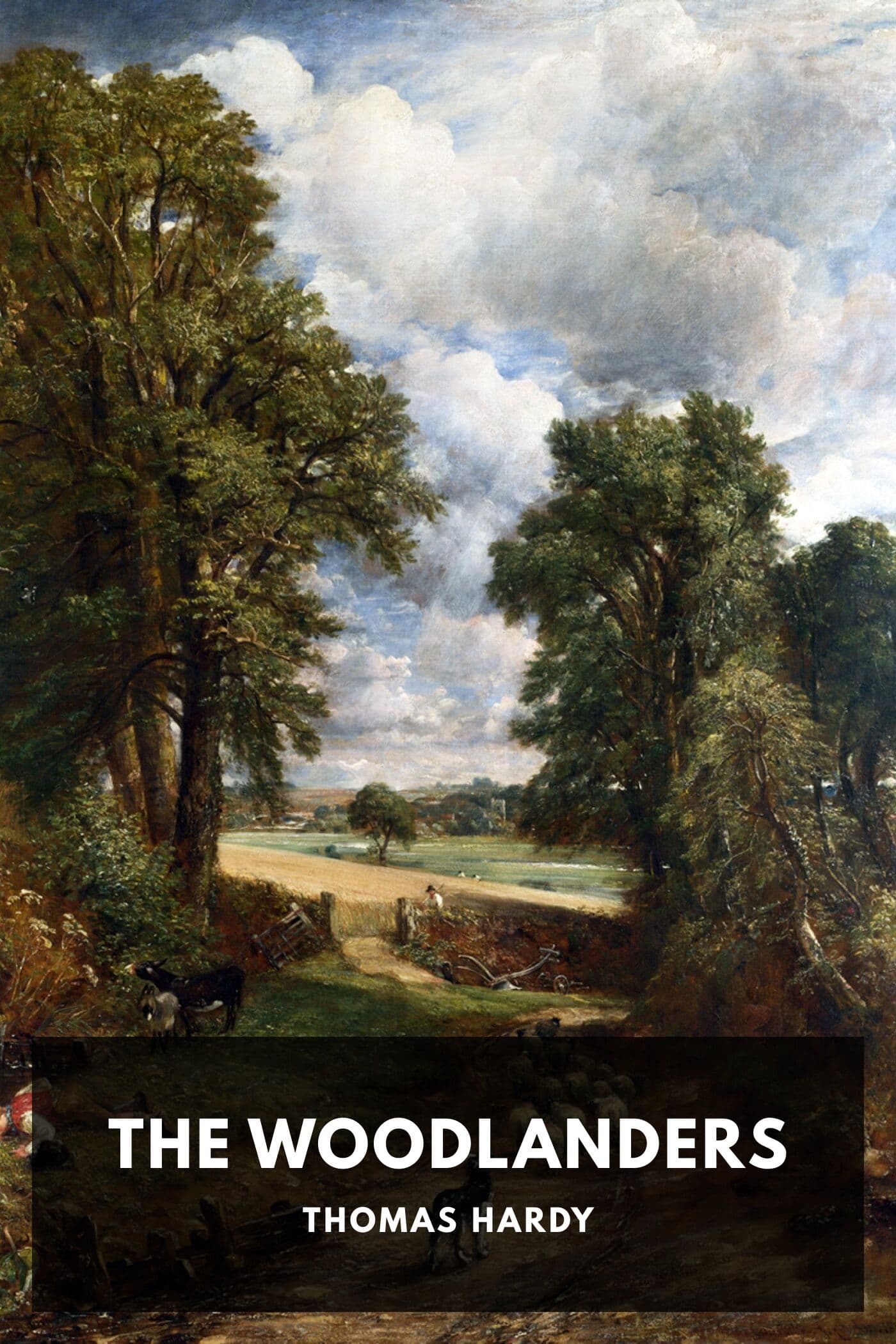
The Woodlanders
1887
The Woodlanders is a novel by Thomas Hardy, first published in 1887, set in the rural English village of Little Hintock. The story follows Grace Melbury, who, after returning from school, finds herself torn between her childhood suitor, Giles Winterborne, and the sophisticated Dr. Edred Fitzpiers, leading to themes of betrayal and social ambition. Hardy explores the complexities of class dynamics and the impact of external influences on a secluded community, while also highlighting the struggles of women seeking agency in a patriarchal society. This work is part of Hardy's Wessex novels, reflecting his deep connection to the English countryside.
Editions

X-Ray
“He Looked and smelt like Autumn's very brother, his face being sunburnt to wheat-colour, his eyes blue as corn-flowers, his sleeves and leggings dyed with fruit-stains, his hands clammy with the sweet juice of apples, his hat sprinkled with pips, and everywhere about him the sweet atmosphere of cider which at its first return each season has such an indescribable fascination for those who have been born and bred among the orchards.””
— Thomas Hardy
“Such miserable creatures of circumstance are we all!””
— Thomas Hardy
“There was now a distinct manifestation of morning in the air, and presently the bleared white visage of a sunless winter day emerged like a dead-born child.””
— Thomas Hardy
“...Nameless, unknown to me as you were, I couldn't forget your voice!''For how long?''O - ever so long. Days and days.''Days and days! Only days and days? O, the heart of a man! Days and days!''But, my dear madam, I had not known you more than a day or two. It was not a full-blown love - it was the merest bud - red, fresh, vivid, but small. It was a colossal passion in embryo. It never returned.””
— Thomas Hardy
“For the love of men like Fitzpiers is unquestionably of such quality as to bear division and transference. He had indeed once declared, though not to her, that on one occasion he had noticed himself to be possessed by five distinct infatuations at the same time. If this were true, his differed from the highest affection as the lower orders of the animal world differ from advanced organisms, partition causing not death but a multiplied existence.””
— Thomas Hardy
“She looked towards the western sky, which was now aglow like some vast foundry wherein new worlds were cast””
— Thomas Hardy
“Her face had the usual fulness of expression which is developed by a life of solitude. Where the eyes of a multitude continuously beat like waves upon a countenance they seem to wear away its mobile power ; but in the still water of privacy every feeling and sentiment unfolds in visible luxuriance, to be interpreted as readily as a printed word by an intruder. In years she was no more than nineteen or twenty, but the necessity of taking thought at a too early period of life had forced the provisional curves of her childhood's face to a premature finality.””
— Thomas Hardy
“The physiognomy of a deserted highway expresses solitude to a degree that is not reached by mere dales or downs, and bespeaks a tomb-like stillness more emphatic than that of glades and pools. The contrast of what is with what might be, probably accounts for this.””
— Thomas Hardy
“It often happens that in situations of unrestraint, where there is no thought of the eye of criticism, real feeling glides into a mode of manifestation not easily distinguishable from rodomontade. A veneer of affectation overlies a bulk of truth, with the evil consequence, if perceived, that the substance is estimated by the superficies, and the whole rejected.””
— Thomas Hardy
Link to this book
Add a free, dofollow link to Lex on your blog, forum, syllabus, or reading list.

<a href="https://lex-books.com/book/the-woodlanders-0740fd33-de5a-41b4-b6aa-e111dfb30583"><img src="https://lex-books.com/badges/read-on-lex.svg" alt="Read The Woodlanders by Thomas Hardy free on Lex" width="160" height="40"></a>[](https://lex-books.com/book/the-woodlanders-0740fd33-de5a-41b4-b6aa-e111dfb30583)[url=https://lex-books.com/book/the-woodlanders-0740fd33-de5a-41b4-b6aa-e111dfb30583][img]https://lex-books.com/badges/read-on-lex.svg[/img][/url]Read The Woodlanders by Thomas Hardy free on Lex: https://lex-books.com/book/the-woodlanders-0740fd33-de5a-41b4-b6aa-e111dfb30583Cite this book
Reading this edition for a paper or guide? Copy a citation.
Hardy, Thomas. The Woodlanders. Lex, lex-books.com/book/the-woodlanders-0740fd33-de5a-41b4-b6aa-e111dfb30583.Hardy, T. (1887). The Woodlanders. Lex. https://lex-books.com/book/the-woodlanders-0740fd33-de5a-41b4-b6aa-e111dfb30583Hardy, Thomas. The Woodlanders. Lex. https://lex-books.com/book/the-woodlanders-0740fd33-de5a-41b4-b6aa-e111dfb30583.