The Social Contract & Discourses
1712
The Social Contract & Discourses
1712
Translated by G. D. H. (George Douglas Howard) Cole
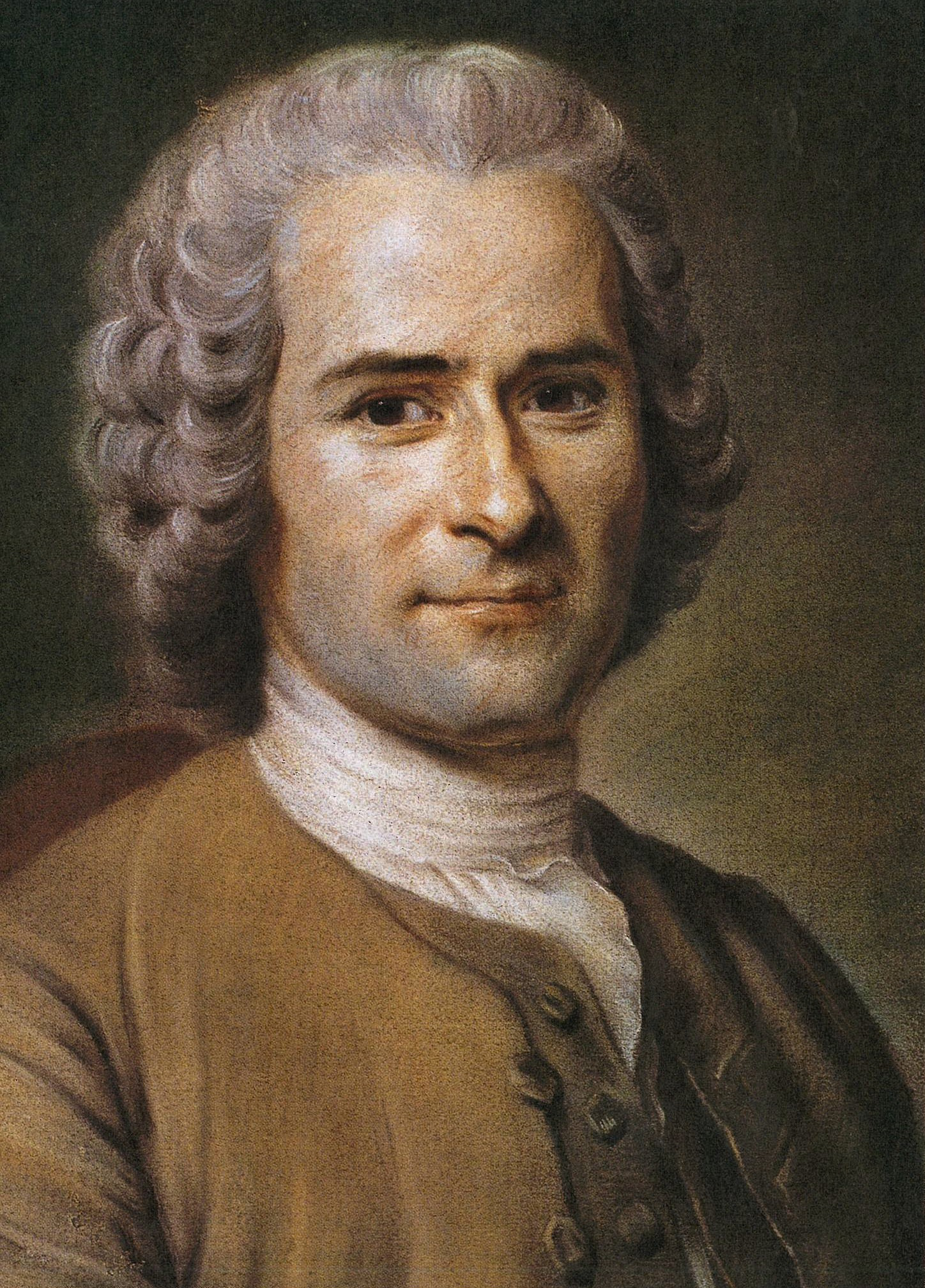
Man is born free; and everywhere he is in chains. With this incendiary opening line, Rousseau detonates the philosophical foundations of political authority in 1762. The Social Contract asks a question that still haunts us: what gives any government the right to rule? Rousseau's answer is radical. Rejecting the notion that anyone possesses natural authority over others, he argues that legitimate power must flow from a pact among citizens themselves, a collective agreement to form a society governed by what he calls the general will. From this premise, he develops a vision of sovereignty, freedom, and civic obligation that has inspired revolutions and provoked furious debate for over two centuries. To some readers, Rousseau offers a blueprint for democratic self-governance; to others, his conception of the general will contains the seeds of modern totalitarianism. What no one can deny is that his interrogation of political obligation, individual liberty, and the terms of human association remains unavoidable. Anyone who has ever wondered why they should obey a government, or what would make obedience just, must grapple with this book.
Editions
X-Ray
“Every man having been born free and master of himself, no one else may under any pretext whatever subject him without his consent. To assert that the son of a slave is born a slave is to assert that he is not born a man.””
— Jean-Jacques Rousseau
“...in respect of riches, no citizen shall ever be wealthy enough to buy another, and none poor enough to be forced to sell himself.””
— Jean-Jacques Rousseau
“In truth, laws are always useful to those with possessions and harmful to those who have nothing; from which it follows that the social state is advantageous to men only when all possess something and none has too much.””
— Jean-Jacques Rousseau
“As soon as any man says of the affairs of the State "What does it matter to me?" the State may be given up for lost.””
— Jean-Jacques Rousseau
“أُفضِّل الحرية مع الخطر على السلم مع العبودية””
— Jean-Jacques Rousseau
“In any case, frequent punishments are a sign of weakness or slackness in the government. There is no man so bad that he cannot be made good for something. No man should be put to death, even as an example, if he can be left to live without danger to society.””
— Jean-Jacques Rousseau
“It is easier to conquer than to administer. With enough leverage, a finger could overturn the world; but to support the world, one must have the shoulders of Hercules.””
— Jean-Jacques Rousseau
“The word ‘slavery’ and ‘right’ are contradictory, they cancel each other out. Whether as between one man and another, or between one man and a whole people, it would always be absurd to say: "I hereby make a covenant with you which is wholly at your expense and wholly to my advantage; I will respect it so long as I please and you shall respect it as long as I wish.””
— Jean-Jacques Rousseau
“In a well governed state, there are few punishments, not because there are many pardons, but because criminals are rare; it is when a state is in decay that the multitude of crimes is a guarantee of impunity.””
— Jean-Jacques Rousseau
Link to this book
Add a free, dofollow link to Lex on your blog, forum, syllabus, or reading list.

<a href="https://lex-books.com/book/the-social-contract-discourses-e1683eae-d6cf-4f71-b3b5-bdcd251c4022"><img src="https://lex-books.com/badges/read-on-lex.svg" alt="Read The Social Contract & Discourses by Jean-Jacques Rousseau free on Lex" width="160" height="40"></a>[](https://lex-books.com/book/the-social-contract-discourses-e1683eae-d6cf-4f71-b3b5-bdcd251c4022)[url=https://lex-books.com/book/the-social-contract-discourses-e1683eae-d6cf-4f71-b3b5-bdcd251c4022][img]https://lex-books.com/badges/read-on-lex.svg[/img][/url]Read The Social Contract & Discourses by Jean-Jacques Rousseau free on Lex: https://lex-books.com/book/the-social-contract-discourses-e1683eae-d6cf-4f71-b3b5-bdcd251c4022Cite this book
Reading this edition for a paper or guide? Copy a citation.
Rousseau, Jean-Jacques. The Social Contract & Discourses. Lex, lex-books.com/book/the-social-contract-discourses-e1683eae-d6cf-4f71-b3b5-bdcd251c4022.Rousseau, J. (1712). The Social Contract & Discourses. Lex. https://lex-books.com/book/the-social-contract-discourses-e1683eae-d6cf-4f71-b3b5-bdcd251c4022Rousseau, Jean-Jacques. The Social Contract & Discourses. Lex. https://lex-books.com/book/the-social-contract-discourses-e1683eae-d6cf-4f71-b3b5-bdcd251c4022.