A Discourse upon the Origin and the Foundation of the Inequality Among Mankind
1755
A Discourse upon the Origin and the Foundation of the Inequality Among Mankind
1755
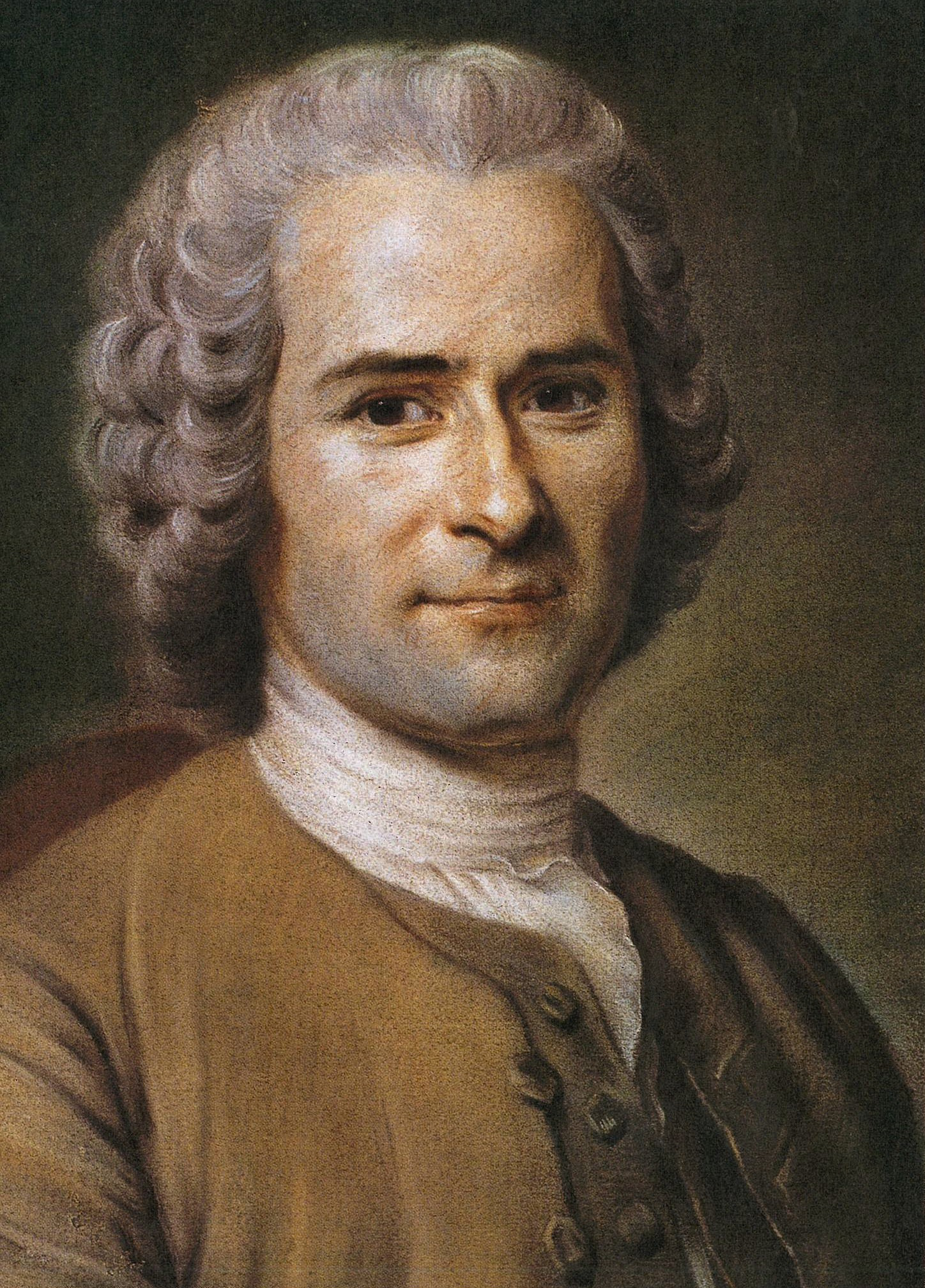
In 1755, a Swiss thinker posed a question that would shatter Enlightenment optimism: what if civilization itself is the disease? Rousseau's Discourse on the Origin of Inequality remains one of philosophy's most audacious attacks on the idea that progress is inevitable and good. He distinguishes between natural inequality (differences in age, health, strength) and moral or political inequality (the privileges some hold over others), then argues that the latter is not divinely ordained or rooted in nature, but built through society itself. Drawing on what he calls "hypothetical history," Rousseau imagines humanity in a state of nature solitary, free, and compassionately amoral before the advent of property, language, and social bonds. What follows is civilization's tragedy: the rise of dependency, comparison, vanity, and the concentration of power in the hands of few. Rousseau prefigures Darwin by millennia in seeing humanity as shaped by its environment, and he offers no easy solutions, only the bracing claim that we are all, in some essential way, victims of our own collective making. This is essential reading for anyone who wonders why societies organize themselves as they do and whether they could be otherwise.
Editions
X-Ray
“The first man who, having enclosed a piece of ground, bethought himself of saying , and found people simple enough to believe him, was the real founder of civil society. From how many crimes, wars and murders, from how many horrors and misfortunes might not any one have saved mankind, by pulling up the stakes, or filling up the ditch, and crying to his fellows, "Beware of listening to this impostor; you are undone if you once forget that the fruits of the earth belong to us all, and the earth itself to nobody.””
— Jean-Jacques Rousseau
“The extreme inequality of our ways of life, the excess of idleness among some and the excess of toil among others, the ease of stimulating and gratifying our appetites and our senses, the over-elaborate foods of the rich, which inflame and overwhelm them with indigestion, the bad food of the poor, which they often go withotu altogether, so hat they over-eat greedily when they have the opportunity; those late nights, excesses of all kinds, immoderate transports of every passion, fatigue, exhaustion of mind, the innumerable sorrows and anxieties that people in all classes suffer, and by which the human soul is constantly tormented: these are the fatal proofs that most of our ills are of our own making, and that we might have avoided nearly all of them if only we had adhered to the simple, unchanging and solitary way of life that nature ordained for us. ””
— Jean-Jacques Rousseau
“Peoples once accustomed to masters are not in a condition to do without them. If they attempt to shake off the yoke, they still more estrange themselves from freedom, as, by mistaking for it an unbridled license to which it is diametrically opposed, they nearly always manage, by their revolutions, to hand themselves over to seducers, who only make their chains heavier than before.””
— Jean-Jacques Rousseau
“It is reason which breeds pride and reflection which fortifies it; reason which turns man inward into himself; reason which separates him from everything which troubles or affects him. It is philosophy which isolates a man, and prompts him to say in secret at the sight of another suffering: 'Perish if you will; I am safe.' No longer can anything but dangers to society in general disturb the tranquil sleep of the philosopher or drag him from his bed. A fellow-man may with impunity be murdered under his window, for the philosopher has only to put his hands over his ears and argue a little with himself to prevent nature, which rebels inside him, from making him identify himself with the victim of the murder. The savage man entirely lacks this admirable talent, and for want of wisdom and reason he always responds recklessly to the first promptings of human feeling.””
— Jean-Jacques Rousseau
“Such is the pure movement of nature prior to all reflection. Such is the force of natural pity, which the most depraved mores still have difficulty destroying, since everyday one sees in our theaters someone affected and weeping at the ills of some unfortunate person, and who, were he in the tyrant's place, would intensify the torments of his enemy still more; [like the bloodthirsty Sulla, so sensitive to ills he had not caused, or like Alexander of Pherae, who did not dare attend the performance of any tragedy, for fear of being seen weeping with Andromache and Priam, and yet who listened impassively to the cries of so many citizens who were killed everyday on his orders. Nature, in giving men tears, bears witness that she gave the human race the softest hearts.] Mandeville has a clear awareness that, with all their mores, men would never have been anything but monsters, if nature had not given them pity to aid their reason; but he has not seen that from this quality alone flow all the social virtues that he wants to deny in men. In fact, what are generosity, mercy, and humanity, if not pity applied to the weak, to the guilty, or to the human species in general. Benevolence and even friendship are, properly understood, the products of a constant pity fixed on a particular object; for is desiring that someone not suffer anything but desiring that he be happy?””
— Jean-Jacques Rousseau
“The first sentiment of man was that of his existence, his first care that of preserving it.””
— Jean-Jacques Rousseau
“I can discover nothing in any mere animal but an ingenious machine, to which nature has given senses to wind itself up, and guard, to a certain degree, against everything that might destroy or disorder it.””
— Jean-Jacques Rousseau
“Social man lives always outside himself; he knows how to live only in the opinion of others, it is, so to speak, from their judgement alone that he derives the sense of his own existence.””
— Jean-Jacques Rousseau
“In fact, the real source of all those differences, is that the savage lives within himself, whereas the citizen, constantly beside himself, knows only how to live in the opinion of others; insomuch that it is, if I may say so, merely from their judgment that he derives the consciousness of his own existence.””
— Jean-Jacques Rousseau
Link to this book
Add a free, dofollow link to Lex on your blog, forum, syllabus, or reading list.

<a href="https://lex-books.com/book/a-discourse-upon-the-origin-and-the-foundation-of-the-inequality-among-mankind-351eec75-c454-4da3-b9e9-c7d91cb63a95"><img src="https://lex-books.com/badges/read-on-lex.svg" alt="Read A Discourse upon the Origin and the Foundation of the Inequality Among Mankind by Jean-Jacques Rousseau free on Lex" width="160" height="40"></a>[](https://lex-books.com/book/a-discourse-upon-the-origin-and-the-foundation-of-the-inequality-among-mankind-351eec75-c454-4da3-b9e9-c7d91cb63a95)[url=https://lex-books.com/book/a-discourse-upon-the-origin-and-the-foundation-of-the-inequality-among-mankind-351eec75-c454-4da3-b9e9-c7d91cb63a95][img]https://lex-books.com/badges/read-on-lex.svg[/img][/url]Read A Discourse upon the Origin and the Foundation of the Inequality Among Mankind by Jean-Jacques Rousseau free on Lex: https://lex-books.com/book/a-discourse-upon-the-origin-and-the-foundation-of-the-inequality-among-mankind-351eec75-c454-4da3-b9e9-c7d91cb63a95Cite this book
Reading this edition for a paper or guide? Copy a citation.
Rousseau, Jean-Jacques. A Discourse upon the Origin and the Foundation of the Inequality Among Mankind. Lex, lex-books.com/book/a-discourse-upon-the-origin-and-the-foundation-of-the-inequality-among-mankind-351eec75-c454-4da3-b9e9-c7d91cb63a95.Rousseau, J. (1755). A Discourse upon the Origin and the Foundation of the Inequality Among Mankind. Lex. https://lex-books.com/book/a-discourse-upon-the-origin-and-the-foundation-of-the-inequality-among-mankind-351eec75-c454-4da3-b9e9-c7d91cb63a95Rousseau, Jean-Jacques. A Discourse upon the Origin and the Foundation of the Inequality Among Mankind. Lex. https://lex-books.com/book/a-discourse-upon-the-origin-and-the-foundation-of-the-inequality-among-mankind-351eec75-c454-4da3-b9e9-c7d91cb63a95.