The Rise of Silas Lapham
1885
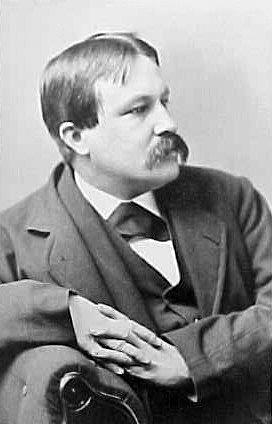
Silas Lapham made his fortune in paint. Mineral paint, to be precise, dug from Vermont earth and refined into something valuable. Now he's moved his family to Boston, rented a house on Beacon Street, and believes that money has finally bought him entry into Brahmin society. It hasn't. The Coreys know exactly what he is: a vulgar man with fresh cash and no manners. What follows is William Dean Howells' merciless, often very funny dissection of American ambition and the lie of meritocracy. Silas wants respect more than anything, but respect, as he learns, is the one thing wealth cannot purchase. The novel's real power lies in its complicated sympathy for this struggling man while simultaneously exposing the cruelty of a social order that rewards old money and pretends merit matters. Howells, the father of American realism, refuses the sentimental happy ending; instead, he gives us something harder and more honest: a man who loses his fortune but keeps his integrity, and a society that remains exactly as closed as it always was.
Editions

X-Ray
“Each one of us must suffer long to himself before he can learn that he is but one in a great community of wretchedness which has been pitilessly repeating itself from the foundation of the world.””
— William Dean Howells
“Those novels with old-fashioned heroes and heroines in them -- are ruinous!””
— William Dean Howells
“All civilization comes through literature now, especially in our country. A Greek got his civilization by talking and looking, and in some measure a Parisian may still do it. But we, who live remote from history and monuments, we must read or we must barbarise.””
— William Dean Howells
“Our theory of disaster, of sorrow, of affliction, borrowed from the poets and novelist, is that it is incessant; but every passage in our own lives and in the lives of others, so far as we have witnessed them, teaches us that this is false. The house of mourning is decorously darkened to the world, but within itself it is also the house of laughing. Burst of gaiety, as heartfelt as its grief, relieve the gloom, and the stricken survivors have their jest together, in which the thought of the dead is tenderly involved, and a fond sense, not crazier than many others, of sympathy and enjoyment beyond the silence, justifies the sunnier mood before sorrow rushes back, deploring and despairing, and make it all up again with the conventional fitness of things.””
— William Dean Howells
“If he was not commonplace, it was through nothing remarkable in his mind, which was simply clear and practical, but through some combination of qualities of the heart that made men trust him, and women call him sweet--a word of theirs which conveys otherwise indefinable excellences.””
— William Dean Howells
“The novelist might be greater possible help to us if they painted life as it is, and human feelings in their true proportion and relation, but for the most part they have been and are altogether noxious.””
— William Dean Howells
“Yes, there's sense in that. But the suddenly rich are on a level with any of us nowadays. Money buys position at once. I don't say that it isn't all right. The world generally knows what it's about, and knows how to drive a bargain. I dare say that it makes the new rich pay too much. But there's no doubt but money is to the fore now. It is the romance, the poetry of our age. It's the thing that chiefly strikes the imagination. The Englishmen who come here are more curious about the great new millionaires than about anyone else, and they respect them more. It's all very well. I don't complain of it.””
— William Dean Howells
“We can trace the operation of evil in the physical world…but I am more and more puzzled about it in the moral world. There its course is often so very obscure; and often it seems to involve, so far as we can see, no penalty whatsoever.””
— William Dean Howells
“It's a curious thing, this thing we call civilization...we think it is an affair of epochs, and nations. It's really an affair of individuals. One brother will be civilized and the other a barbarian...All civilization comes through literature now, especially in our country. A Greek got his civilization by talking and looking, and in some measure a Parisian may still do it. But we, who live remote from history and monuments, we must read or we must barbarise.””
— William Dean Howells
Link to this book
Add a free, dofollow link to Lex on your blog, forum, syllabus, or reading list.

<a href="https://lex-books.com/book/the-rise-of-silas-lapham-b7b4a15d-8b45-4879-a46a-a165d11e18b7"><img src="https://lex-books.com/badges/read-on-lex.svg" alt="Read The Rise of Silas Lapham by William Dean Howells free on Lex" width="160" height="40"></a>[](https://lex-books.com/book/the-rise-of-silas-lapham-b7b4a15d-8b45-4879-a46a-a165d11e18b7)[url=https://lex-books.com/book/the-rise-of-silas-lapham-b7b4a15d-8b45-4879-a46a-a165d11e18b7][img]https://lex-books.com/badges/read-on-lex.svg[/img][/url]Read The Rise of Silas Lapham by William Dean Howells free on Lex: https://lex-books.com/book/the-rise-of-silas-lapham-b7b4a15d-8b45-4879-a46a-a165d11e18b7Cite this book
Reading this edition for a paper or guide? Copy a citation.
Howells, William Dean. The Rise of Silas Lapham. Lex, lex-books.com/book/the-rise-of-silas-lapham-b7b4a15d-8b45-4879-a46a-a165d11e18b7.Howells, W. D. (1885). The Rise of Silas Lapham. Lex. https://lex-books.com/book/the-rise-of-silas-lapham-b7b4a15d-8b45-4879-a46a-a165d11e18b7Howells, William Dean. The Rise of Silas Lapham. Lex. https://lex-books.com/book/the-rise-of-silas-lapham-b7b4a15d-8b45-4879-a46a-a165d11e18b7.