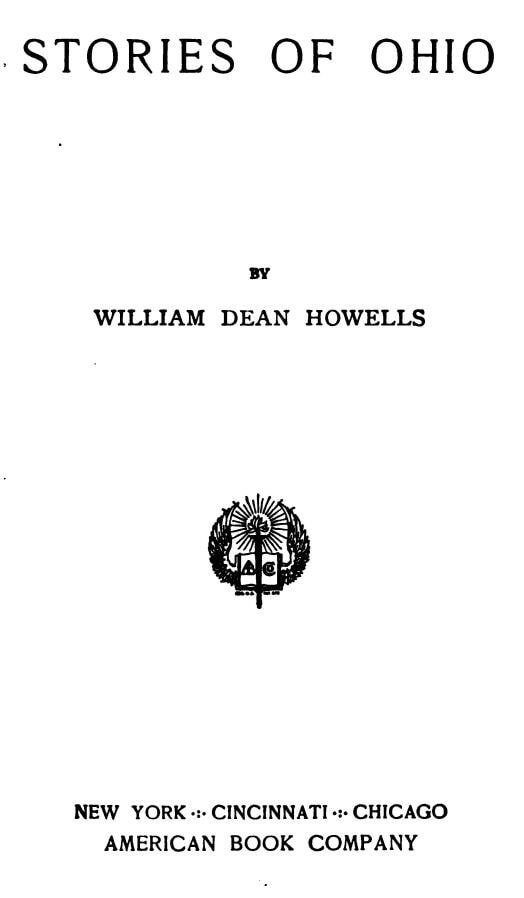
Stories of Ohio
1799
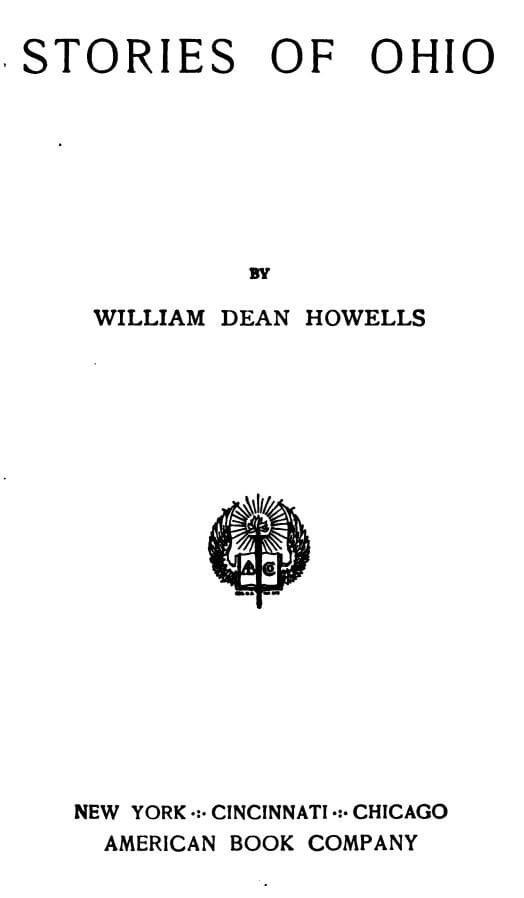
Stories of Ohio
1799
One of the earliest attempts by an American writer to construct a usable past for the young republic, this 1799 chronicle traces Ohio from the retreat of glaciers through the sophisticated earthwork civilizations of the Mound Builders to the turbulent first decades of European contact. Howells writes with the confident curiosity of a man piecing together a still-mysterious history, giving us the 'Ice Folk' who hunted mammoth along vanishing ice sheets, the mysterious mound-builders whose geometric precision still confounded early antiquarians, and the French traders who first threaded the territory's rivers. What emerges is not mere chronology but something stranger: an early American vision of deep time, of ancient peoples whose artifacts were already being unearthed by Ohio farmers, whose languages were already lost, whose stories could only be guessed at. The book matters because it captures a particular American moment, just after independence, when writers were urgently inventing origins for a nation that seemed both ancient and startlingly new. For readers interested in early American literature, frontier history, or the persistent American impulse to narrate the land into being.
Editions
X-Ray
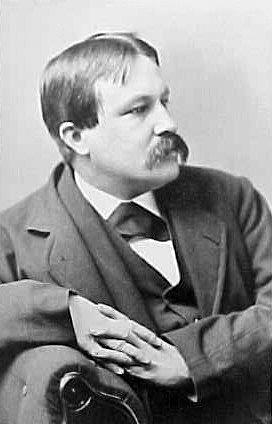
The author and narrator of these Ohio stories, presenting historical accounts from the earliest times through the Civil War. He serves as the guiding voice throughout the narrative.
French officer who visited Ohio in 1749 to claim the territory for the French king. He buried lead plates and nailed tin plates to trees as markers of French sovereignty.
Pennsylvania frontiersman captured by Delaware Indians in 1755 and adopted into their tribe. His captivity narrative provides insight into Indian life and customs.
Wise and religious Ottawa chief who adopted James Smith. Known for his philosophical nature, piety, and kind treatment of his white adoptive brother.
About Stories of Ohio
Chapter Summaries
- I
- Describes Ohio's prehistoric inhabitants during the Ice Age and the mysterious Mound Builders who created earthworks throughout the region. Howells speculates on their origins and fate.
- II
- Chronicles French exploration and claims to Ohio, focusing on Céloron's 1749 expedition to claim the territory and his interactions with the Miami Indians at Pickawillany.
- III
- Describes the transfer of Ohio from French to English control and Colonel Bouquet's 1764 expedition to force Indians to return white captives.
Key Themes
- Frontier Violence and Survival
- The brutal realities of frontier life, including Indian warfare, captivity, torture, and the constant struggle for survival in the wilderness. Howells doesn't romanticize this violence but presents it as a necessary part of Ohio's development.
- Cultural Collision and Adaptation
- The complex interactions between Native Americans and white settlers, showing how both groups influenced each other. Captivity narratives reveal how individuals could adapt to and even prefer different ways of life.
- The Cost of Progress
- The inevitable displacement of Native Americans and the destruction of wilderness to make way for civilization. Howells presents this as both necessary and tragic, acknowledging the human cost of westward expansion.
Characters
- William Dean Howells(major)
- The author and narrator of these Ohio stories, presenting historical accounts from the earliest times through the Civil War. He serves as the guiding voice throughout the narrative.
- Céloron de Bienville(minor)
- French officer who visited Ohio in 1749 to claim the territory for the French king. He buried lead plates and nailed tin plates to trees as markers of French sovereignty.
- James Smith(major)
- Pennsylvania frontiersman captured by Delaware Indians in 1755 and adopted into their tribe. His captivity narrative provides insight into Indian life and customs.
- Tecaughretanego(major)
- Wise and religious Ottawa chief who adopted James Smith. Known for his philosophical nature, piety, and kind treatment of his white adoptive brother.
- Daniel Boone(major)
- Famous Kentucky pioneer and hunter who was captured by Indians at Blue Licks in 1778. Known for his wilderness skills and stoic demeanor.
- Simon Kenton(major)
- Frontiersman and Indian fighter who was captured and tortured by Indians but saved by Simon Girty. Known for his courage and wilderness skills.
Link to this book
Add a free, dofollow link to Lex on your blog, forum, syllabus, or reading list.

<a href="https://lex-books.com/book/stories-of-ohio-4c003e51-b874-4c57-a0a5-e969d4a1d9c6"><img src="https://lex-books.com/badges/read-on-lex.svg" alt="Read Stories of Ohio by William Dean Howells free on Lex" width="160" height="40"></a>[](https://lex-books.com/book/stories-of-ohio-4c003e51-b874-4c57-a0a5-e969d4a1d9c6)[url=https://lex-books.com/book/stories-of-ohio-4c003e51-b874-4c57-a0a5-e969d4a1d9c6][img]https://lex-books.com/badges/read-on-lex.svg[/img][/url]Read Stories of Ohio by William Dean Howells free on Lex: https://lex-books.com/book/stories-of-ohio-4c003e51-b874-4c57-a0a5-e969d4a1d9c6Cite this book
Reading this edition for a paper or guide? Copy a citation.
Howells, William Dean. Stories of Ohio. Lex, lex-books.com/book/stories-of-ohio-4c003e51-b874-4c57-a0a5-e969d4a1d9c6.Howells, W. D. (1799). Stories of Ohio. Lex. https://lex-books.com/book/stories-of-ohio-4c003e51-b874-4c57-a0a5-e969d4a1d9c6Howells, William Dean. Stories of Ohio. Lex. https://lex-books.com/book/stories-of-ohio-4c003e51-b874-4c57-a0a5-e969d4a1d9c6.