The Riddle of the Universe at the Close of the Nineteenth Century
The Riddle of the Universe at the Close of the Nineteenth Century
Translated by Joseph McCabe
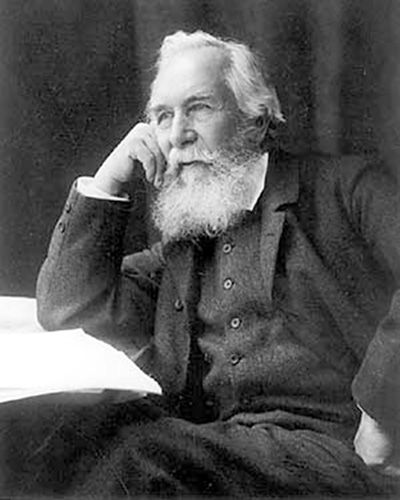
At the twilight of the 19th century, Germany's most vociferous Darwinian champion set out to solve the great riddles of existence. Ernst Haeckel, the zoologist who practically invented the term 'ecology' and whose artistry shaped how generations visualized the natural world, argues here that science has unveiled the machinery of the universe but humanity's moral and spiritual understanding has lagged catastrophically behind. He presents twelve 'world-riddles' - the nature of matter and force, the origin of life, the mystery of consciousness - and offers his radical monistic philosophy as the answer: a unified, naturalistic vision that rejects God, free will, and the immortal soul in favor of a cosmos governed entirely by natural law. This is Haeckel at his most ambitious, synthesizing Darwinism, comparative anatomy, and philosophical materialism into a grand cosmic narrative that scandalized both the church and cautious academics. The book made him famous, sparked international debate, and shaped how generations understood the relationship between science and existence. For readers interested in the intellectual history of modernity, it remains an essential artifact - a window into both the soaring ambitions and troubling blind spots of late Victorian science.
Editions
X-Ray
“As our mother earth is a mere speck in the sunbeam in the illimitable universe, so man himself is but a tiny grain of protoplasm in the perishable framework of organic nature. [This] clearly indicates the true place of man in nature, but it dissipates the prevalent illusion of man's supreme importance and the arrogance with which he sets himself apart from the illimitable universe and exalts himself to the position of its most valuable element.””
— Ernst Haeckel
Link to this book
Add a free, dofollow link to Lex on your blog, forum, syllabus, or reading list.

<a href="https://lex-books.com/book/the-riddle-of-the-universe-at-the-close-of-the-nineteenth-century-2bdf1de6-48ea-44e7-a049-bdb7f92efa3b"><img src="https://lex-books.com/badges/read-on-lex.svg" alt="Read The Riddle of the Universe at the Close of the Nineteenth Century by Ernst Haeckel free on Lex" width="160" height="40"></a>[](https://lex-books.com/book/the-riddle-of-the-universe-at-the-close-of-the-nineteenth-century-2bdf1de6-48ea-44e7-a049-bdb7f92efa3b)[url=https://lex-books.com/book/the-riddle-of-the-universe-at-the-close-of-the-nineteenth-century-2bdf1de6-48ea-44e7-a049-bdb7f92efa3b][img]https://lex-books.com/badges/read-on-lex.svg[/img][/url]Read The Riddle of the Universe at the Close of the Nineteenth Century by Ernst Haeckel free on Lex: https://lex-books.com/book/the-riddle-of-the-universe-at-the-close-of-the-nineteenth-century-2bdf1de6-48ea-44e7-a049-bdb7f92efa3bCite this book
Reading this edition for a paper or guide? Copy a citation.
Haeckel, Ernst. The Riddle of the Universe at the Close of the Nineteenth Century. Lex, lex-books.com/book/the-riddle-of-the-universe-at-the-close-of-the-nineteenth-century-2bdf1de6-48ea-44e7-a049-bdb7f92efa3b.Haeckel, E. (n.d.). The Riddle of the Universe at the Close of the Nineteenth Century. Lex. https://lex-books.com/book/the-riddle-of-the-universe-at-the-close-of-the-nineteenth-century-2bdf1de6-48ea-44e7-a049-bdb7f92efa3bHaeckel, Ernst. The Riddle of the Universe at the Close of the Nineteenth Century. Lex. https://lex-books.com/book/the-riddle-of-the-universe-at-the-close-of-the-nineteenth-century-2bdf1de6-48ea-44e7-a049-bdb7f92efa3b.