The Wonders of Life: A Popular Study of Biological Philosophy
1904
The Wonders of Life: A Popular Study of Biological Philosophy
1904
Translated by Joseph McCabe
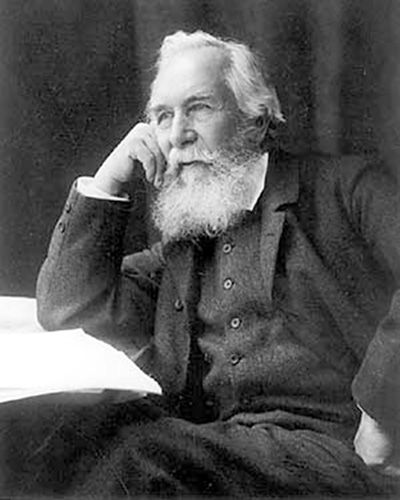
Ernst Haeckel was Darwin's most charismatic German interpreter, a man who believed science itself was a form of philosophy and that philosophy without science was empty speculation. In this passionate work, he builds on his earlier 'Riddle of the Universe' to argue that life is not a mystery beyond human comprehension but a phenomenon to be understood through observation, reason, and a unified view of nature. Haeckel championed monism the radical proposition that mind and matter, spirit and body, are one, attacking the dualistic thinking he saw as a relic of theological superstition. He believed that understanding life meant understanding its physical basis in the brain, that truth emerges from the patient work of empirical inquiry rather than metaphysical speculation. Written for the educated general reader rather than specialists, 'The Wonders of Life' bristles with the confidence of a man who saw himself as a revolutionary, spreading the gospel of evolutionary science to a public hungry for answers. The book remains a landmark in how biology became popular knowledge, for better and for worse, revealing both the genuine wonder and the troubling certainties of early twentieth-century scientific materialism.
Editions
Link to this book
Add a free, dofollow link to Lex on your blog, forum, syllabus, or reading list.

<a href="https://lex-books.com/book/the-wonders-of-life-a-popular-study-of-biological-philosophy-270a9fff-c042-41a6-891b-2e1860d67928"><img src="https://lex-books.com/badges/read-on-lex.svg" alt="Read The Wonders of Life: A Popular Study of Biological Philosophy by Ernst Haeckel free on Lex" width="160" height="40"></a>[](https://lex-books.com/book/the-wonders-of-life-a-popular-study-of-biological-philosophy-270a9fff-c042-41a6-891b-2e1860d67928)[url=https://lex-books.com/book/the-wonders-of-life-a-popular-study-of-biological-philosophy-270a9fff-c042-41a6-891b-2e1860d67928][img]https://lex-books.com/badges/read-on-lex.svg[/img][/url]Read The Wonders of Life: A Popular Study of Biological Philosophy by Ernst Haeckel free on Lex: https://lex-books.com/book/the-wonders-of-life-a-popular-study-of-biological-philosophy-270a9fff-c042-41a6-891b-2e1860d67928Cite this book
Reading this edition for a paper or guide? Copy a citation.
Haeckel, Ernst. The Wonders of Life: A Popular Study of Biological Philosophy. Lex, lex-books.com/book/the-wonders-of-life-a-popular-study-of-biological-philosophy-270a9fff-c042-41a6-891b-2e1860d67928.Haeckel, E. (1904). The Wonders of Life: A Popular Study of Biological Philosophy. Lex. https://lex-books.com/book/the-wonders-of-life-a-popular-study-of-biological-philosophy-270a9fff-c042-41a6-891b-2e1860d67928Haeckel, Ernst. The Wonders of Life: A Popular Study of Biological Philosophy. Lex. https://lex-books.com/book/the-wonders-of-life-a-popular-study-of-biological-philosophy-270a9fff-c042-41a6-891b-2e1860d67928.