The Evolution of Man
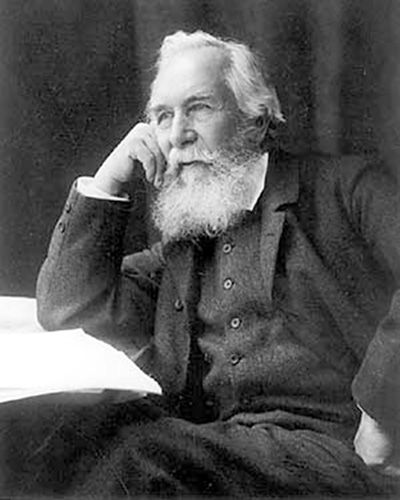
In 1874, German biologist Ernst Haeckel unveiled a groundbreaking vision of human origins, arguing that every embryo carries the evolutionary history of its species written in miniature. This lavishly illustrated work traces human development from the moment of conception, comparing embryonic stages across the animal kingdom to reveal the startling similarities that bind us to our vertebrate ancestors. Haeckel's central thesis that ontogeny recapitulates phylogeny, though now discredited in its strictest form, ignited fierce scientific debate and shaped how generations understood humanity's place in the natural world. The book pairs meticulous anatomical drawings with philosophical speculation, presenting evolution not as abstract theory but as a visceral, visible process unfolding within every developing organism. Though Haeckel's later racial theories and socialDarwinism have rightly tarnished his legacy, this work remains a landmark in making evolutionary science accessible to the public. For readers curious about the history of biology and the origins of ideas that still reverberate through science today.
Editions
X-Ray
“Phylogenesis is the mechanical cause of ontogenesis.1 In other words, the development of the stem, or race, is, in accordance with the laws of heredity and adaptation, the cause of all the changes which appear in a condensed form in the evolution of the fœtus.””
— Ernst Haeckel
Link to this book
Add a free, dofollow link to Lex on your blog, forum, syllabus, or reading list.

<a href="https://lex-books.com/book/the-evolution-of-man-6d6b829f-fcd8-41f7-9974-2bb17a46a96a"><img src="https://lex-books.com/badges/read-on-lex.svg" alt="Read The Evolution of Man by Ernst Haeckel free on Lex" width="160" height="40"></a>[](https://lex-books.com/book/the-evolution-of-man-6d6b829f-fcd8-41f7-9974-2bb17a46a96a)[url=https://lex-books.com/book/the-evolution-of-man-6d6b829f-fcd8-41f7-9974-2bb17a46a96a][img]https://lex-books.com/badges/read-on-lex.svg[/img][/url]Read The Evolution of Man by Ernst Haeckel free on Lex: https://lex-books.com/book/the-evolution-of-man-6d6b829f-fcd8-41f7-9974-2bb17a46a96aCite this book
Reading this edition for a paper or guide? Copy a citation.
Haeckel, Ernst. The Evolution of Man. Lex, lex-books.com/book/the-evolution-of-man-6d6b829f-fcd8-41f7-9974-2bb17a46a96a.Haeckel, E. (n.d.). The Evolution of Man. Lex. https://lex-books.com/book/the-evolution-of-man-6d6b829f-fcd8-41f7-9974-2bb17a46a96aHaeckel, Ernst. The Evolution of Man. Lex. https://lex-books.com/book/the-evolution-of-man-6d6b829f-fcd8-41f7-9974-2bb17a46a96a.