The Evolution of Man — Volume 1
1874
The Evolution of Man — Volume 1
1874
Translated by Joseph McCabe
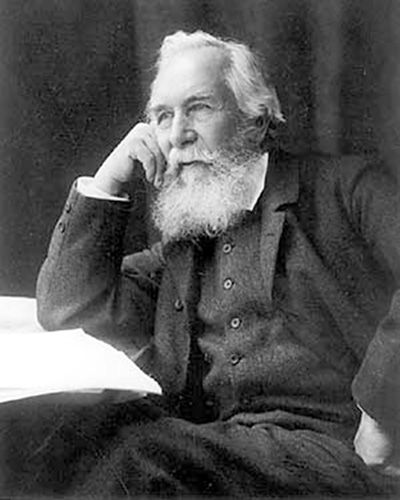
The Evolution of Man — Volume 1, published in 1874 by Ernst Haeckel, is a scientific exploration of human embryology and its evolutionary connections to other species. Haeckel argues that the stages of human embryonic development reflect ancestral forms, suggesting that human beings initially resemble simpler organisms like fish and amphibians. This work emphasizes the relationship between embryology and anthropology, advocating for its importance in understanding human evolution and biology.
Editions
X-Ray
“Phylogenesis is the mechanical cause of ontogenesis.1 In other words, the development of the stem, or race, is, in accordance with the laws of heredity and adaptation, the cause of all the changes which appear in a condensed form in the evolution of the fœtus.””
— Ernst Haeckel
Link to this book
Add a free, dofollow link to Lex on your blog, forum, syllabus, or reading list.

<a href="https://lex-books.com/book/the-evolution-of-man-volume-1-907671a4-1f16-48a1-af68-dcb7f8e5411a"><img src="https://lex-books.com/badges/read-on-lex.svg" alt="Read The Evolution of Man — Volume 1 by Ernst Haeckel free on Lex" width="160" height="40"></a>[](https://lex-books.com/book/the-evolution-of-man-volume-1-907671a4-1f16-48a1-af68-dcb7f8e5411a)[url=https://lex-books.com/book/the-evolution-of-man-volume-1-907671a4-1f16-48a1-af68-dcb7f8e5411a][img]https://lex-books.com/badges/read-on-lex.svg[/img][/url]Read The Evolution of Man — Volume 1 by Ernst Haeckel free on Lex: https://lex-books.com/book/the-evolution-of-man-volume-1-907671a4-1f16-48a1-af68-dcb7f8e5411aCite this book
Reading this edition for a paper or guide? Copy a citation.
Haeckel, Ernst. The Evolution of Man — Volume 1. Lex, lex-books.com/book/the-evolution-of-man-volume-1-907671a4-1f16-48a1-af68-dcb7f8e5411a.Haeckel, E. (1874). The Evolution of Man — Volume 1. Lex. https://lex-books.com/book/the-evolution-of-man-volume-1-907671a4-1f16-48a1-af68-dcb7f8e5411aHaeckel, Ernst. The Evolution of Man — Volume 1. Lex. https://lex-books.com/book/the-evolution-of-man-volume-1-907671a4-1f16-48a1-af68-dcb7f8e5411a.