Monism as Connecting Religion and Science: A Man of Science
1894
Monism as Connecting Religion and Science: A Man of Science
1894
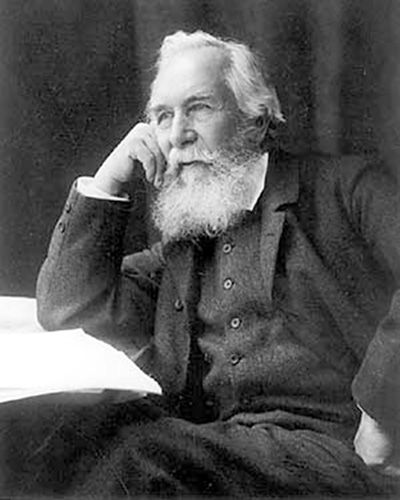
Ernst Haeckel was the most dangerous biologist of his era, a man who dared to replace God with evolution. In this 1894 lecture, originally delivered to a German scientific society on its 75th anniversary, he mounts a radical argument: that monism the philosophical doctrine asserting the fundamental unity of all things can bridge the chasm between empirical science and spiritual belief. Haeckel, whose famous dictum that 'ontogeny recapitulates phylogeny' shaped generations of biologists, was no mere scientist. He was a philosopher-warrior attempting to construct a complete worldview from raw material: the conservation of energy, the descent of species, the laws of matter. He proposes a pantheistic divinity woven into the fabric of nature itself, arguing that morality and consciousness emerge inevitably from the cosmic process. The result is neither orthodox religion nor cold materialism, but something more audacious: a scientific faith. Haeckel's influence echoes through debates about evolution, secularism, and the boundaries of knowledge that continue to divide us today. For readers interested in the intellectual history of modernity, in how Victorian scientists grappled with the implications of Darwin, this remains an essential document from a thinker who refused to accept that science and meaning must remain strangers.
Editions
Link to this book
Add a free, dofollow link to Lex on your blog, forum, syllabus, or reading list.

<a href="https://lex-books.com/book/monism-as-connecting-religion-and-science-a-man-of-science-5360c688-2053-4a8f-b8bf-637d8e61e8a3"><img src="https://lex-books.com/badges/read-on-lex.svg" alt="Read Monism as Connecting Religion and Science: A Man of Science by Ernst Haeckel free on Lex" width="160" height="40"></a>[](https://lex-books.com/book/monism-as-connecting-religion-and-science-a-man-of-science-5360c688-2053-4a8f-b8bf-637d8e61e8a3)[url=https://lex-books.com/book/monism-as-connecting-religion-and-science-a-man-of-science-5360c688-2053-4a8f-b8bf-637d8e61e8a3][img]https://lex-books.com/badges/read-on-lex.svg[/img][/url]Read Monism as Connecting Religion and Science: A Man of Science by Ernst Haeckel free on Lex: https://lex-books.com/book/monism-as-connecting-religion-and-science-a-man-of-science-5360c688-2053-4a8f-b8bf-637d8e61e8a3Cite this book
Reading this edition for a paper or guide? Copy a citation.
Haeckel, Ernst. Monism as Connecting Religion and Science: A Man of Science. Lex, lex-books.com/book/monism-as-connecting-religion-and-science-a-man-of-science-5360c688-2053-4a8f-b8bf-637d8e61e8a3.Haeckel, E. (1894). Monism as Connecting Religion and Science: A Man of Science. Lex. https://lex-books.com/book/monism-as-connecting-religion-and-science-a-man-of-science-5360c688-2053-4a8f-b8bf-637d8e61e8a3Haeckel, Ernst. Monism as Connecting Religion and Science: A Man of Science. Lex. https://lex-books.com/book/monism-as-connecting-religion-and-science-a-man-of-science-5360c688-2053-4a8f-b8bf-637d8e61e8a3.