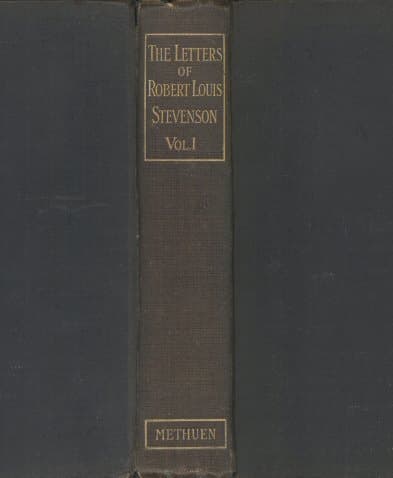
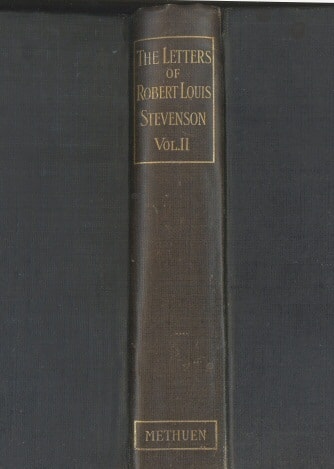
The Letters of Robert Louis Stevenson — Volume 2
1901
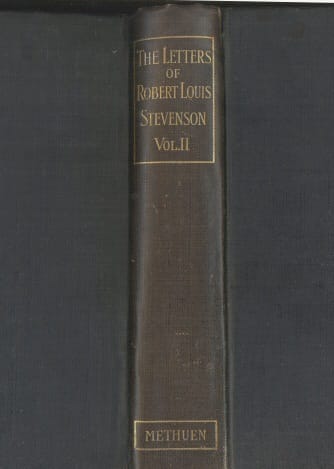
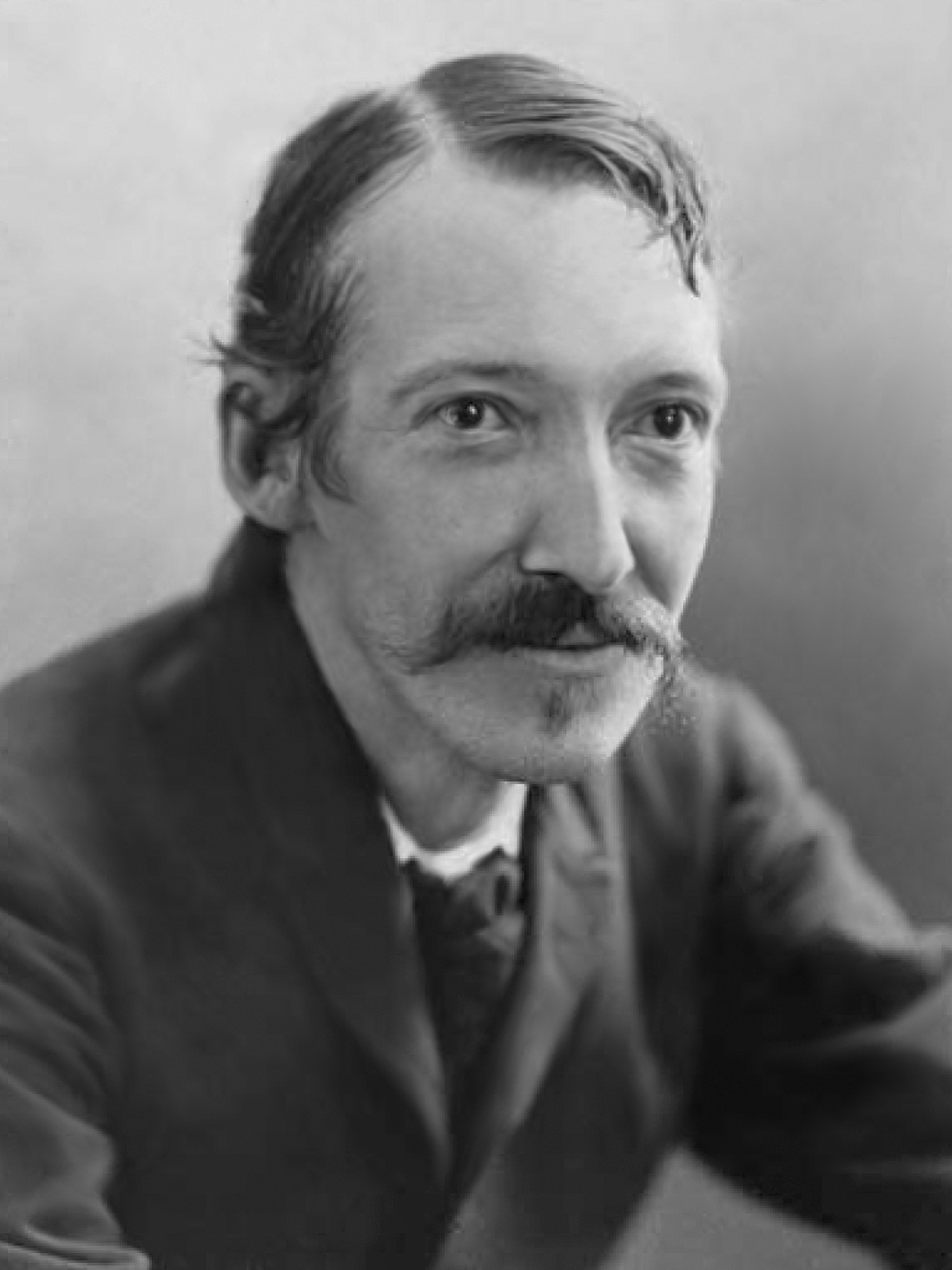
Here is the private Stevenson - the man behind Jekyll and Treasure Island - revealed in his own hand. Written from Bournemouth in 1886, these letters capture a writer battling tuberculosis while churning out works that would define an era. But what emerges is not merely a portrait of suffering genius. Stevenson's correspondence bristles with self-deprecating humor, sharp observations about the mundane (he complains beautifully about the English weather), and genuine tenderness toward the friends and family who sustained him. He discusses his craft with the ease of a man who knows his powers but refuses to take himself too seriously. These are the conversations a writer has when he thinks no one is listening - and they happen to be among the most entertaining dispatches from Victorian literary life. For readers who have ever wanted to meet the person behind the legend, this volume offers exactly that chance.
Editions
X-Ray
“The supply of subjects was a continual trouble to him as well as to his master. In that large and busy class, the raw material of the anatomists kept perpetually running out; and the business thus rendered necessary was not only unpleasant in itself, but threatened dangerous consequences to all who were concerned. It was the policy of Mr. K”
— Robert Louis Stevenson
“Freedom, to be desirable, involves kindness, wisdom, and all the virtues of the free; but the free man as we have seen him in action has been, as of yore, only the master of many helots; and the slaves are still ill-fed, ill-clad, ill-taught, ill-housed, insolently treated, and driven to their mines and workshops by the lash of famine.””
— Robert Louis Stevenson
“I will begin the story of my adventures with a certain morning early in the month of June, the year of grace 1751, when I took the key for the last time out of the door of my father’s house.””
— Robert Louis Stevenson
“I swear by the mass I believe Hugh Ferryman took you for a maid.””
— Robert Louis Stevenson
“Nay, y’are not tall enough. What age are ye, for a wager?”
— Robert Louis Stevenson
“Can ye so?” cried Dick, with open eyes. It was the one manly accomplishment of which he was himself incapable.””
— Robert Louis Stevenson
“A cat may look at a king.””
— Robert Louis Stevenson
“There is no doubt that the poorer classes in our country are much more charitably disposed than their superiors in wealth. And I fancy it must arise a great deal from the comparative indistinction of the easy and the not so easy in these ranks. A workman or a pedlar cannot shutter himself off from his less comfortable neighbours. If he treats himself to a luxury he must do it in the face of a dozen who cannot. And what should more directly lead to charitable thoughts?... Thus the poor man, camping out in life, sees it as it is, and knows that every mouthful he puts in his belly has been wrenched out of the fingers of the hungry. But at a certain stage of prosperity, as in a balloon ascent, the fortunate person passes through a zone of clouds, and sublunary matters are thenceforward hidden from his view. He sees nothing but the heavenly bodies, all in admirable order, and positively as good as new. He finds himself surrounded in the most touching manner by the attentions of Providence, and compares himself involuntarily with the lilies and the skylarks. He does not precisely sing, of course; but then he looks so unassuming in his open landau! If all the world dined at one table, this philosophy would meet with some rude knocks.””
— Robert Louis Stevenson
“The words died in Richard’s throat. He saw, through tears, the poor old man, bemused with liquor and sorrow, go shambling away, with bowed head, across the snow, and the unnoticed dog whimpering at his heels, and for the first time began to understand the desperate game that we play in life; and how a thing once done is not to be changed or remedied, by any penitence.””
— Robert Louis Stevenson
Link to this book
Add a free, dofollow link to Lex on your blog, forum, syllabus, or reading list.

<a href="https://lex-books.com/book/the-letters-of-robert-louis-stevenson-volume-2-40244b37-e7f0-4c55-b3de-4300a13f9579"><img src="https://lex-books.com/badges/read-on-lex.svg" alt="Read The Letters of Robert Louis Stevenson — Volume 2 by Robert Louis Stevenson free on Lex" width="160" height="40"></a>[](https://lex-books.com/book/the-letters-of-robert-louis-stevenson-volume-2-40244b37-e7f0-4c55-b3de-4300a13f9579)[url=https://lex-books.com/book/the-letters-of-robert-louis-stevenson-volume-2-40244b37-e7f0-4c55-b3de-4300a13f9579][img]https://lex-books.com/badges/read-on-lex.svg[/img][/url]Read The Letters of Robert Louis Stevenson — Volume 2 by Robert Louis Stevenson free on Lex: https://lex-books.com/book/the-letters-of-robert-louis-stevenson-volume-2-40244b37-e7f0-4c55-b3de-4300a13f9579Cite this book
Reading this edition for a paper or guide? Copy a citation.
Stevenson, Robert Louis. The Letters of Robert Louis Stevenson — Volume 2. Lex, lex-books.com/book/the-letters-of-robert-louis-stevenson-volume-2-40244b37-e7f0-4c55-b3de-4300a13f9579.Stevenson, R. L. (1901). The Letters of Robert Louis Stevenson — Volume 2. Lex. https://lex-books.com/book/the-letters-of-robert-louis-stevenson-volume-2-40244b37-e7f0-4c55-b3de-4300a13f9579Stevenson, Robert Louis. The Letters of Robert Louis Stevenson — Volume 2. Lex. https://lex-books.com/book/the-letters-of-robert-louis-stevenson-volume-2-40244b37-e7f0-4c55-b3de-4300a13f9579.