Essays in the Art of Writing
1885
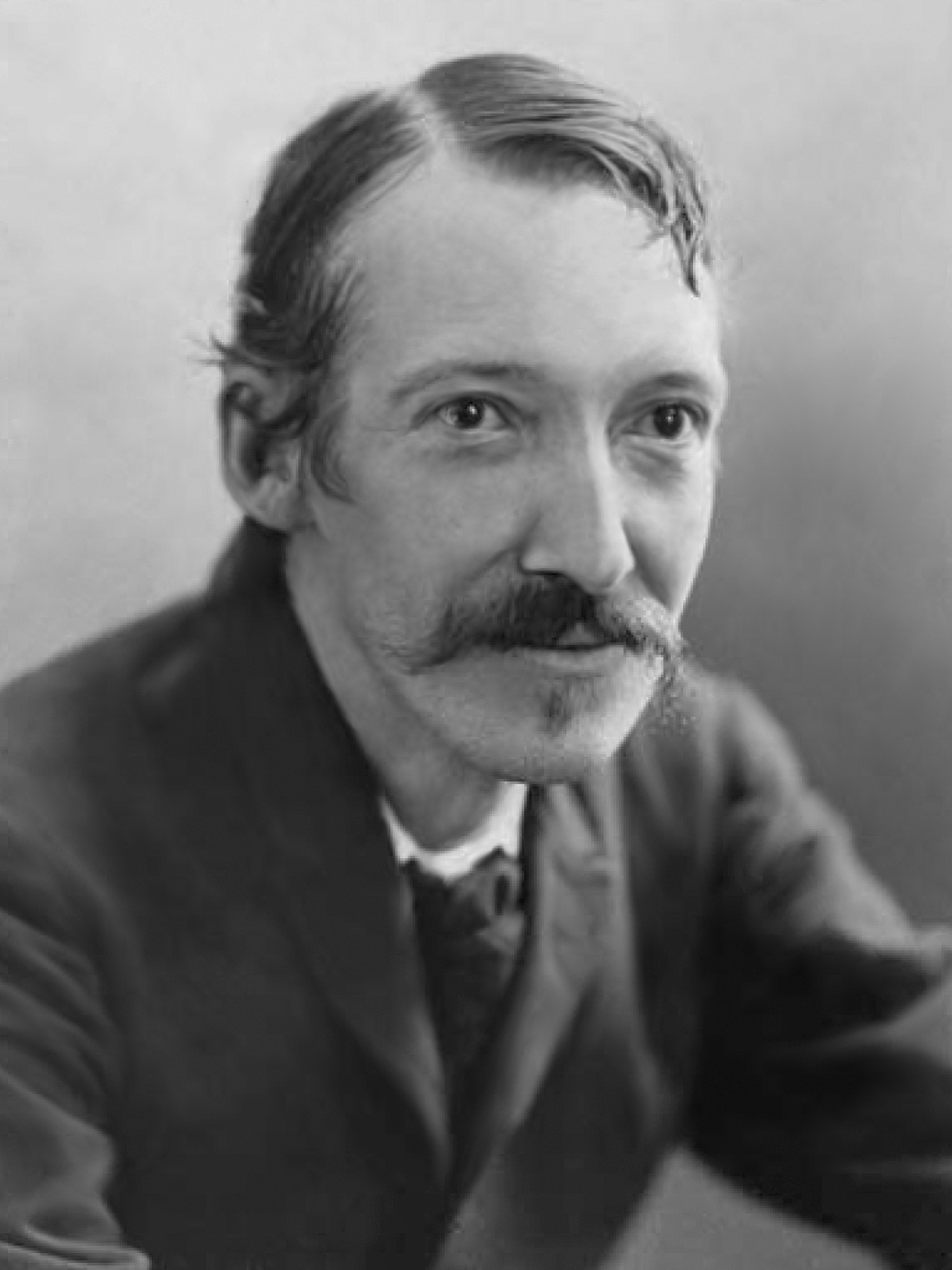
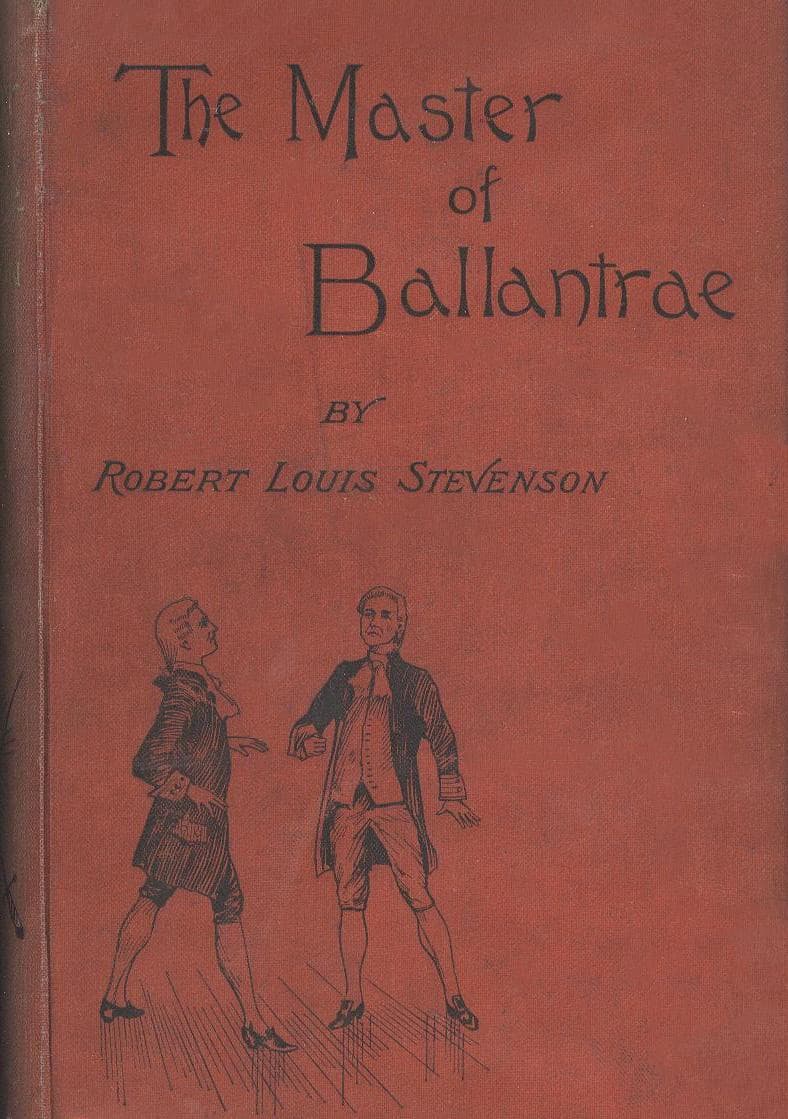
Robert Louis Stevenson was not a critic who wrote about literature from a distance. He was a working novelist who built his stories with the same care a carpenter brings to furniture, and in these essays he pulls back the curtain on his craft. Written with the verve and clarity that made Treasure Island an enduring classic, this collection ranges from the technical mechanics of prose style to the moral responsibilities of authorship. Stevenson discusses word choice and sentence structure like a surgeon discussing scalpels: tools to be mastered, then deployed with purpose. The most compelling pieces offer a behind-the-scenes look at his own work. The essays on Treasure Island and The Master of Ballantrae read like letters from a master craftsman to an apprentice, full of specific decisions and the reasoning behind them. He writes about the books that shaped him, the nature of realism, and the delicate balance between art and commerce. Throughout, Stevenson proves that writing well is neither magic nor mystery but a discipline requiring both talent and labor. For anyone who has ever wanted to understand how stories actually get made, these essays remain vital more than a century later.
Editions
X-Ray
“The most influential books, and the truest in their influence, are works of fiction. They do not pin the reader to a dogma, which he must afterwards discover to be inexact; they do not teach him a lesson, which he must afterwards unlearn. They repeat, they rearrange, they clarify the lessons of life; they disengage us from ourselves, they constrain us to the acquaintance of others; and they show us the web of experience, not as we can see it for ourselves, but with a singular change - that monstrous, consuming ego of ours being, for the nonce, struck out. To be so, they must be reasonably true to the human comedy; and any work that is so serves the turn of instruction. ””
— Robert Louis Stevenson
“I am not afraid of the truth, if any one could tell it me, but I am afraid of parts of it impertinently uttered.””
— Robert Louis Stevenson
“The gift of reading, as I have called it, is not very common, nor very generally understood. It consists, first of all, in a vast intellectual endowment - a free grace, I find I must call it - by which a man rises to understand that he is not punctually right, nor those from whom he differs absolutely wrong. ””
— Robert Louis Stevenson
“We may now briefly enumerate the elements of style. We have, peculiar to the prose writer, the task of keeping his phrases large, rhythmical, and pleasing to the ear, without ever allowing them to fall into the strictly metrical: peculiar to the versifier, the task of combining and contrasting his double, treble, and quadruple pattern, feet and groups, logic and metre”
— Robert Louis Stevenson
“These (Shakespeare, Milton, and Victor Hugo) not only knit and knot the logical texture of the style with all the dexterity and strength of prose; they not only fill up the pattern of the verse with infinite variety and sober wit; but they give us, besides, a rare and special pleasure, by the art, comparable to that of counterpoint, with which they follow at the same time, and now contrast, and now combine, the double pattern of the texture and the verse. Here the sounding line concludes; a little further on, the well-knit sentence; and yet a little further, and both will reach their solution on the same ringing syllable. The best that can be offered by the best writer of prose is to show us the development of the idea and the stylistic pattern proceed hand in hand, sometimes by an obvious and triumphant effort, sometimes with a great air of ease and nature. The writer of verse, by virtue of conquering another difficulty, delights us with a new series of triumphs. He follows three purposes where his rival followed only two; and the change is of precisely the same nature as that from melody to harmony.-ON SOME TECHNICAL ELEMENTS OF STYLE IN LITERATURE””
— Robert Louis Stevenson
“Music and literature, the two temporal arts, contrive their pattern of sounds in time; or, in other words, of sounds and pauses. Communication may be made in broken words, the business of life be carried on with substantives alone; but that is not what we call literature; and the true business of the literary artist is to plait or weave his meaning, involving it around itself; so that each sentence, by successive phrases, shall first come into a kind of knot, and then, after a moment of suspended meaning, solve and clear itself.-ON SOME TECHNICAL ELEMENTS OF STYLE IN LITERATURE””
— Robert Louis Stevenson
“The art of literature stands apart from among its sisters, because the material in which the literary artist works is the dialect of life; hence, on the one hand, a strange freshness and immediacy of address to the public mind, which is ready prepared to understand it; but hence, on the other, a singular limitation. The sister arts enjoy the use of a plastic and ductile material, like the modeller’s clay; literature alone is condemned to work in mosaic with finite and quite rigid words.””
— Robert Louis Stevenson
“Pattern and argument live in each other; and it is by the brevity, clearness, charm, or emphasis of the second, that we judge the strength and fitness of the first.””
— Robert Louis Stevenson
“Mi dicono che ci sono persone alle quali non interessano le mappe, ma faccio fatica a crederlo. I nomi, i contorni delle foreste, le linee delle strade e dei fiumi, le impronte della preistoria dell’uomo ancora chiaramente rintracciabili tra colline e valli, i mulini e le rovine, i laghi e i battelli che li solcano, magari anche un menhir e un circolo druidico nella brughiera; lì è racchiuso un fondo inesauribile di interesse per ogni uomo che abbia occhi per vedere o un’immaginazione da due soldi per comprenderne i segni! Tutti i bambini si ricordano di essere stati sdraiati con la testa nell’erba a fissare una foresta piccolissima, immaginandola popolata da schiere di fate.””
— Robert Louis Stevenson
Link to this book
Add a free, dofollow link to Lex on your blog, forum, syllabus, or reading list.

<a href="https://lex-books.com/book/essays-in-the-art-of-writing-3b9dcdf7-77ee-454d-9f4b-0225de87d318"><img src="https://lex-books.com/badges/read-on-lex.svg" alt="Read Essays in the Art of Writing by Robert Louis Stevenson free on Lex" width="160" height="40"></a>[](https://lex-books.com/book/essays-in-the-art-of-writing-3b9dcdf7-77ee-454d-9f4b-0225de87d318)[url=https://lex-books.com/book/essays-in-the-art-of-writing-3b9dcdf7-77ee-454d-9f4b-0225de87d318][img]https://lex-books.com/badges/read-on-lex.svg[/img][/url]Read Essays in the Art of Writing by Robert Louis Stevenson free on Lex: https://lex-books.com/book/essays-in-the-art-of-writing-3b9dcdf7-77ee-454d-9f4b-0225de87d318Cite this book
Reading this edition for a paper or guide? Copy a citation.
Stevenson, Robert Louis. Essays in the Art of Writing. Lex, lex-books.com/book/essays-in-the-art-of-writing-3b9dcdf7-77ee-454d-9f4b-0225de87d318.Stevenson, R. L. (1885). Essays in the Art of Writing. Lex. https://lex-books.com/book/essays-in-the-art-of-writing-3b9dcdf7-77ee-454d-9f4b-0225de87d318Stevenson, Robert Louis. Essays in the Art of Writing. Lex. https://lex-books.com/book/essays-in-the-art-of-writing-3b9dcdf7-77ee-454d-9f4b-0225de87d318.