The Iliad
750 BC
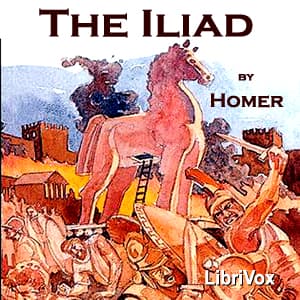
The Iliad opens with a single word - rage - and proceeds to excavate the human cost of war with an honesty that still shocks. Set during the final weeks of the Trojan War, it follows the devastating quarrel between Achilles and Agamemnon, a dispute over honor and war prizes that spirals into losses neither side can absorb. But the poem's true subject is not the battle itself but what battle reveals: the tenderness beneath the armor, the fathers who will never see their sons again, the gods who toy with mortals while the slaughter continues. Robert Fagles' celebrated translation renders Homer's ancient Greek into language that breathes - muscular, musical, alive. The repeated phrases that structure the poem create a rhythm as relentless as war itself. Yet amid the heroism and horror, Homer finds space for tenderness: Priam pleading for his son's body, Achilles in his grief, the quiet dignity of Hector preparing for battle he knows he cannot win. This is not a glorification of war. It is an anatomy of its wreckage.
Editions


X-Ray
“…There is the heat of Love, the pulsing rush of Longing, the lover’s whisper, irresistible”
— Homer
“Hateful to me as the gates of Hades is that man who hides one thing in his heart and speaks another.””
— Homer
“Let me not then die ingloriously and without a struggle, but let me first do some great thing that shall be told among men hereafter.””
— Homer
“Sing, O muse, of the rage of Achilles, son of Peleus, that brought countless ills upon the Achaeans.””
— Homer
“Like the generations of leaves, the lives of mortal men. Now the wind scatters the old leaves across the earth, now the living timber bursts with the new buds and spring comes round again. And so with men: as one generation comes to life, another dies away.””
— Homer
“We men are wretched things.””
— Homer
“Why so much grief for me? No man will hurl me down to Death, against my fate. And fate? No one alive has ever escaped it, neither brave man nor coward, I tell you - it’s born with us the day that we are born.””
— Homer
“Achilles glared at him and answered, "Fool, prate not to me about covenants. There can be no covenants between men and lions, wolves and lambs can never be of one mind, but hate each other out and out an through. Therefore there can be no understanding between you and me, nor may there be any covenants between us, till one or other shall fall””
— Homer
“...like that star of the waning summer who beyond all stars rises bathed in the ocean stream to glitter in brilliance.””
— Homer
Link to this book
Add a free, dofollow link to Lex on your blog, forum, syllabus, or reading list.

<a href="https://lex-books.com/book/the-iliad-c1c362b3-7c92-41f4-87e8-f0e2275d9b48"><img src="https://lex-books.com/badges/read-on-lex.svg" alt="Read The Iliad by Homer free on Lex" width="160" height="40"></a>[](https://lex-books.com/book/the-iliad-c1c362b3-7c92-41f4-87e8-f0e2275d9b48)[url=https://lex-books.com/book/the-iliad-c1c362b3-7c92-41f4-87e8-f0e2275d9b48][img]https://lex-books.com/badges/read-on-lex.svg[/img][/url]Read The Iliad by Homer free on Lex: https://lex-books.com/book/the-iliad-c1c362b3-7c92-41f4-87e8-f0e2275d9b48Cite this book
Reading this edition for a paper or guide? Copy a citation.
Homer. The Iliad. Lex, lex-books.com/book/the-iliad-c1c362b3-7c92-41f4-87e8-f0e2275d9b48.Homer (750 BC). The Iliad. Lex. https://lex-books.com/book/the-iliad-c1c362b3-7c92-41f4-87e8-f0e2275d9b48Homer. The Iliad. Lex. https://lex-books.com/book/the-iliad-c1c362b3-7c92-41f4-87e8-f0e2275d9b48.