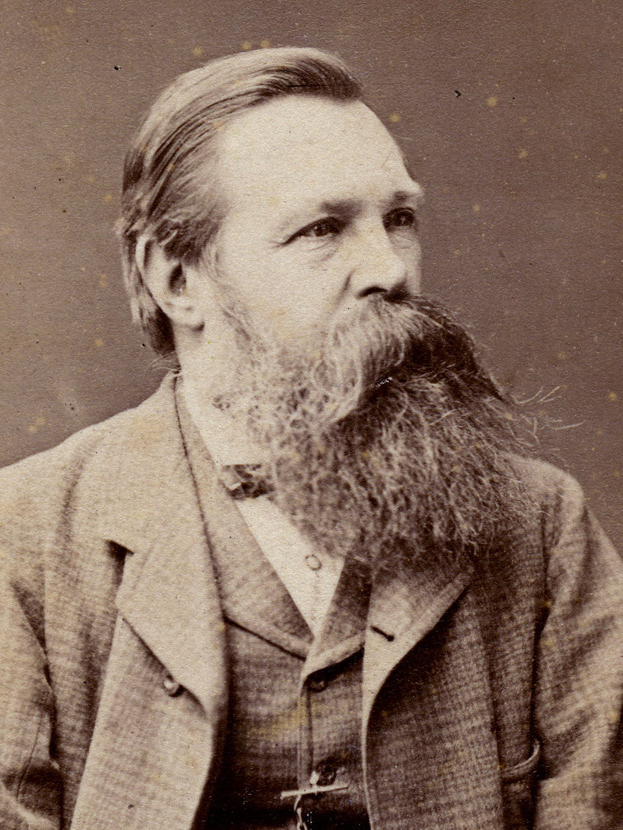
Socialism, Utopian and Scientific
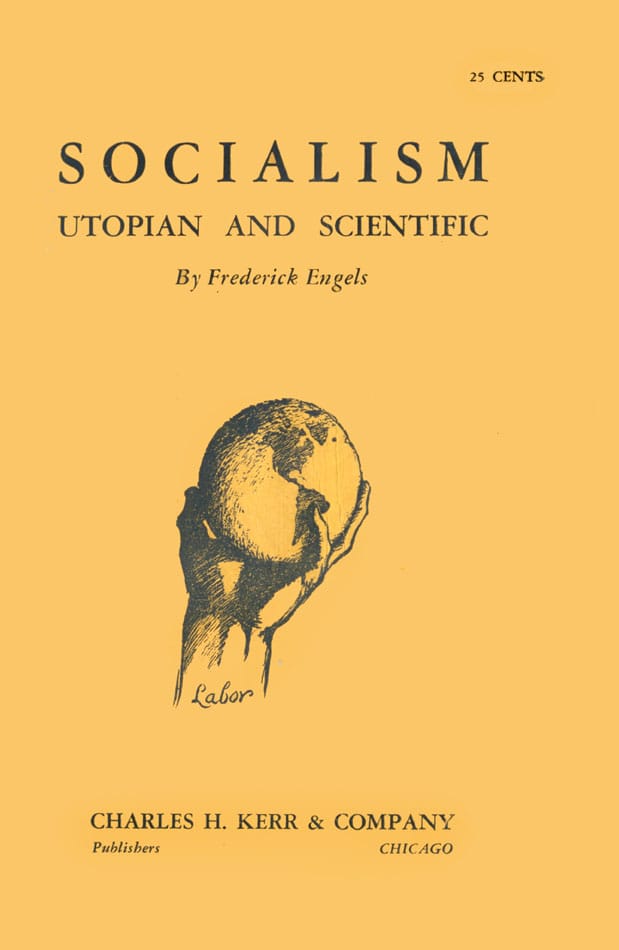
Socialism, Utopian and Scientific
Translated by Edward B. Aveling
This is the book that shaped a century. Written in 1880 as a popular introduction to Marxist thought, Friedrich Engels distills the core of historical materialism into a devastating critique of capitalism and a vision of what might replace it. But this is not dry theory. Engels traces how feudalism birthed industrial capitalism, and how capitalism's own internal contradictions breed the conditions for its eventual dissolution. He methodically dismantains the utopian socialists: Saint Simon, Fourier, Owen. Brilliant visionaries, yes, but they treated socialism as a moral experiment rather than an inevitable product of material conditions. The book crackles with intellectual urgency, arguing that only when socialism becomes "scientific" grounded in the real dynamics of class struggle can it cease to be a dream and become a historical certainty. Whether you find his deterministic conclusions persuasive or not, this remains an essential document for understanding how millions of people across the twentieth century came to believe history had a direction and that they could help steer it.
Editions

X-Ray
“Thus, as far as he is a scientific man, as far as he anything, he is a materialist; outside his science, in spheres about which he knows nothing, he translates his ignorance into Greek and calls it agnosticism.””
— Friedrich Engels
“The materialist conception of history starts from the proposition that the production of the means to support human life and, next to production, the exchange of things produced, is the basis of all social structure; that in every society that has appeared in history, the manner in which wealth is distributed and society divided into classes or orders is dependent upon what is produced, how it is produced, and how the products are exchanged.””
— Friedrich Engels
“But, the transformation”
— Friedrich Engels
“The new facts made imperative a new examination of all past history. Then it was seen that all past history, with the exception of its primitive stages, was the history of class struggles; that these warring classes of society are always the products of the modes of production and of exchange”
— Friedrich Engels
“In fact, in England too, the working-people have begun to move again. They are, no doubt, shackled by traditions of various kinds. Bourgeois traditions, such as the widespread belief that there can be but two parties, Conservatives and Liberals, and that the working-class must work out its salvation by and through the great Liberal Party. […]””
— Friedrich Engels
“State interference in social relations becomes, in one domain after another, superfluous, and then dies out of itself; the government of persons is replaced by the administration of things, and by the conduct of processes of production.””
— Friedrich Engels
“It is the Darwinian struggle of the individual for existence transferred from Nature to society with intensified violence.””
— Friedrich Engels
“Production has become a social act. Exchange and appropriation continue to be individual acts, the acts of individuals. The social product is appropriated by the individual capitalist. Fundamental contradiction, whence arise all the contradictions in which our present-day society moves, and which modern industry brings to light.””
— Friedrich Engels
“With the seizing of the means of production by society, production of commodities is done away with, and, simultaneously, the mastery of the product over the producer. Anarchy in social production is replaced by systematic, definite organization. The struggle for individual existence disappears. Then, for the first time, man, in a certain sense, is finally marked off from the rest of the animal kingdom, and emerges from mere animal conditions of existence into really human ones. The whole sphere of the conditions of life which environ man, and which have hitherto ruled man, now comes under the dominion and control of man, who for the first time becomes the real, conscious lord of nature, because he has now become master of his own social organization. The laws of his own social action, hitherto standing face-to-face with man as laws of Nature foreign to, and dominating him, will then be used with full understanding, and so mastered by him. Man's own social organization, hitherto confronting him as a necessity imposed by Nature and history, now becomes the result of his own free action. The extraneous objective forces that have, hitherto, governed history,pass under the control of man himself. Only from that time will man himself, more and more consciously, make his own history”
— Friedrich Engels
Link to this book
Add a free, dofollow link to Lex on your blog, forum, syllabus, or reading list.

<a href="https://lex-books.com/book/socialism-utopian-and-scientific-71ad368d-f9d0-446d-b610-1927bb2e498f"><img src="https://lex-books.com/badges/read-on-lex.svg" alt="Read Socialism, Utopian and Scientific by Friedrich Engels free on Lex" width="160" height="40"></a>[](https://lex-books.com/book/socialism-utopian-and-scientific-71ad368d-f9d0-446d-b610-1927bb2e498f)[url=https://lex-books.com/book/socialism-utopian-and-scientific-71ad368d-f9d0-446d-b610-1927bb2e498f][img]https://lex-books.com/badges/read-on-lex.svg[/img][/url]Read Socialism, Utopian and Scientific by Friedrich Engels free on Lex: https://lex-books.com/book/socialism-utopian-and-scientific-71ad368d-f9d0-446d-b610-1927bb2e498fCite this book
Reading this edition for a paper or guide? Copy a citation.
Engels, Friedrich. Socialism, Utopian and Scientific. Lex, lex-books.com/book/socialism-utopian-and-scientific-71ad368d-f9d0-446d-b610-1927bb2e498f.Engels, F. (n.d.). Socialism, Utopian and Scientific. Lex. https://lex-books.com/book/socialism-utopian-and-scientific-71ad368d-f9d0-446d-b610-1927bb2e498fEngels, Friedrich. Socialism, Utopian and Scientific. Lex. https://lex-books.com/book/socialism-utopian-and-scientific-71ad368d-f9d0-446d-b610-1927bb2e498f.