The Condition of the Working-Class in England in 1844: With a Preface Written in 1892
The Condition of the Working-Class in England in 1844: With a Preface Written in 1892
Translated by Florence Kelley
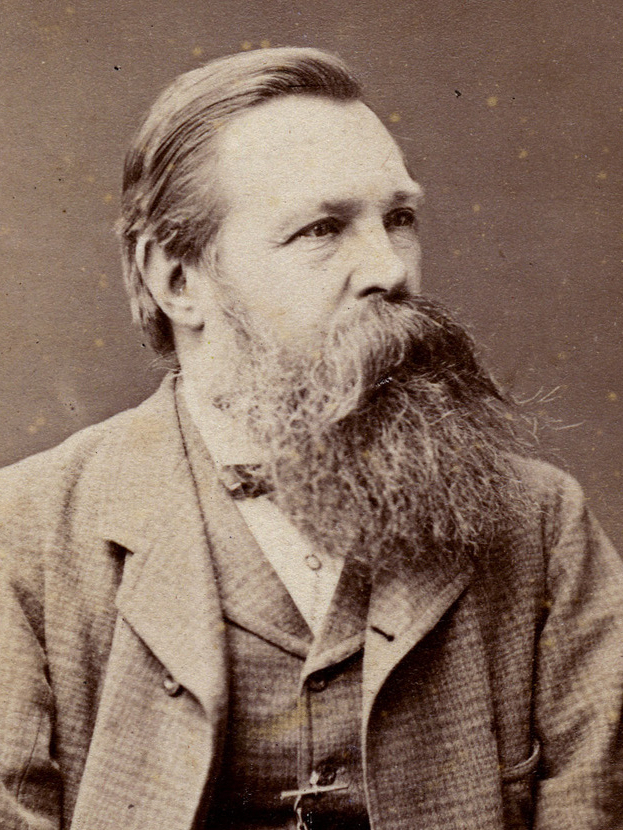
The book that shaped Marx. Written by a 24-year-old Friedrich Engels during his time in Manchester and Salford between 1842-1844, this is one of the first systematic, firsthand investigations into the lives of England's industrial working class. Engels didn't write from afar - he observed the slums, the factories, the cholera outbreaks, the child labor with his own eyes, then documented it with statistical precision and moral fury. What emerges is a portrait of a society in crisis: overcrowded tenements where entire families slept in single rooms, factories that mutilated workers, women and children laboring twelve-hour shifts for starvation wages, and a chasm between bourgeois wealth and working-class misery so vast it defined an era. Engels traces how independent artisans were systematically reduced to wage-dependent proletarians, how enclosure and mechanization destroyed traditional life, and how industrial capitalism produced squalor on an unprecedented scale. The 1892 preface, added nearly fifty years later, allows Engels to reflect on what changed - and what didn't - after half a century of industrialization. This remains essential reading for understanding the foundations of industrial capitalism, the origins of socialist thought, and the human cost of progress. It reads like journalism, history, and indictment rolled into one.
Editions
X-Ray
“The middle classes have a truly extraordinary conception of society. They really believe that human beings . . . have real existence only if they make money or help to make it.””
— Friedrich Engels
“The English bourgeoisie is charitable out of self-interest; it gives nothing outright, but regards its gifts as a business matter, makes a bargain with the poor, saying: "If I spend this much upon benevolent institutions, I thereby purchase the right not to be troubled any further, and you are bound thereby to stay in your dusky holes and not to irritate my tender nerves by exposing your misery.””
— Friedrich Engels
“It is quite obvious that all legislation is calculated to protect those that possess property against those who do not.””
— Friedrich Engels
“The wage-worker sells to the capitalist his labour-force for a certain daily sum. After a few hours’ work he has reproduced the value of that sum; but the substance of his contract is, that he has to work another series of hours to complete his working-day; and the value he produces during these additional hours of surplus labour is surplus value, which cost the capitalist nothing, but yet goes into his pocket.””
— Friedrich Engels
“I wanted more than a mere abstract knowledge of my subject, I wanted to see you in your own homes, to observe you in your everyday life, to chat with you on your condition and grievances, to witness your struggles against the social and political power of your oppressors.””
— Friedrich Engels
“Malthus declares in plain English that the right to live, a right previously asserted in favour of every man in the world, is nonsense. He quotes the words of a poet, that the poor man comes to the feast of Nature and finds no cover laid for him, and adds that ‘she bids him begone’, for he did not before his birth ask of society whether or not he is welcome. This is now the pet theory of all genuine English bourgeois, and very naturally, since it is the most specious excuse for them, and has moreover, a good deal of truth in it under existing conditions. If, then, the problem is not to make the ‘surplus population’ useful, to transform it into available population, but merely to let it starve to death in the least objectionable way and to prevent its having too many children, this, of course, is simple enough, provided the surplus population perceives its own superfluousness and takes kindly to starvation. There is, however, in spite of the strenuous exertions of the humane bourgeoisie, no immediate prospect of its succeeding in bringing about such a disposition among the workers. The workers have taken it into their heads that they, with their busy hands, are the necessary, and the rich capitalists, who do nothing, the surplus population.””
— Friedrich Engels
“When one individual inflicts bodily injury upon another such that death results, we call the deed manslaughter; when the assailant knew in advance that the injury would be fatal, we call his deed murder. But when society places hundreds of proletarians in such a position that they inevitably meet a too early and an unnatural death, one which is quite as much a death by violence as that by the sword or bullet; when it deprives thousands of the necessaries of life, places them under conditions in which they cannot live – forces them, through the strong arm of the law, to remain in such conditions until that death ensues which is the inevitable consequence – knows that these thousands of victims must perish, and yet permits these conditions to remain, its deed is murder just as surely as the deed of the single individual; disguised, malicious murder, murder against which none can defend himself, which does not seem what it is, because no man sees the murderer, because the death of the victim seems a natural one, since the offence is more one of omission than of commission. But murder it remains.””
— Friedrich Engels
“Though not expressly stated in our recognised treatises, it is still a law of modern Political Economy that the larger the scale on which Capitalistic Production is carried on, the less can it support the petty devices of swindling and pilfering which characterise its early stages.””
— Friedrich Engels
“In truth, they were not human beings; they were merely toiling machines in the service of the few aristocrats who had guided history down to that time. The industrial revolution has simply carried this out to its logical end by making the workers machines pure and simple, taking from them the last trace of independent activity, and so forcing them to think and demand a position worthy of men.””
— Friedrich Engels
Link to this book
Add a free, dofollow link to Lex on your blog, forum, syllabus, or reading list.

<a href="https://lex-books.com/book/the-condition-of-the-working-class-in-england-in-1844-with-a-preface-written-in--704881dc-f87b-4a19-8ce3-b8b0a839d220"><img src="https://lex-books.com/badges/read-on-lex.svg" alt="Read The Condition of the Working-Class in England in 1844: With a Preface Written in 1892 by Friedrich Engels free on Lex" width="160" height="40"></a>[](https://lex-books.com/book/the-condition-of-the-working-class-in-england-in-1844-with-a-preface-written-in--704881dc-f87b-4a19-8ce3-b8b0a839d220)[url=https://lex-books.com/book/the-condition-of-the-working-class-in-england-in-1844-with-a-preface-written-in--704881dc-f87b-4a19-8ce3-b8b0a839d220][img]https://lex-books.com/badges/read-on-lex.svg[/img][/url]Read The Condition of the Working-Class in England in 1844: With a Preface Written in 1892 by Friedrich Engels free on Lex: https://lex-books.com/book/the-condition-of-the-working-class-in-england-in-1844-with-a-preface-written-in--704881dc-f87b-4a19-8ce3-b8b0a839d220Cite this book
Reading this edition for a paper or guide? Copy a citation.
Engels, Friedrich. The Condition of the Working-Class in England in 1844: With a Preface Written in 1892. Lex, lex-books.com/book/the-condition-of-the-working-class-in-england-in-1844-with-a-preface-written-in--704881dc-f87b-4a19-8ce3-b8b0a839d220.Engels, F. (n.d.). The Condition of the Working-Class in England in 1844: With a Preface Written in 1892. Lex. https://lex-books.com/book/the-condition-of-the-working-class-in-england-in-1844-with-a-preface-written-in--704881dc-f87b-4a19-8ce3-b8b0a839d220Engels, Friedrich. The Condition of the Working-Class in England in 1844: With a Preface Written in 1892. Lex. https://lex-books.com/book/the-condition-of-the-working-class-in-england-in-1844-with-a-preface-written-in--704881dc-f87b-4a19-8ce3-b8b0a839d220.