Feuerbach: The Roots of the Socialist Philosophy
Feuerbach: The Roots of the Socialist Philosophy
Translated by Austin, 1865? Lewis
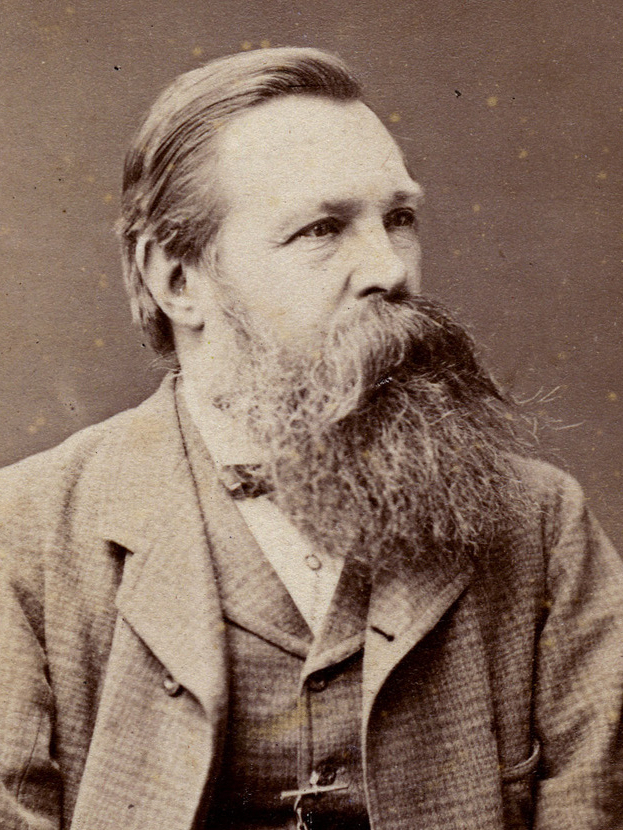
Feuerbach: The Roots of the Socialist Philosophy is a philosophical work by Friedrich Engels, written in the late 19th century. It examines the origins of socialist thought, particularly the influence of Hegel and Ludwig Feuerbach on Marx and Engels. Engels critiques Feuerbach's idealism, arguing for a materialist understanding of history and society, and outlines the limitations of Feuerbach's framework in capturing the revolutionary potential of socialism. This work is significant for its exploration of dialectical materialism and its role in shaping Marxist philosophy.
Editions
X-Ray
“The ideas of the ruling class are in every epoch the ruling ideas, i.e. the class which is the ruling material force of society, is at the same time its ruling intellectual force. The class which has the means of material production at its disposal, has control at the same time over the means of mental production, so that thereby, generally speaking, the ideas of those who lack the means of mental production are subject to it. The ruling ideas are nothing more than the ideal expression of the dominant material relationships, the dominant material relationships grasped as ideas.””
— Friedrich Engels
“For as soon as the distribution of labour comes into being, each man has a particular, exclusive sphere of activity, which is forced upon him and from which he cannot escape. He is a hunter, a fisherman, a herdsman, or a critical critic, and must remain so if he does not want to lose his means of livelihood; while in communist society, where nobody has one exclusive sphere of activity but each can become accomplished in any branch he wishes, society regulates the general production and thus makes it possible for me to do one thing today and another tomorrow, to hunt in the morning, fish in the afternoon, rear cattle in the evening, criticise after dinner, just as I have a mind, without ever becoming hunter, fisherman, herdsman or critic.””
— Friedrich Engels
“Communism is for us not a state of affairs which is to be established, an ideal to which reality [will] have to adjust itself. We call communism the real movement which abolishes the present state of things. The conditions of this movement result from the premises now in existence.””
— Friedrich Engels
“Language is as old as consciousness, language is practical, real consciousness that exists for other men as well, and only therefore does it also exist for me; language, like consciousness, only arises from the need, the necessity, of intercourse with other men.””
— Friedrich Engels
“As individuals express their life, so they are.””
— Friedrich Engels
“Hitherto men have always formed wrong ideas about themselves, about what they are and what they ought to be. They have arranged their relations according to their ideas of God, of normal man, etc. The products of their brains have got out of their hands. They, the creators, have bowed down before their creations.””
— Friedrich Engels
“One has to 'leave philosophy aside,' one has to leap out of it and devote oneselflike an ordinary man to the study of actuality . . . Philosophy and the study of the actual world have the same relation to one another as masturbation and sexual love.””
— Friedrich Engels
“Hitherto men have constantly made up for themselves false conceptions about themselves, about what they are and what they ought to be. They have arranged their relationships according to their ideas of God, of normal man, etc. The phantoms of their brains have got out of their hands. They, the creators, have bowed down before their creations. Let us liberate them from the chimeras, the ideas, dogmas, imaginary beings under the yoke of which they are pining away. Let us revolt against the rule of thoughts. Let us teach men, says one, to exchange these imaginations for thoughts which correspond to the essence of man; says the second, to take up a critical attitude to them; says the third, to knock them out of their heads; and”
— Friedrich Engels
“Philosophy and the study of the real world have the same relation to one another as onanism and sexual love.””
— Friedrich Engels
Link to this book
Add a free, dofollow link to Lex on your blog, forum, syllabus, or reading list.

<a href="https://lex-books.com/book/feuerbach-the-roots-of-the-socialist-philosophy-e60be3dc-61d1-4659-8d6d-fb80bf165b0f"><img src="https://lex-books.com/badges/read-on-lex.svg" alt="Read Feuerbach: The Roots of the Socialist Philosophy by Friedrich Engels free on Lex" width="160" height="40"></a>[](https://lex-books.com/book/feuerbach-the-roots-of-the-socialist-philosophy-e60be3dc-61d1-4659-8d6d-fb80bf165b0f)[url=https://lex-books.com/book/feuerbach-the-roots-of-the-socialist-philosophy-e60be3dc-61d1-4659-8d6d-fb80bf165b0f][img]https://lex-books.com/badges/read-on-lex.svg[/img][/url]Read Feuerbach: The Roots of the Socialist Philosophy by Friedrich Engels free on Lex: https://lex-books.com/book/feuerbach-the-roots-of-the-socialist-philosophy-e60be3dc-61d1-4659-8d6d-fb80bf165b0fCite this book
Reading this edition for a paper or guide? Copy a citation.
Engels, Friedrich. Feuerbach: The Roots of the Socialist Philosophy. Lex, lex-books.com/book/feuerbach-the-roots-of-the-socialist-philosophy-e60be3dc-61d1-4659-8d6d-fb80bf165b0f.Engels, F. (n.d.). Feuerbach: The Roots of the Socialist Philosophy. Lex. https://lex-books.com/book/feuerbach-the-roots-of-the-socialist-philosophy-e60be3dc-61d1-4659-8d6d-fb80bf165b0fEngels, Friedrich. Feuerbach: The Roots of the Socialist Philosophy. Lex. https://lex-books.com/book/feuerbach-the-roots-of-the-socialist-philosophy-e60be3dc-61d1-4659-8d6d-fb80bf165b0f.