Poems of William Blake
1921
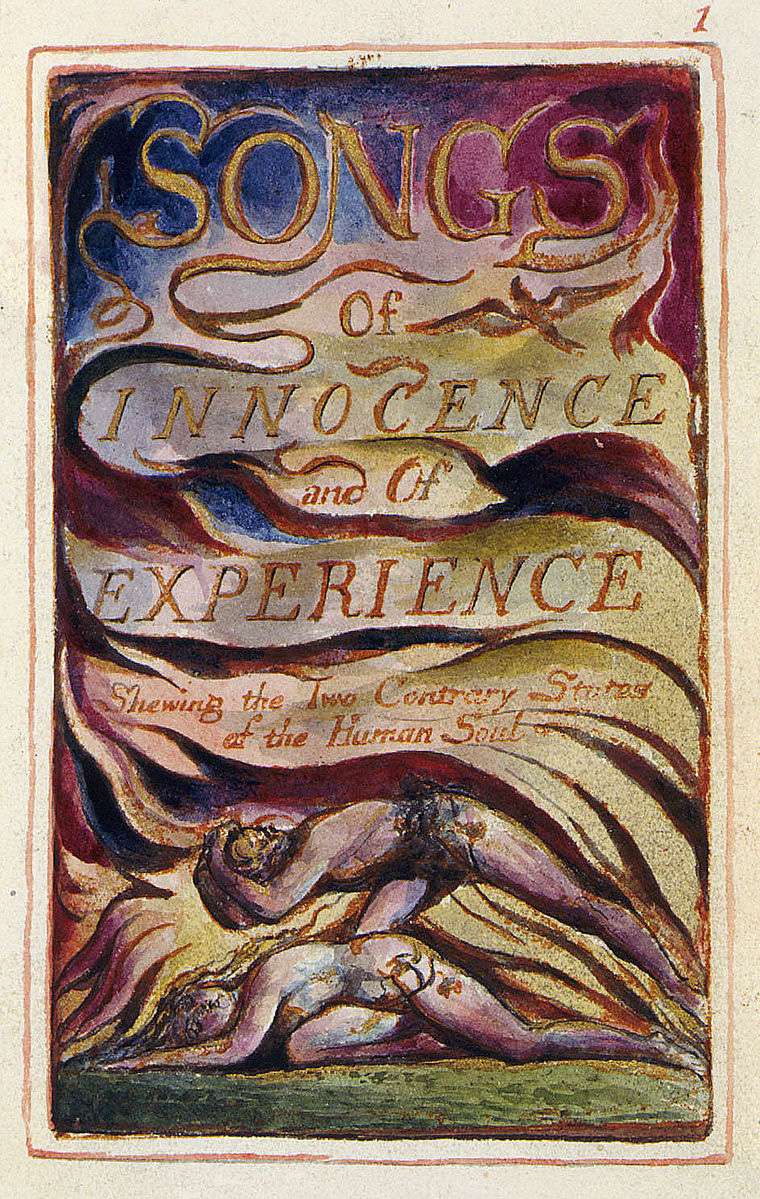
In the forests of the night, William Blake saw angels. This collection gathers his most accessible and most radical work: the paired visions of Songs of Innocence and Songs of Experience, where the same world transforms entirely through the eyes of a child and through the eyes of a soul that has known suffering. Here are the poems that have haunted readers for generations: "The Lamb," whose gentle question finds its terrifying answer in "The Tyger"; "The Blossom" beside "The Sick Rose," beauty confronting corruption. Blake believed these opposing states existed simultaneously in every human soul, and he illustrated his own verses with luminous watercolors that make each page a small window into his divine imagination. The Book of Thel extends this meditation on mortality through the story of a lily who fears to bloom. Blake's mystical vision, rooted in Christian mysticism and radical political dissent, presents a world where every natural object breathes with spiritual significance. This is poetry that refuses to let the reader remain comfortable, demanding instead that we confront the terrible questions at the heart of existence.
Editions
X-Ray
“Never seek to tell thy love, Love that never told can be; For the gentle wind doth move Silently, invisibly. I told my love, I told my love, I told her all my heart, Trembling, cold, in ghastly fears. Ah! she did depart! Soon after she was gone from me, A traveller came by, Silently, invisibly: He took her with a sigh.””
— William Blake
“It is right it should be so;Man was made for joy and woe;And when this we rightly know,Thro' the world we safely go.Joy and woe are woven fine,A clothing for the soul divine.Under every grief and pineRuns a joy with silken twine.””
— William Blake
“Cruelty has a human heart,And Jealousy a human face;Terror the human form divine,And Secresy the human dress.The human dress is forged iron,The human form a fiery forge,The human face a furnace sealed,The human heart its hungry gorge.- "A DIVINE IMAGE””
— William Blake
“I am made to sow the thistle for wheat; the nettle for a nourishing daintyI have planted a false oath in the earth, it has brought forth a poison treeI have chosen the serpent for a councellor & the dog for a schoolmaster to my childrenI have blotted out from light & living the dove & the nightingaleAnd I have caused the earthworm to beg from door to door I have taught the thief a secret path into the house of the justI have taught pale artifice to spread his nets upon the morningMy heavens are brass my earth is iron my moon a clod of clayMy sun a pestilence burning at noon & a vapor of death in night””
— William Blake
“He who mocks the infant's faithShall be mock'd in age and death.He who shall teach the child to doubtThe rotting grave shall ne'er get out.He who respects the infant's faithTriumphs over hell and death.The child's toys and the old man's reasonsAre the fruits of the two seasons.- "Auguries of Innocence””
— William Blake
“WHEN the voices of children are heard on the green, And laughing is heard on the hill, My heart is at rest within my breast, And everything else is still. Then come home, my children, the sun is gone down, And the dews of night arise; Come, come, leave off play, and let us away Till the morning appears in the skies. No, no, let us play, for it is yet day, And we cannot go to sleep; Besides, in the sky the little birds fly, And the hills are all cover’d with sheep. Well, well, go and play till the light fades away, And then go home to bed.’ The little ones leaped and shouted and laugh’d And all the hills echoed.””
— William Blake
“I have no nameI am but two days old.-What shall I call thee?I happy amJoy is my name,-Sweet joy befell thee!Pretty joy!Sweet joy but two days old.Sweet joy I call thee:Thou dost smile.I sing the whileSweet joy befell thee.- "Infant Joy””
— William Blake
“A robin redbreast in a cagePuts all heaven in a rage.A dove-house fill'd with doves and pigeonsShudders hell thro' all its regions.A dog starv'd at his master's gatePredicts the ruin of the state.A horse misused upon the roadCalls to heaven for human blood.Each outcry of the hunted hareA fibre from the brain does tear.A skylark wounded in the wing,A cherubim does cease to sing.The game-cock clipt and arm'd for fightDoes the rising sun affright.Every wolf's and lion's howlRaises from hell a human soul.””
— William Blake
“The emmet's inch and eagle's mileMake lame philosophy to smile.He who doubts from what he seesWill ne'er believe, do what you please.- "Auguries of Innocence””
— William Blake
Link to this book
Add a free, dofollow link to Lex on your blog, forum, syllabus, or reading list.

<a href="https://lex-books.com/book/poems-of-william-blake-fc959514-12f3-4413-a601-999bb79938f2"><img src="https://lex-books.com/badges/read-on-lex.svg" alt="Read Poems of William Blake by William Blake free on Lex" width="160" height="40"></a>[](https://lex-books.com/book/poems-of-william-blake-fc959514-12f3-4413-a601-999bb79938f2)[url=https://lex-books.com/book/poems-of-william-blake-fc959514-12f3-4413-a601-999bb79938f2][img]https://lex-books.com/badges/read-on-lex.svg[/img][/url]Read Poems of William Blake by William Blake free on Lex: https://lex-books.com/book/poems-of-william-blake-fc959514-12f3-4413-a601-999bb79938f2Cite this book
Reading this edition for a paper or guide? Copy a citation.
Blake, William. Poems of William Blake. Lex, lex-books.com/book/poems-of-william-blake-fc959514-12f3-4413-a601-999bb79938f2.Blake, W. (1921). Poems of William Blake. Lex. https://lex-books.com/book/poems-of-william-blake-fc959514-12f3-4413-a601-999bb79938f2Blake, William. Poems of William Blake. Lex. https://lex-books.com/book/poems-of-william-blake-fc959514-12f3-4413-a601-999bb79938f2.