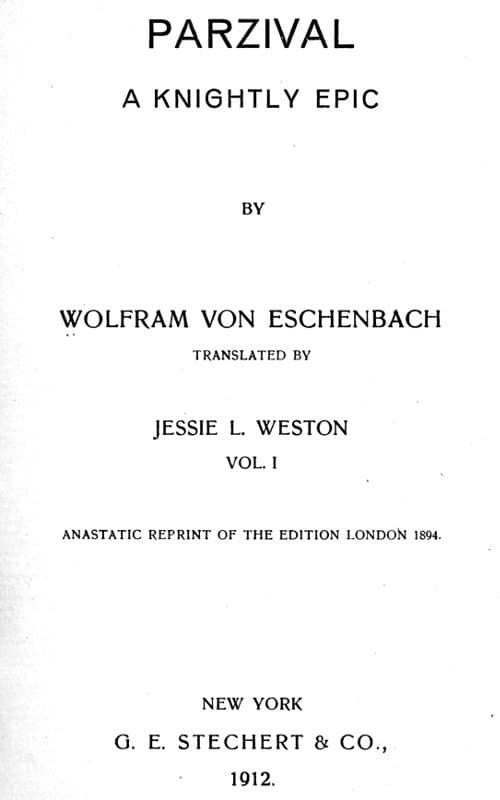
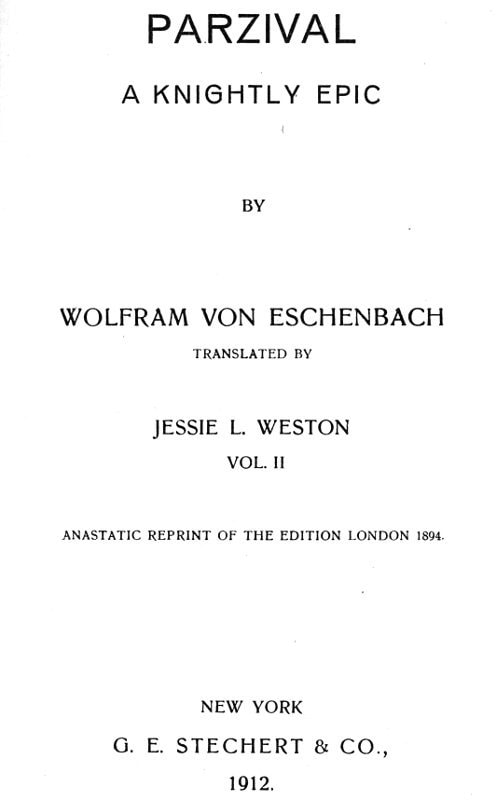
Parzival: A Knightly Epic (vol. 2 of 2)
1200
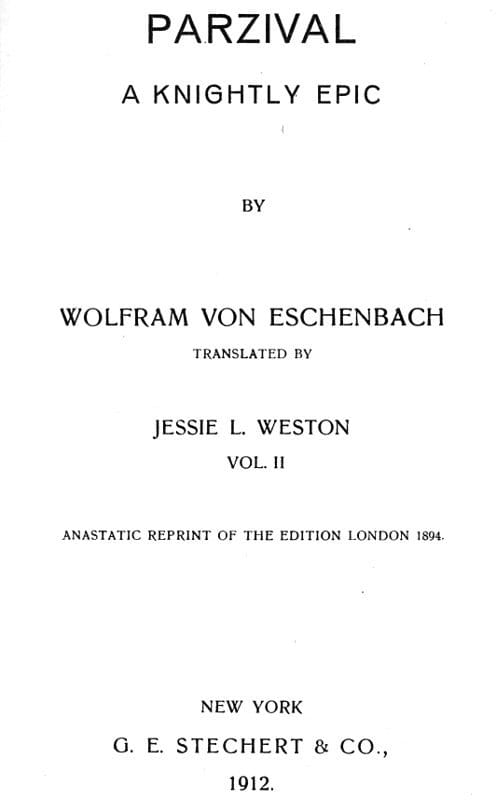
Parzival: A Knightly Epic (vol. 2 of 2)
1200
Translated by Jessie L. (Jessie Laidlay) Weston
Volume two of Wolfram von Eschenbach's monumental epic shifts its gaze from Parzival to his cousin Gawain, and in doing so reveals a darker, more tangled vision of knighthood. Where Parzival's path winds toward spiritual enlightenment, Gawain's journey exposes the crushing weight of reputation, the perilous distance between performing virtue and possessing it. Through encounters with enchantment, desire, and moral compromise, Wolfram excavates what lies beneath the shining surface of Arthurian chivalry: a world where even the most celebrated knights stumble through confusion, guilt, and the haunting possibility that valor alone cannot redeem a troubled soul. This volume stands as a devastating counterpoint to Parzival's eventual triumph, offering instead a portrait of spiritual struggle without easy resolution. Written in the early thirteenth century by a knight who understood courtly life from the inside, Wolfram's masterpiece refuses the easy comforts of moral certainty, insisting instead that the quest for the Grail is above all a quest for the soul.
Editions
X-Ray
“Let mercy keep company with courage. Follow my advice in this: if in battle you win a man’s surrender, then unless he has done you such grievance as amounts to heart’s sorrow, accept his oath, and let him live.””
— von Eschenbach Wolfram
“If doubt is near neighbor to the heart, that may turn sour on the soul. There is both scorning and adorning when a man’s undaunted mind turns pied like the magpie’s hue. Yet he may still enjoy bliss, for both have a share in him, Heaven and Hell. Inconstancy’s companion holds entirely to the black colour and will, indeed, take on darkness’s hue, while he who is constant in his thoughts will hold to the white.””
— von Eschenbach Wolfram
“Then the King of Arragon pushed old Utepandragun over his horse’s tail down on to the meadow – the King of Britain! – where he lay in a bed of flowers!””
— von Eschenbach Wolfram
“Sir, if you are otherwise discreet, you will consider that you have gone far enough. At my brother's request I am treating you no less kindly than Ampflise treated my uncle Gahmuret, without going to bed together. My kindness would in the long run outweigh hers, if anyone were to weigh us properly. And besides, Sir, I don't know who you are, and yet in such a short space of time you want to have my love.””
— von Eschenbach Wolfram
“Entonces Parsifal le contestó:«Si la caballería, con escudo y lanza,puede conseguir la recompensa en la tierray el paraíso para el alma, seré siempre caballero.»En verdad tu nombre es Parsifalque significa: corta por la mitad.””
— von Eschenbach Wolfram
“When indecision’s in the heartThe soul is bound to grieve and smart.””
— von Eschenbach Wolfram
“Will ich Vertrauen finden, da, wo es zu verschwinden weiß wie Feuer in den Brunnenquellen und der Tau an der Sonne?””
— von Eschenbach Wolfram
“His ways were a refuge from falsity.””
— von Eschenbach Wolfram
Link to this book
Add a free, dofollow link to Lex on your blog, forum, syllabus, or reading list.

<a href="https://lex-books.com/book/parzival-a-knightly-epic-vol-2-of-2-409b4d8a-08b9-4ee1-b7e7-637fedea267a"><img src="https://lex-books.com/badges/read-on-lex.svg" alt="Read Parzival: A Knightly Epic (vol. 2 of 2) by von Eschenbach Wolfram free on Lex" width="160" height="40"></a>[](https://lex-books.com/book/parzival-a-knightly-epic-vol-2-of-2-409b4d8a-08b9-4ee1-b7e7-637fedea267a)[url=https://lex-books.com/book/parzival-a-knightly-epic-vol-2-of-2-409b4d8a-08b9-4ee1-b7e7-637fedea267a][img]https://lex-books.com/badges/read-on-lex.svg[/img][/url]Read Parzival: A Knightly Epic (vol. 2 of 2) by von Eschenbach Wolfram free on Lex: https://lex-books.com/book/parzival-a-knightly-epic-vol-2-of-2-409b4d8a-08b9-4ee1-b7e7-637fedea267aCite this book
Reading this edition for a paper or guide? Copy a citation.
Wolfram, von Eschenbach. Parzival: A Knightly Epic (vol. 2 of 2). Lex, lex-books.com/book/parzival-a-knightly-epic-vol-2-of-2-409b4d8a-08b9-4ee1-b7e7-637fedea267a.Wolfram, V. E. (1200). Parzival: A Knightly Epic (vol. 2 of 2). Lex. https://lex-books.com/book/parzival-a-knightly-epic-vol-2-of-2-409b4d8a-08b9-4ee1-b7e7-637fedea267aWolfram, von Eschenbach. Parzival: A Knightly Epic (vol. 2 of 2). Lex. https://lex-books.com/book/parzival-a-knightly-epic-vol-2-of-2-409b4d8a-08b9-4ee1-b7e7-637fedea267a.