On the Nature of Things
1920
On the Nature of Things
1920
Translated by William Ellery Leonard
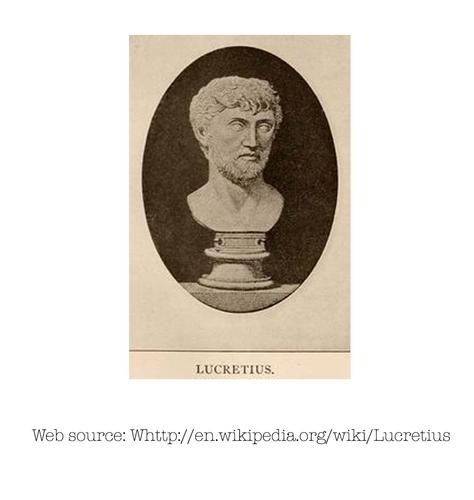
Two thousand years before modern physics confirmed his intuition, a Roman poet argued that the universe is made of atoms falling through empty space, that the soul dies with the body, and that the gods have nothing to do with our fates. De rerum natura is not a philosophy textbook in verse. It is a fevered, passionate argument for human liberation from the terror of superstition. Lucretius believed that understanding nature's true machinery would free humanity from the grip of religious fear and the dread of death that poisons our nights. He writes with the urgency of someone convinced that millions live in chains of error, and his poetry burns with that conviction. This is the earliest complete Latin poem we possess, and it reads like something discovered in a time capsule meant for a more rational age. Its influence stretches from the Renaissance through the Enlightenment, shaping thinkers who never admitted where their ideas came from. The message remains the same: we are transient arrangements of eternal matter, death is simply the dissolution of that arrangement, and the only reasonable response is to live without the shadow of irrational fear.
Editions
X-Ray
“All religions are equally sublime to the ignorant, useful to the politician, and ridiculous to the philosopher.””
— Titus Lucretius Carus
“Air, I should explain, becomes wind when it is agitated.””
— Titus Lucretius Carus
“Tantum religio potuit suadere malorum. (To such heights of evil are men driven by religion.)””
— Titus Lucretius Carus
“It's easier to avoid the snares of love than to escape once you are in that net whose cords and knots are strong; but even so, enmeshed, entangled, you can still get out unless, poor fool, you stand in your own way.””
— Titus Lucretius Carus
“There can be no centrein infinity.””
— Titus Lucretius Carus
“Watch a man in times of adversity to discover what kind of man he is; for then at last words of truth are drawn from the depths of his heart, and the mask is torn off.””
— Titus Lucretius Carus
“There is nothing that exists so great or marvelous that over time mankind does not admire it less and less.””
— Titus Lucretius Carus
“...nothing is more blissful than to occupy the heights effectively fortified by the teaching of the wise, tranquil sanctuaries from which you can look down upon others and see them wandering everywhere in their random search for the way of life, competing for intellectual eminence, disputing about rank, and striving night and day with prodigious effort to scale the summit of wealth and to secure power. O minds of mortals, blighted by your blindness! Amid what deep darkness and daunting dangers life’s little day is passed! To think that you should fail to see that nature importantly demands only that the body may be rid of pain, and that the mind, divorced from anxiety and fear, may enjoy a feeling of contentment!””
— Titus Lucretius Carus
“For fools admire and love those things they see hidden in verses turned all upside down, and take for truth what sweetly strokes the ears and comes with sound of phrases fine imbued.””
— Titus Lucretius Carus
Link to this book
Add a free, dofollow link to Lex on your blog, forum, syllabus, or reading list.

<a href="https://lex-books.com/book/on-the-nature-of-things-faddac26-9daa-443e-88b5-b41270ccda8f"><img src="https://lex-books.com/badges/read-on-lex.svg" alt="Read On the Nature of Things by Titus Lucretius Carus free on Lex" width="160" height="40"></a>[](https://lex-books.com/book/on-the-nature-of-things-faddac26-9daa-443e-88b5-b41270ccda8f)[url=https://lex-books.com/book/on-the-nature-of-things-faddac26-9daa-443e-88b5-b41270ccda8f][img]https://lex-books.com/badges/read-on-lex.svg[/img][/url]Read On the Nature of Things by Titus Lucretius Carus free on Lex: https://lex-books.com/book/on-the-nature-of-things-faddac26-9daa-443e-88b5-b41270ccda8fCite this book
Reading this edition for a paper or guide? Copy a citation.
Carus, Titus Lucretius. On the Nature of Things. Lex, lex-books.com/book/on-the-nature-of-things-faddac26-9daa-443e-88b5-b41270ccda8f.Carus, T. L. (1920). On the Nature of Things. Lex. https://lex-books.com/book/on-the-nature-of-things-faddac26-9daa-443e-88b5-b41270ccda8fCarus, Titus Lucretius. On the Nature of Things. Lex. https://lex-books.com/book/on-the-nature-of-things-faddac26-9daa-443e-88b5-b41270ccda8f.