Hegel's Lectures on the History of Philosophy: Volume 3 (of 3)
1892
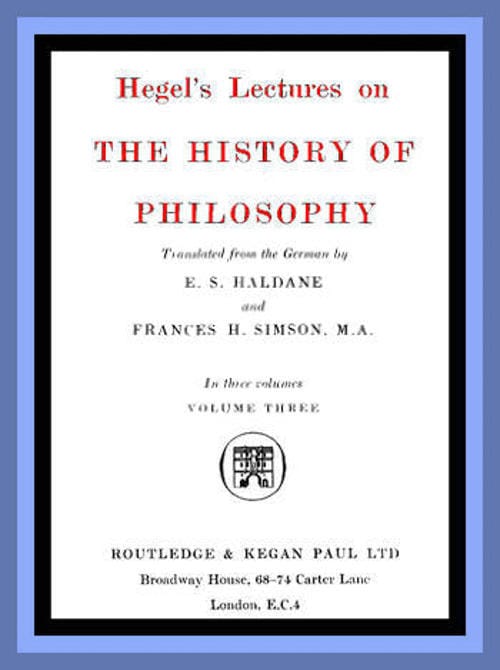
Hegel's Lectures on the History of Philosophy: Volume 3 (of 3)
1892
Translated by Elizabeth Sanderson Haldane
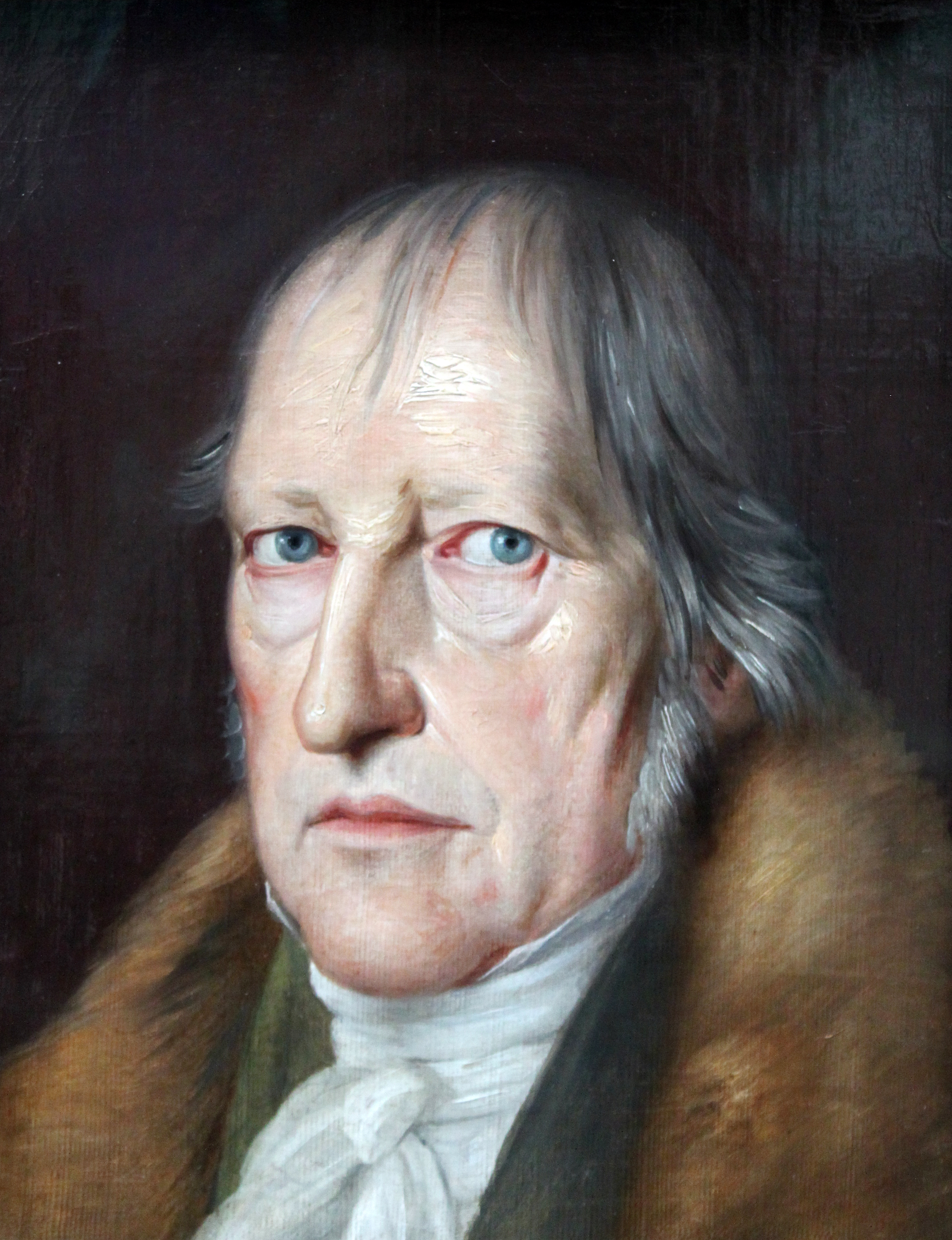
Hegel's Lectures on the History of Philosophy: Volume 3, first published in 1892, continues the examination of philosophical development, focusing on the Middle Ages and the rise of modern thought. Hegel discusses the influence of Christianity, the contributions of medieval philosophers, and the preservation of Greek thought by Arabian and Jewish scholars. This volume highlights the evolution of ideas and the integration of religious concepts into philosophy, providing a critical analysis of the transition to modern philosophical frameworks. The English translation by E. S. Haldane and Frances H. Simson is noted for its reliability.
Editions
X-Ray
“It is when subjective consciousness maintains its independence of everything, that it says, 'It is I who through my educated thoughts can annul all determinations of right, morality, good, &c., because I am clearly master of them, and I know that if anything seems good to me I can easily subvert it, because things are only true to me in so far as they please me now.' This irony is thus only a trifling with everything, and it can transform all things into show: to this subjectivity nothing is any longer serious, for any seriousness which it has, immediately becomes dissipated again in jokes, and all noble or divine truth vanishes away or becomes mere triviality.””
— Georg Wilhelm Friedrich Hegel
“Religion is a begetting of the divine spirit, not an invention of human beings but an effect of the divine at work, of the divine productive process within humanity””
— Georg Wilhelm Friedrich Hegel
“Ученая эрудиция состоит именно в том, чтобы знать массу безполезных вещей, т.е. таких вещей которые сами по себе безсодержательны и лишены всякого интереса, а интересны для ученого эрудита только лишь потому, что он их знает.””
— Georg Wilhelm Friedrich Hegel
Link to this book
Add a free, dofollow link to Lex on your blog, forum, syllabus, or reading list.

<a href="https://lex-books.com/book/hegel-s-lectures-on-the-history-of-philosophy-volume-3-of-3-83707fd1-ecae-4b6a-a714-e2ce0f2b402f"><img src="https://lex-books.com/badges/read-on-lex.svg" alt="Read Hegel's Lectures on the History of Philosophy: Volume 3 (of 3) by Georg Wilhelm Friedrich Hegel free on Lex" width="160" height="40"></a>[](https://lex-books.com/book/hegel-s-lectures-on-the-history-of-philosophy-volume-3-of-3-83707fd1-ecae-4b6a-a714-e2ce0f2b402f)[url=https://lex-books.com/book/hegel-s-lectures-on-the-history-of-philosophy-volume-3-of-3-83707fd1-ecae-4b6a-a714-e2ce0f2b402f][img]https://lex-books.com/badges/read-on-lex.svg[/img][/url]Read Hegel's Lectures on the History of Philosophy: Volume 3 (of 3) by Georg Wilhelm Friedrich Hegel free on Lex: https://lex-books.com/book/hegel-s-lectures-on-the-history-of-philosophy-volume-3-of-3-83707fd1-ecae-4b6a-a714-e2ce0f2b402fCite this book
Reading this edition for a paper or guide? Copy a citation.
Hegel, Georg Wilhelm Friedrich. Hegel's Lectures on the History of Philosophy: Volume 3 (of 3). Lex, lex-books.com/book/hegel-s-lectures-on-the-history-of-philosophy-volume-3-of-3-83707fd1-ecae-4b6a-a714-e2ce0f2b402f.Hegel, G. W. F. (1892). Hegel's Lectures on the History of Philosophy: Volume 3 (of 3). Lex. https://lex-books.com/book/hegel-s-lectures-on-the-history-of-philosophy-volume-3-of-3-83707fd1-ecae-4b6a-a714-e2ce0f2b402fHegel, Georg Wilhelm Friedrich. Hegel's Lectures on the History of Philosophy: Volume 3 (of 3). Lex. https://lex-books.com/book/hegel-s-lectures-on-the-history-of-philosophy-volume-3-of-3-83707fd1-ecae-4b6a-a714-e2ce0f2b402f.