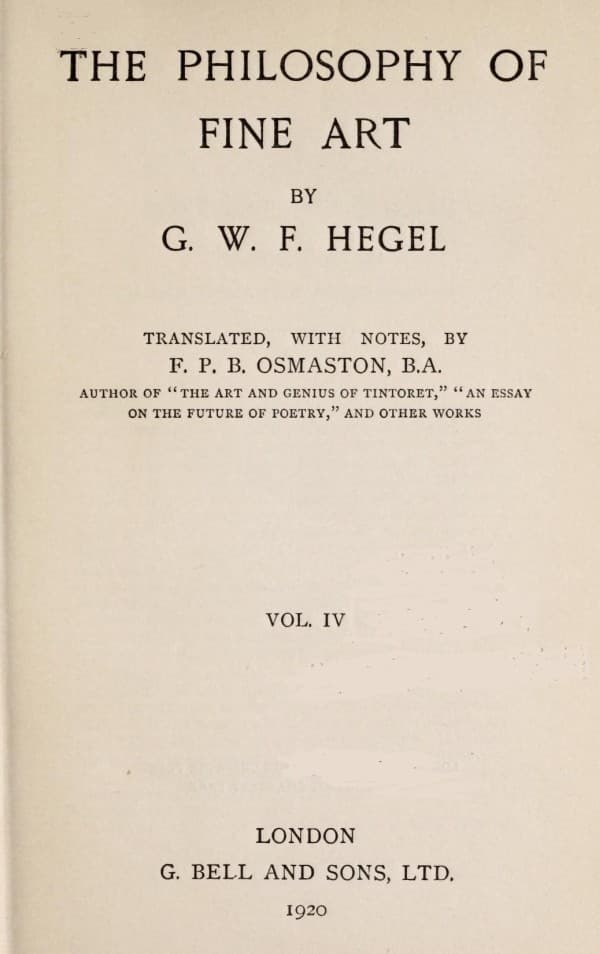
Hegel's Lectures on the History of Philosophy: Volume 1 (of 3)
1892

Hegel's Lectures on the History of Philosophy: Volume 1 (of 3)
1892
Translated by Elizabeth Sanderson Haldane
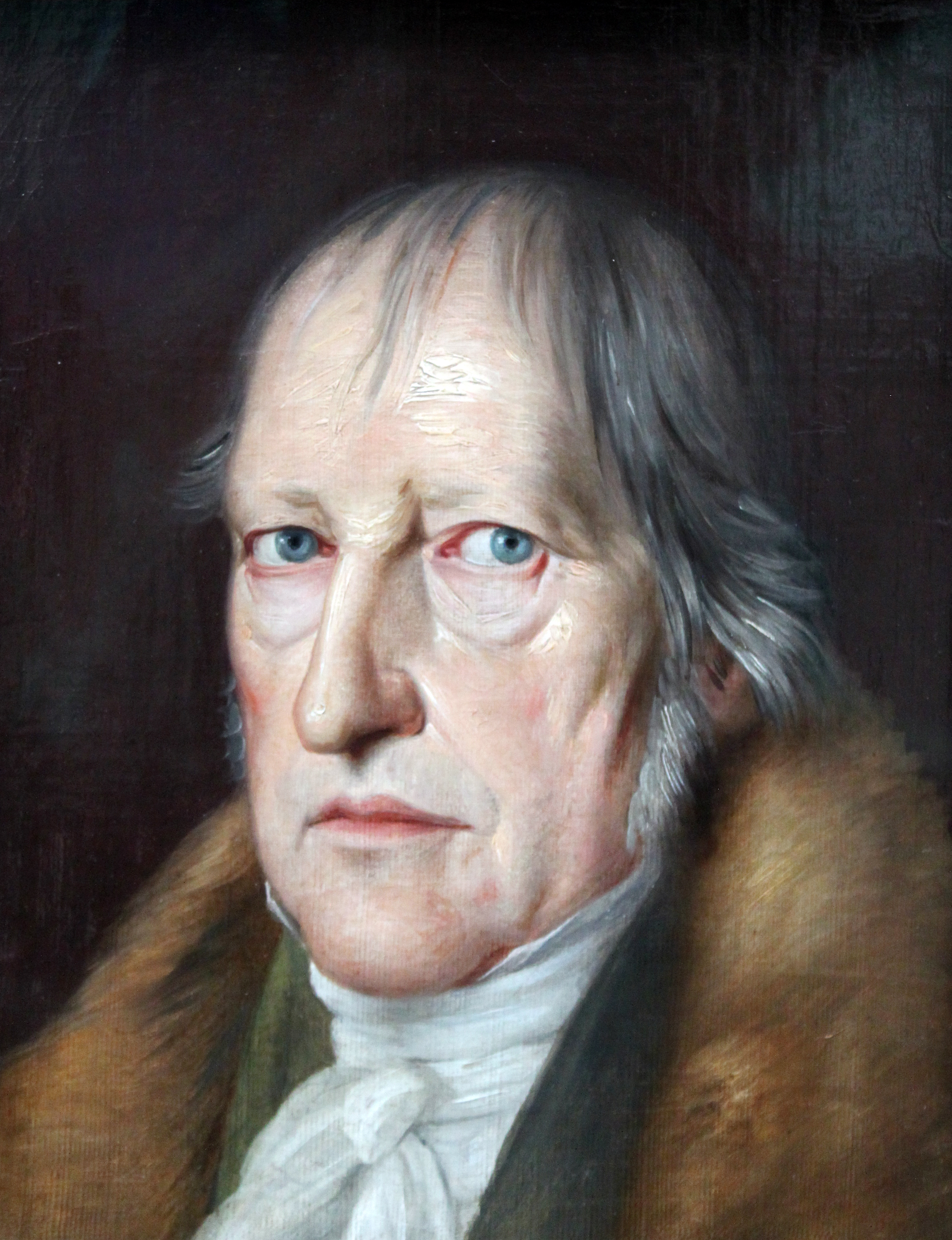
Hegel believed the history of philosophy was not a graveyard of outdated ideas but philosophy itself in motion, a living dialogue where each epoch advances our grasp of truth. In these lectures, he develops his radical method: to understand any philosophical system, you must understand its historical moment and its dialectical struggle with what came before. This first volume traces the grand arc from the ancient Greeks through medieval thought, showing how each philosopher's work emerged from and responded to its predecessors. Hegel makes no attempt at neutral cataloging; he judges, interprets, and integrates, arguing that philosophy has always been one continuous unfolding of the absolute idea. The result is demanding, passionate, and often infuriating, Hegel dismisses entire traditions as mere "opinions" while elevating others as necessary stages in reason's self-realization. For anyone seeking to understand how we got from Thales to the present, or why Hegel remains unavoidable in any serious philosophical education, this volume remains essential.
Editions

Link to this book
Add a free, dofollow link to Lex on your blog, forum, syllabus, or reading list.

<a href="https://lex-books.com/book/hegel-s-lectures-on-the-history-of-philosophy-volume-1-of-3-cc4a58fe-f70a-4c4f-9c78-a92551186277"><img src="https://lex-books.com/badges/read-on-lex.svg" alt="Read Hegel's Lectures on the History of Philosophy: Volume 1 (of 3) by Georg Wilhelm Friedrich Hegel free on Lex" width="160" height="40"></a>[](https://lex-books.com/book/hegel-s-lectures-on-the-history-of-philosophy-volume-1-of-3-cc4a58fe-f70a-4c4f-9c78-a92551186277)[url=https://lex-books.com/book/hegel-s-lectures-on-the-history-of-philosophy-volume-1-of-3-cc4a58fe-f70a-4c4f-9c78-a92551186277][img]https://lex-books.com/badges/read-on-lex.svg[/img][/url]Read Hegel's Lectures on the History of Philosophy: Volume 1 (of 3) by Georg Wilhelm Friedrich Hegel free on Lex: https://lex-books.com/book/hegel-s-lectures-on-the-history-of-philosophy-volume-1-of-3-cc4a58fe-f70a-4c4f-9c78-a92551186277Cite this book
Reading this edition for a paper or guide? Copy a citation.
Hegel, Georg Wilhelm Friedrich. Hegel's Lectures on the History of Philosophy: Volume 1 (of 3). Lex, lex-books.com/book/hegel-s-lectures-on-the-history-of-philosophy-volume-1-of-3-cc4a58fe-f70a-4c4f-9c78-a92551186277.Hegel, G. W. F. (1892). Hegel's Lectures on the History of Philosophy: Volume 1 (of 3). Lex. https://lex-books.com/book/hegel-s-lectures-on-the-history-of-philosophy-volume-1-of-3-cc4a58fe-f70a-4c4f-9c78-a92551186277Hegel, Georg Wilhelm Friedrich. Hegel's Lectures on the History of Philosophy: Volume 1 (of 3). Lex. https://lex-books.com/book/hegel-s-lectures-on-the-history-of-philosophy-volume-1-of-3-cc4a58fe-f70a-4c4f-9c78-a92551186277.