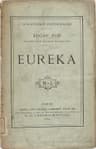
Eureka: A Prose Poem
1848
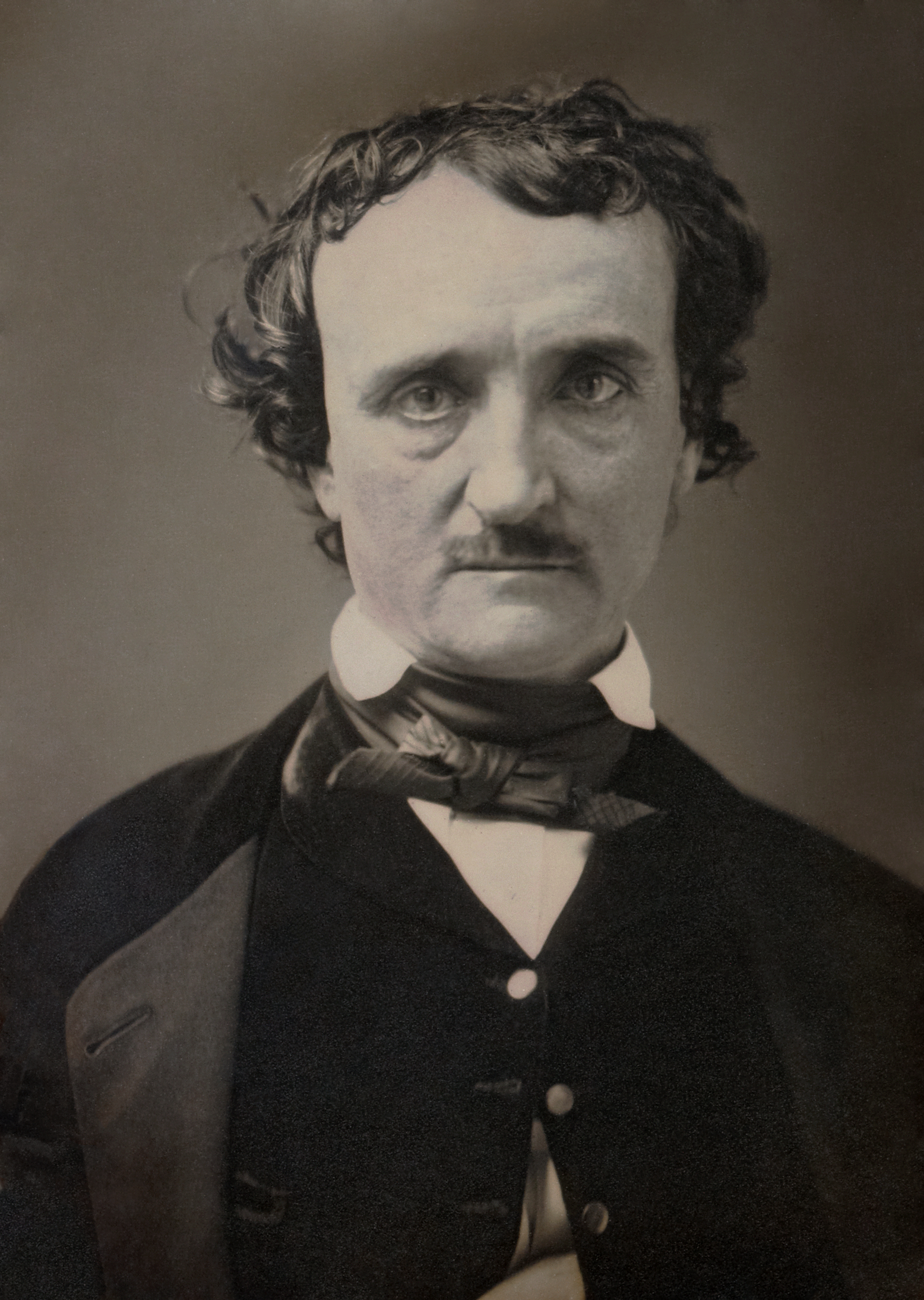
In 1848, the master of Gothic terror turned his gaze upward and outward, producing this audacious prose poem a year before his death. Poe presents not a story but a vision: the universe born from a single particle, matter constantly diffusing through space, gravity as the divine longing of all things to return to their source. He writes with the intensity of a man who believes he has glimpsed absolute truth, arguing that creation began with unity and must end with annihilation. Some of his intuitions staggeringly prefigure modern cosmology, the Big Bang, an expanding universe, entropy. Yet Eureka is no mere scientific speculation. It is poetry, philosophy, and prophecy intertwined, a work where Poe's obsession with death and the afterlife becomes cosmological, where the soul's relationship to God threads through discussions of attraction and repulsion. He dedicated it to Alexander von Humboldt and believed it his greatest achievement, more significant than Newton's discovery of gravity. The book was savaged by critics in his lifetime. Today it reads as the extraordinary document of a brilliant, tormented mind reaching beyond science into the realm of grand intuition.
Editions
X-Ray
“No thinking being lives who, at some luminous point of his life of thought, has not felt himself lost amid the surges of futile efforts at understanding, or believing, that anything exists greater than his own soul.””
— Edgar Allan Poe
“In the Original Unity of the First Thing lies the Secondary Cause of All Things, with the Germ of their Inevitable Annihilation.””
— Edgar Allan Poe
“Una cosa es consistente en razón de su verdad; una verdad lo es en razón de su consistencia. Una perfecta consistencia, repito, no puede ser sino una absoluta verdad.””
— Edgar Allan Poe
“El círculo matemático es una curva compuesta de una infinidad de líneas rectas. Pero esta idea del círculo, que para la geometría corriente es sólo la idea matemática, en oposición a la idea práctica, constituye en rigor la única concepción práctica que tenemos algún derecho de sostener con respecto al majestuoso círculo al que nos referimos, por lo menos en imaginación, cuando suponemos nuestro sistema girando alrededor de un punto en el centro de la Galaxia. ¡Que la imaginación humana más vigorosa intente dar un solo paso hacía la comprensión de curva tan inefable! No sería paradójico decir que un relámpago que recorriera eternamente el perímetro de este círculo fantástico viajaría eternamente en línea recta. Que la trayectoria del Sol en esa órbita se desviara para cualquier percepción humana en el más mínimo grado de la línea recta, aun en un millón de años, es una proposición insostenible; sin embargo, se nos pide creamos que una curvatura ha llegado a ser perceptible durante el breve período de nuestra historia astronómica, durante un mero punto, durante la nada absoluta de dos o tres mil años.””
— Edgar Allan Poe
“Conjeturando con Platón de vez en cuando, empleamos mejor el tiempo que escuchando una demostración de Alcmeón.””
— Edgar Allan Poe
“Por mi lado no tengo paciencia para fantasías tan tímidas, tan ociosas y tan torpes a un tiempo. Son propias de una absoluta cobardía de pensamiento.””
— Edgar Allan Poe
“Hemos llegado a un punto en que sólo la intuición puede ayudarnos; pero permítaseme repetir la idea que ya he sugerido como la única adecuada para expresar qué es la intuición. No es sino la convicción que surge de esas inducciones o deducciones cuyos procesos son tan oscuros que escapan a nuestra ciencia, eluden nuestra razón o desafían nuestra capacidad de expresión. Entendido esto, afirmo ahora que una intuición por completo irresistible aunque inexpresable me fuerza a la conclusión de que lo que Dios creó originariamente, esa materia que por obra de su voluntad sacó primero de su espíritu o de la nada, no pudo haber sido sino materia en su extremo estado concebible ¿de qué? De simplicidad.””
— Edgar Allan Poe
“«No conocemos nada acerca de la naturaleza o de la esencia de Dios; para saber qué es, se necesita ser Dios mismo.»””
— Edgar Allan Poe
“«La inteligencia admite la idea de espacio ilimitado a causa de la mayor imposibilidad para sostener la de espacio limitado.»””
— Edgar Allan Poe
Link to this book
Add a free, dofollow link to Lex on your blog, forum, syllabus, or reading list.

<a href="https://lex-books.com/book/eureka-a-prose-poem-22a5a624-1259-410b-97d9-dc1a68ca9aee"><img src="https://lex-books.com/badges/read-on-lex.svg" alt="Read Eureka: A Prose Poem by Edgar Allan Poe free on Lex" width="160" height="40"></a>[](https://lex-books.com/book/eureka-a-prose-poem-22a5a624-1259-410b-97d9-dc1a68ca9aee)[url=https://lex-books.com/book/eureka-a-prose-poem-22a5a624-1259-410b-97d9-dc1a68ca9aee][img]https://lex-books.com/badges/read-on-lex.svg[/img][/url]Read Eureka: A Prose Poem by Edgar Allan Poe free on Lex: https://lex-books.com/book/eureka-a-prose-poem-22a5a624-1259-410b-97d9-dc1a68ca9aeeCite this book
Reading this edition for a paper or guide? Copy a citation.
Poe, Edgar Allan. Eureka: A Prose Poem. Lex, lex-books.com/book/eureka-a-prose-poem-22a5a624-1259-410b-97d9-dc1a68ca9aee.Poe, E. A. (1848). Eureka: A Prose Poem. Lex. https://lex-books.com/book/eureka-a-prose-poem-22a5a624-1259-410b-97d9-dc1a68ca9aeePoe, Edgar Allan. Eureka: A Prose Poem. Lex. https://lex-books.com/book/eureka-a-prose-poem-22a5a624-1259-410b-97d9-dc1a68ca9aee.