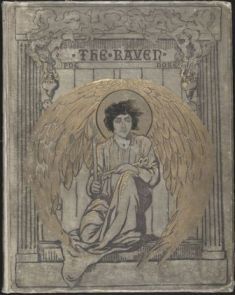
The Raven
1845
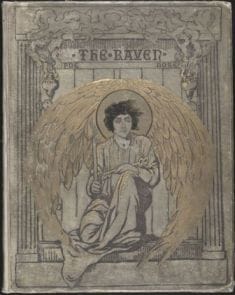
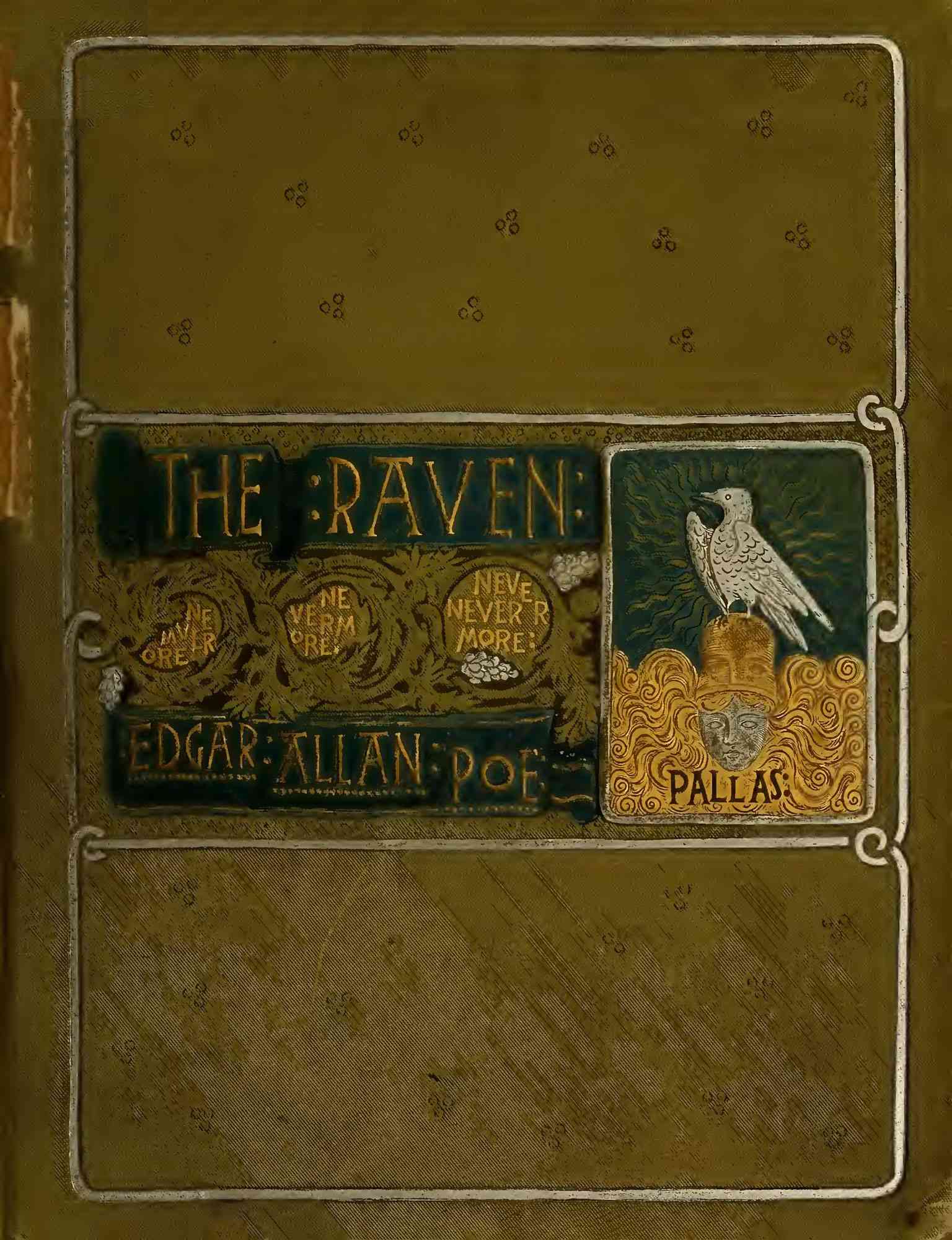
The poem opens on a bleak December night. A student, grieving for his lost love Lenore, sits alone in his chamber, drinking and trying to forget. A raven enters through the window, perches on a bust of Pallas, and will not leave. What follows is a descent into psychological torment as the student poses increasingly desperate questions to the bird - about his lost love, about whether he will ever hold her again, about whether his soul can escape the Night's Plutonian shore. The raven's only answer is nevermore. This single word, repeated like a knell, becomes unbearable. Poe understood something essential about grief: it is not the initial blow that destroys us, but the question of whether it will ever end. The raven is not a supernatural creature so much as the embodiment of the speaker's own despair, his refusal to accept the permanence of loss. The poem builds toward a devastating inevitability - the speaker knows what the answer will be, and he asks anyway, again and again, as if hoping to trick the bird into a different response. Poe composed the poem with meticulous care, as he explained in his essay "The Philosophy of Composition" - every sound, every rhyme, every repetition was deliberate. The result is a piece that works like music, a hypnotic rhythm that pulls you into the speaker's growing madness. More than a century and a half later, the poem retains its power. It is for anyone who has ever asked the unanswerable question and dreaded the answer.
Editions
X-Ray
“Once upon a midnight dreary, while I pondered, weak and weary,Over many a quaint and curious volume of forgotten lore,While I nodded, nearly napping, suddenly there came a tapping,As of some one gently rapping, rapping at my chamber door.Tis some visitor," I muttered, "tapping at my chamber door”
— Edgar Allan Poe
“Deep into that darkness peering, long I stood there, wondering, fearing, doubting, dreaming dreams no mortal ever dared to dream before.””
— Edgar Allan Poe
“Quoth the Raven, "Nevermore.””
— Edgar Allan Poe
“Leave my loneliness unbroken””
— Edgar Allan Poe
“Let my heart be still a moment and this mystery explore...””
— Edgar Allan Poe
“Here I opened wide the door;”
— Edgar Allan Poe
“Then, methought, the air grew denser, perfumed from an unseen censerSwung by Seraphim whose footfalls tinkled on the tufted floor."Wretch," I cried, "thy God hath lent thee--by these angels he hath sent thee--Respite--respite and nepenthe from thy memories of Lenore!Quaff, oh quaff this kind nepenthe, and forget this lost Lenore!"Quothe the Raven, "Nevermore.””
— Edgar Allan Poe
“Deep into that darkness peering, long I stood there wondering, fearing,Doubting, dreaming dreams no mortals ever dared to dream before;But the silence was unbroken, and the stillness gave no token,And the only word there spoken was the whispered word, "Lenore?"This I whispered, and an echo murmured back the word, "Lenore!"”
— Edgar Allan Poe
“Darkness there, and nothing more.””
— Edgar Allan Poe
Link to this book
Add a free, dofollow link to Lex on your blog, forum, syllabus, or reading list.

<a href="https://lex-books.com/book/the-raven-a3cbcf06-8f4f-4a7a-a207-e7cef1a2bff7"><img src="https://lex-books.com/badges/read-on-lex.svg" alt="Read The Raven by Edgar Allan Poe free on Lex" width="160" height="40"></a>[](https://lex-books.com/book/the-raven-a3cbcf06-8f4f-4a7a-a207-e7cef1a2bff7)[url=https://lex-books.com/book/the-raven-a3cbcf06-8f4f-4a7a-a207-e7cef1a2bff7][img]https://lex-books.com/badges/read-on-lex.svg[/img][/url]Read The Raven by Edgar Allan Poe free on Lex: https://lex-books.com/book/the-raven-a3cbcf06-8f4f-4a7a-a207-e7cef1a2bff7Cite this book
Reading this edition for a paper or guide? Copy a citation.
Poe, Edgar Allan. The Raven. Lex, lex-books.com/book/the-raven-a3cbcf06-8f4f-4a7a-a207-e7cef1a2bff7.Poe, E. A. (1845). The Raven. Lex. https://lex-books.com/book/the-raven-a3cbcf06-8f4f-4a7a-a207-e7cef1a2bff7Poe, Edgar Allan. The Raven. Lex. https://lex-books.com/book/the-raven-a3cbcf06-8f4f-4a7a-a207-e7cef1a2bff7.