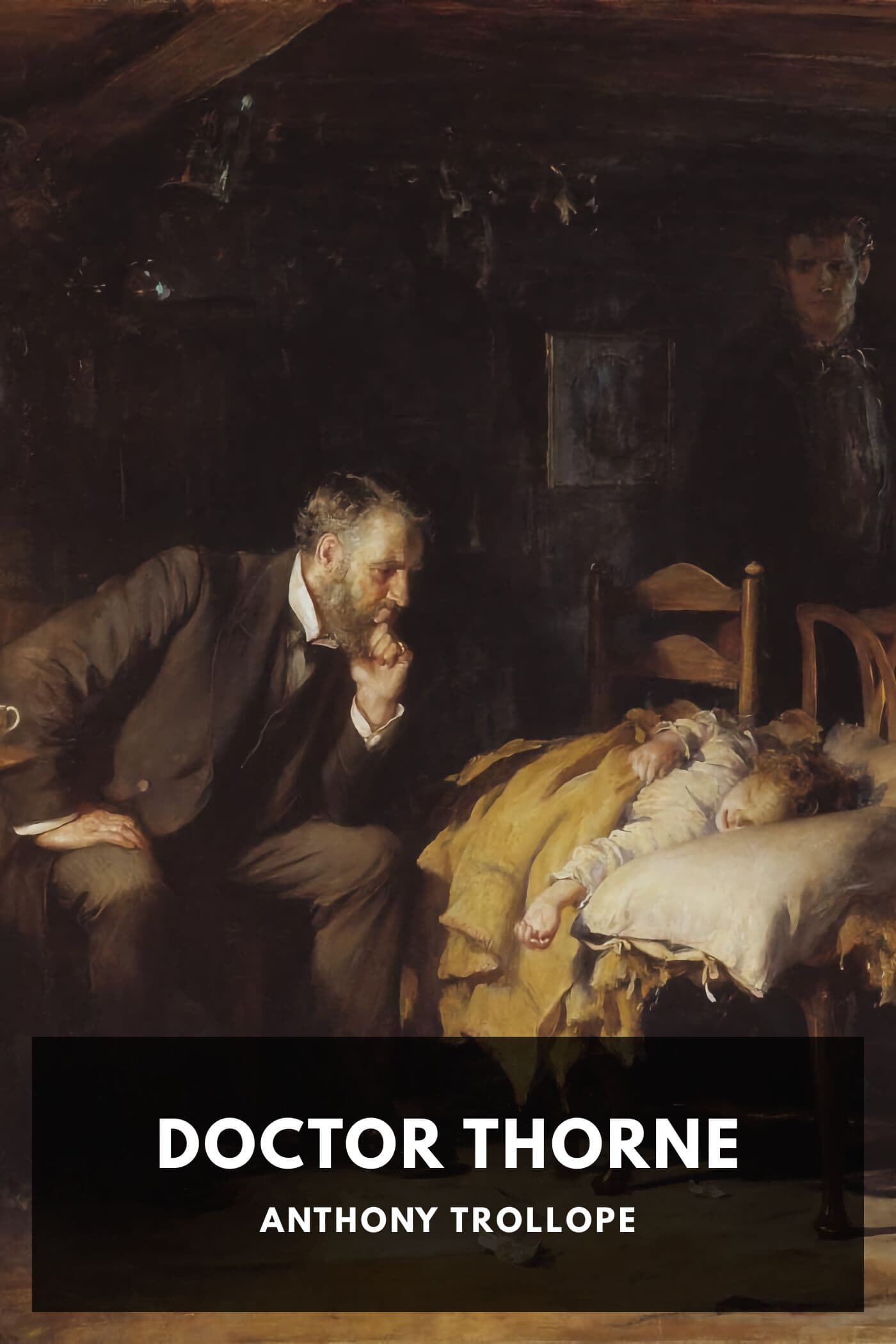
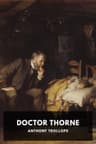
Doctor Thorne
1858
Dr. Thorne holds a secret that could solve everything. His niece Mary loves Frank Gresham, heir to Greshamsbury Hall, but Frank's family opposes the match, Mary appears penniless and illegitimate. What no one knows: Mary is entitled to a substantial fortune from her late father, a fact Dr. Thorne has kept hidden. The doctor believes his niece should be loved for herself, not her money. As the Gresham estate slides deeper into debt and Frank's ambitious mother pushes him toward a wealthy heiress, Dr. Thorne's principled silence becomes both a test of love and a quiet indictment of a society that measures worth in pounds. Set in the village of Greshamsbury, this third novel in the Chronicles of Barsetshire offers Trollope at his finest, observational, compassionate, and deceptively sharp about the hypocrisies beneath Victorian England's genteel surface. The result is a novel that understands how much easier it is to love someone when their bank account is known.
Editions
X-Ray
“Conduct! Is conduct everything? One may conduct oneself excellently, and yet break one's heart.””
— Anthony Trollope
“Wounds sometimes must be opened in order that they may be healed.””
— Anthony Trollope
“Rest and quiet are the comforts of those who have been content to remain in obscurity.””
— Anthony Trollope
“Of course, Lady Arabella could not suckle the young heir herself. Ladies Arabella never can. They are gifted with the powers of being mothers, but not nursing mothers. Nature gives them bosoms for show, but not for use. So Lady Arabella had a wet-nurse.””
— Anthony Trollope
“He had a pride in being a poor man of a high family; he had a pride in repudiating the very family of which he was proud; and he had a special pride in keeping his pride silently to himself.””
— Anthony Trollope
“Buying and selling is good and necessary; it is very necessary, and may, possibly, be very good; but it cannot be the noblest work of man; and let us hope that it may not in our time be esteemed the noblest work of an Englishman.””
— Anthony Trollope
“Mary, it must be remembered, was very nearly of the same age as Frank; but, as I and others have so often said before, 'Women grow on the sunny side of the wall.””
— Anthony Trollope
“And what had Mary said when these fervent protestations of an undying love had been thrown at her feet? Mary, it must be remembered, was very nearly of the same age as Frank; but, as I and others have so often said before, "Women grow on the sunny side of the wall." Though Frank was only a boy, it behoved Mary to be something more than a girl. Frank might be allowed, without laying himself open to much just reproach, to throw all of what he believed to be his heart into a protestation of what he believed to be love; but Mary was in duty bound to be more thoughtful, more reticent, more aware of the facts of their position, more careful of her own feelings, and more careful also of his.””
— Anthony Trollope
“I would carry you home, Mary, if it would do you a service,” said Frank, with considerable pathos in his voice. “Oh, dear me! pray do not, Mr Gresham. I should not like it at all,” said she: “a wheelbarrow would be preferable to that.””
— Anthony Trollope
Link to this book
Add a free, dofollow link to Lex on your blog, forum, syllabus, or reading list.

<a href="https://lex-books.com/book/doctor-thorne-0310882d-12d9-47fe-bf80-8b183d53fa6c"><img src="https://lex-books.com/badges/read-on-lex.svg" alt="Read Doctor Thorne by Anthony Trollope free on Lex" width="160" height="40"></a>[](https://lex-books.com/book/doctor-thorne-0310882d-12d9-47fe-bf80-8b183d53fa6c)[url=https://lex-books.com/book/doctor-thorne-0310882d-12d9-47fe-bf80-8b183d53fa6c][img]https://lex-books.com/badges/read-on-lex.svg[/img][/url]Read Doctor Thorne by Anthony Trollope free on Lex: https://lex-books.com/book/doctor-thorne-0310882d-12d9-47fe-bf80-8b183d53fa6cCite this book
Reading this edition for a paper or guide? Copy a citation.
Trollope, Anthony. Doctor Thorne. Lex, lex-books.com/book/doctor-thorne-0310882d-12d9-47fe-bf80-8b183d53fa6c.Trollope, A. (1858). Doctor Thorne. Lex. https://lex-books.com/book/doctor-thorne-0310882d-12d9-47fe-bf80-8b183d53fa6cTrollope, Anthony. Doctor Thorne. Lex. https://lex-books.com/book/doctor-thorne-0310882d-12d9-47fe-bf80-8b183d53fa6c.