An Autobiography of Anthony Trollope
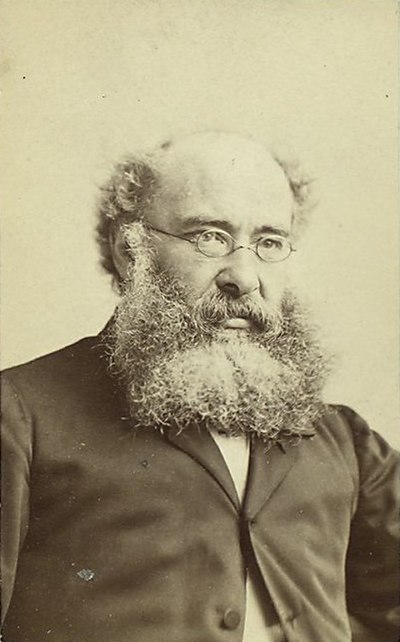
Anthony Trollope's autobiography is not the triumphant memoir of a celebrated novelist. It is something far more rare: a candid reckoning with a lifetime of doubt, discipline, and quiet defiance. Trollope writes with startling honesty about his miserable boyhood, plagued by poverty, social awkward, and the crushing indifference of his family. He admits he was told as a child that he would never amount to anything, and some part of him never quite believed otherwise. Yet this same man would go on to write over forty novels, revolutionize the British postal system, and sustain a writing habit that produced a thousand words before breakfast each morning. The autobiography traces that improbable journey, revealing how Trollope turned his private struggles into literary fuel, how he navigated the precarious economics of Victorian authorship, and how he ultimately found dignity in honest labor. It stands as both a memoir and a manifesto for anyone who has ever felt like an outsider in their own life.
Editions
X-Ray
“Nevertheless a certain class of dishonesty, dishonesty magnificent in its proportions, and climbing into high places, has become at the same time so rampant and so splendid that there seems to be reason for fearing that men and women will be taught to feel that dishonesty, if it can become splendid, will cease to be abominable. If dishonesty can live in a gorgeous palace with pictures on all its walls, and gems in all its cupboards, with marble and ivory in all its corners, and can give Apician dinners, and get into Parliament, and deal in millions, then dishonesty is not disgraceful, and the man dishonest after such a fashion is not a low scoundrel. Instigated, I say, by some such reflections as these, I sat down in my new house to write The Way We Live Now. And as I had ventured to take the whip of the satirist into my hand, I went beyond the iniquities of the great speculator who robs everybody, and made an onslaught also on other vices;--on the intrigues of girls who want to get married, on the luxury of young men who prefer to remain single, and on the puffing propensities of authors who desire to cheat the public into buying their volumes.””
— Anthony Trollope
“I have from the first felt sure that the writer, when he sits down to commence his novel, should do so, not because he has to tell a story, but because he has a story to tell. The novelist's first novel will generally have sprung from the right cause.””
— Anthony Trollope
“(On Charles Dickens) It has been the peculiarity and the marvel of this man’s power, that he has invested his puppets with a charm that has enabled him to dispense with human nature.””
— Anthony Trollope
“No novel is anything, for the purposes either of comedy or tragedy, unless the reader can sympathise with the characters whose names he finds upon the pages. Let an author so tell his tale as to touch his reader's heart and draw his tears, and he has, so far, done his work well. Truth let there be, --truth of description, truth of character, human truth as to men and women. If there be such truth, I do not know that a novel can be too sensational.””
— Anthony Trollope
“The writer of stories must please, or he will be nothing. And he must teach whether he wish to teach or no. How””
— Anthony Trollope
“The so-called Conservative, the conscientious, philanthropic Conservative, seeing this, and being surely convinced that such inequalities are of divine origin, tells himself that it is his duty to preserve them.””
— Anthony Trollope
“She continued writing up to 1856, when she was seventy-six years old,--and had at that time produced 114 volumes, of which the first was not written till she was fifty. Her career offers great encouragement to those who have not begun early in life, but are still ambitious to do something before they depart hence.””
— Anthony Trollope
“Her heart was in every way so perfect, her desire to do good to all around her so thorough, and her power of self-sacrifice so complete, that she generally got herself right in spite of her want of logic; but it must be acknowledged that she was emotional.””
— Anthony Trollope
Link to this book
Add a free, dofollow link to Lex on your blog, forum, syllabus, or reading list.

<a href="https://lex-books.com/book/an-autobiography-of-anthony-trollope-e0e27fe3-800e-4adf-ad62-63d44bfa42a0"><img src="https://lex-books.com/badges/read-on-lex.svg" alt="Read An Autobiography of Anthony Trollope by Anthony Trollope free on Lex" width="160" height="40"></a>[](https://lex-books.com/book/an-autobiography-of-anthony-trollope-e0e27fe3-800e-4adf-ad62-63d44bfa42a0)[url=https://lex-books.com/book/an-autobiography-of-anthony-trollope-e0e27fe3-800e-4adf-ad62-63d44bfa42a0][img]https://lex-books.com/badges/read-on-lex.svg[/img][/url]Read An Autobiography of Anthony Trollope by Anthony Trollope free on Lex: https://lex-books.com/book/an-autobiography-of-anthony-trollope-e0e27fe3-800e-4adf-ad62-63d44bfa42a0Cite this book
Reading this edition for a paper or guide? Copy a citation.
Trollope, Anthony. An Autobiography of Anthony Trollope. Lex, lex-books.com/book/an-autobiography-of-anthony-trollope-e0e27fe3-800e-4adf-ad62-63d44bfa42a0.Trollope, A. (n.d.). An Autobiography of Anthony Trollope. Lex. https://lex-books.com/book/an-autobiography-of-anthony-trollope-e0e27fe3-800e-4adf-ad62-63d44bfa42a0Trollope, Anthony. An Autobiography of Anthony Trollope. Lex. https://lex-books.com/book/an-autobiography-of-anthony-trollope-e0e27fe3-800e-4adf-ad62-63d44bfa42a0.