Diana Trelawny
1893
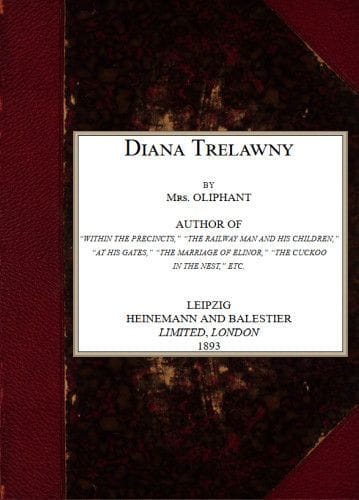
Diana Trelawny is thirty years old, wealthy, and utterly uninterested in marriage. In Victorian England, where a woman's worth was measured by her usefulness to a husband, Diana has carved out a different existence: she manages her estate, controls her considerable fortune, and answers to no one. Mrs. Oliphant paints her not as a bitter spinster or a romantic rebel, but as a woman who has deliberately chosen autonomy over the cage of matrimony, finding genuine fulfillment in her lands, her responsibilities, and her position in the community. The novel quietly asks what it might mean for a woman to possess herself entirely, her property and her person, without the mediating presence of a man. It remains a striking portrait of female self-determination for anyone drawn to Victorian fiction's subtler explorations of gender and the rare heroine who refuses the expected trajectory.
Editions
Link to this book
Add a free, dofollow link to Lex on your blog, forum, syllabus, or reading list.

<a href="https://lex-books.com/book/diana-trelawny-40734a55-7e7b-4f54-b297-231ceefd7809"><img src="https://lex-books.com/badges/read-on-lex.svg" alt="Read Diana Trelawny by Mrs. Oliphant free on Lex" width="160" height="40"></a>[](https://lex-books.com/book/diana-trelawny-40734a55-7e7b-4f54-b297-231ceefd7809)[url=https://lex-books.com/book/diana-trelawny-40734a55-7e7b-4f54-b297-231ceefd7809][img]https://lex-books.com/badges/read-on-lex.svg[/img][/url]Read Diana Trelawny by Mrs. Oliphant free on Lex: https://lex-books.com/book/diana-trelawny-40734a55-7e7b-4f54-b297-231ceefd7809Cite this book
Reading this edition for a paper or guide? Copy a citation.
Oliphant, Mrs.. Diana Trelawny. Lex, lex-books.com/book/diana-trelawny-40734a55-7e7b-4f54-b297-231ceefd7809.Oliphant, M. (1893). Diana Trelawny. Lex. https://lex-books.com/book/diana-trelawny-40734a55-7e7b-4f54-b297-231ceefd7809Oliphant, Mrs.. Diana Trelawny. Lex. https://lex-books.com/book/diana-trelawny-40734a55-7e7b-4f54-b297-231ceefd7809.