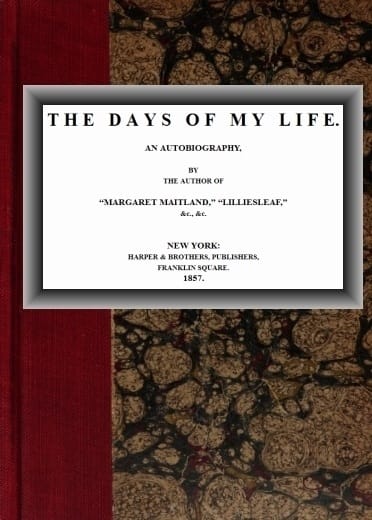
The Days of My Life: An Autobiography
1857
In 1857, Mrs. Oliphant crafted something between autobiography and novel, a luminous portrait of a young woman's consciousness unfolding against the flatlands of Cambridgeshire. The prose is extraordinary: every sunset becomes a meditation on time, every field of stubble a meditation on labor and belonging. This is not simply a memoir but a meditation on memory itself, on how we construct the stories we tell ourselves about who we are. Hester Southcote walks home through the autumn dusk, proud of her heritage, unaware that the world she knows is about to crack open. She encounters a stranger and a timid boy named Edgar who claims to be her cousin. This meeting stirs something in her: indignation, curiosity, the first tremors of understanding that family, like landscape, contains depths invisible to the casual eye. What follows is a quietly devastating exploration of identity, inheritance, and the social boundaries that defined a woman's entire existence in Victorian England. For readers who crave lyrical prose and the slow revelation of buried truths.
Editions
Link to this book
Add a free, dofollow link to Lex on your blog, forum, syllabus, or reading list.

<a href="https://lex-books.com/book/the-days-of-my-life-an-autobiography-498850e1-5828-42fb-85e3-54481c2bb99d"><img src="https://lex-books.com/badges/read-on-lex.svg" alt="Read The Days of My Life: An Autobiography by Mrs. Oliphant free on Lex" width="160" height="40"></a>[](https://lex-books.com/book/the-days-of-my-life-an-autobiography-498850e1-5828-42fb-85e3-54481c2bb99d)[url=https://lex-books.com/book/the-days-of-my-life-an-autobiography-498850e1-5828-42fb-85e3-54481c2bb99d][img]https://lex-books.com/badges/read-on-lex.svg[/img][/url]Read The Days of My Life: An Autobiography by Mrs. Oliphant free on Lex: https://lex-books.com/book/the-days-of-my-life-an-autobiography-498850e1-5828-42fb-85e3-54481c2bb99dCite this book
Reading this edition for a paper or guide? Copy a citation.
Oliphant, Mrs.. The Days of My Life: An Autobiography. Lex, lex-books.com/book/the-days-of-my-life-an-autobiography-498850e1-5828-42fb-85e3-54481c2bb99d.Oliphant, M. (1857). The Days of My Life: An Autobiography. Lex. https://lex-books.com/book/the-days-of-my-life-an-autobiography-498850e1-5828-42fb-85e3-54481c2bb99dOliphant, Mrs.. The Days of My Life: An Autobiography. Lex. https://lex-books.com/book/the-days-of-my-life-an-autobiography-498850e1-5828-42fb-85e3-54481c2bb99d.