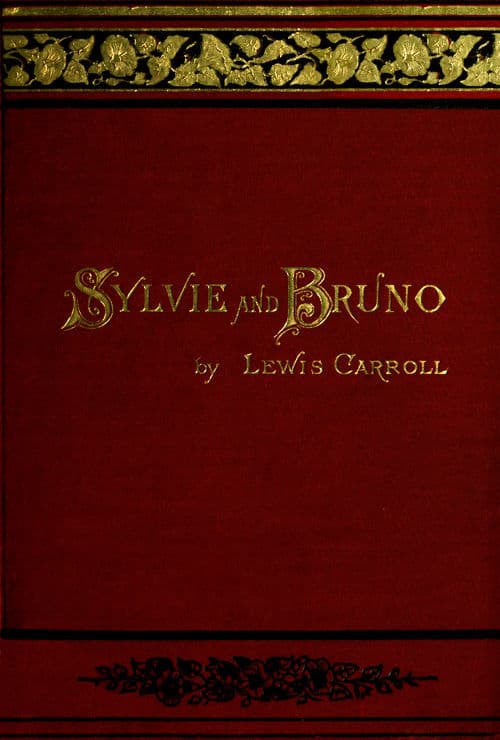
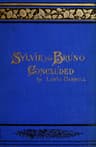
Sylvie and Bruno Concluded (illustrated)
1893
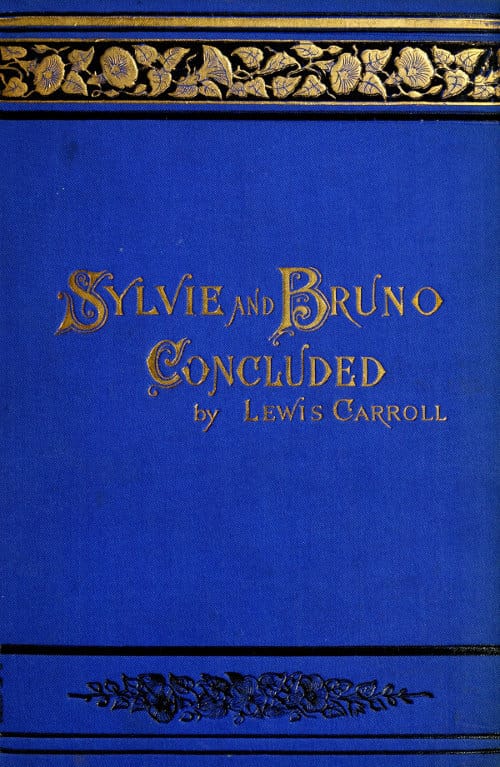
Sylvie and Bruno Concluded (illustrated)
1893
Carroll's final published novel is a daring experiment in dual-world storytelling that refuses to choose between nonsense and philosophy. The narrative splits between the sunlit absurdity of Fairyland, where Sylvie and Bruno frolic in fairylogic, and the fog-shrouded streets of Victorian London, where adults discuss religion, morality, and the rigid social codes that govern their lives. This is not Alice: there is less whimsy here, more longing, and a melancholy undercurrent that suggests Carroll wrestling with questions of duty, love, and what it means to belong to two worlds at once. The real world characters navigate broken engagements, unspoken desires, and conversations that range from the profound to the absurd. Bruno's childlike demands for 'looking-glass' logic intercut with earnest debates about faith and society. The effect is strange, sometimes jarring, always fascinating: a novel that operates in two registers simultaneously, one foot in the nursery and one in the drawing room. For readers willing to surrender to its peculiar rhythms, it offers something Alice cannot: the ache of growing up, the weight of adult responsibility, and the persistent question of whether magic can survive into adulthood.
Editions
X-Ray
“It’s a miserable story!” said Bruno. “It begins miserably, and it ends miserablier. I think I shall cry. Sylvie, please lend me your handkerchief.”“I haven’t got it with me,” Sylvie whispered.“Then I won’t cry,” said Bruno manfully.””
— Lewis Carroll
“Suddenly the Professor started as if he had been electrified. "Why, I had nearly forgotten the most important part of the entertainment! The Other Professor is to recite a Tale of a Pig I mean a Pig-Tale," he corrected himself. "It has Introductory Verses at the beginning, and at the end."It can’t have Introductory Verses at the end, can it?" said Sylvie.Wait till you hear it," said the Professor: "then you will see. I’m not sure it hasn’t some in the middle, as well.””
— Lewis Carroll
“The character of a ‘lunatic’ is not, I believe, very difficult to acquire: but it is amazingly difficult to get rid of.””
— Lewis Carroll
“When you’re older,” said the Professor, “you’ll know that you can’t put Mountains together again so easily!””
— Lewis Carroll
“No, he hasn’t a head for Arithmetic”
— Lewis Carroll
“Did you ever ask yourself the question,” Lady Muriel began, à propos of nothing, “what is the chief advantage of being a Man instead of a Dog?”“No, indeed,” I said: “but I think there are advantages on the Dog’s side of the question, as well.”“No doubt,” she replied, with that pretty mock-gravity that became her so well: “but, on Man’s side, the chief advantage seems to me to consist in having pockets!””
— Lewis Carroll
Link to this book
Add a free, dofollow link to Lex on your blog, forum, syllabus, or reading list.

<a href="https://lex-books.com/book/sylvie-and-bruno-concluded-illustrated-62a910d9-ce83-4e5d-b366-a60beefc8693"><img src="https://lex-books.com/badges/read-on-lex.svg" alt="Read Sylvie and Bruno Concluded (illustrated) by Lewis Carroll free on Lex" width="160" height="40"></a>[](https://lex-books.com/book/sylvie-and-bruno-concluded-illustrated-62a910d9-ce83-4e5d-b366-a60beefc8693)[url=https://lex-books.com/book/sylvie-and-bruno-concluded-illustrated-62a910d9-ce83-4e5d-b366-a60beefc8693][img]https://lex-books.com/badges/read-on-lex.svg[/img][/url]Read Sylvie and Bruno Concluded (illustrated) by Lewis Carroll free on Lex: https://lex-books.com/book/sylvie-and-bruno-concluded-illustrated-62a910d9-ce83-4e5d-b366-a60beefc8693Cite this book
Reading this edition for a paper or guide? Copy a citation.
Carroll, Lewis. Sylvie and Bruno Concluded (illustrated). Lex, lex-books.com/book/sylvie-and-bruno-concluded-illustrated-62a910d9-ce83-4e5d-b366-a60beefc8693.Carroll, L. (1893). Sylvie and Bruno Concluded (illustrated). Lex. https://lex-books.com/book/sylvie-and-bruno-concluded-illustrated-62a910d9-ce83-4e5d-b366-a60beefc8693Carroll, Lewis. Sylvie and Bruno Concluded (illustrated). Lex. https://lex-books.com/book/sylvie-and-bruno-concluded-illustrated-62a910d9-ce83-4e5d-b366-a60beefc8693.