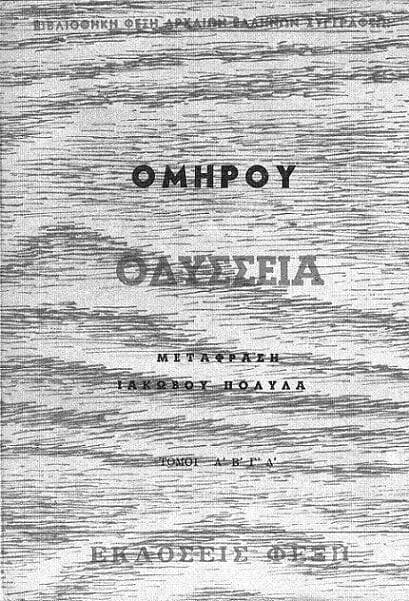
Συμπόσιον: Ή Περί Έρωτος
Συμπόσιον: Ή Περί Έρωτος
Translated by Nikolaos Kountouriotes
The Symposium, written by Plato in the 4th century BC, is a philosophical dialogue set during a banquet hosted by Agathon. Notable figures such as Socrates and Aristophanes discuss various interpretations of love (Eros), transitioning from physical attraction to deeper philosophical insights about love's role in moral virtue and the pursuit of wisdom. This work is significant for its exploration of sex, gender, and human instincts, ultimately presenting love as a guiding force towards understanding the divine and achieving knowledge.
Editions
X-Ray
“According to Greek mythology, humans were originally created with four arms, four legs and a head with two faces. Fearing their power, Zeus split them into two separate parts, condemning them to spend their lives in search of their other halves.””
— Plato
“...and when one of them meets the other half, the actual half of himself, whether he be a lover of youth or a lover of another sort, the pair are lost in an amazement of love and friendship and intimacy and one will not be out of the other's sight, as I may say, even for a moment...””
— Plato
“Love is simply the name for the desire and pursuit of the whole.””
— Plato
“Love is born into every human being; it calls back the halves of our original nature together; it tries to make one out of two and heal the wound of human nature.””
— Plato
“Love is the name for our pursuit of wholeness, for our desire to be complete.””
— Plato
“And so, when a person meets the half that is his very own, whatever his orientation, whether it's to young men or not, then something wonderful happens: the two are struck from their senses by love, by a sense of belonging to one another, and by desire, and they don't want to be separated from one another, not even for a moment.””
— Plato
“He whom loves touches not walks in darkness.””
— Plato
“what if the man could see Beauty Itself, pure, unalloyed, stripped of mortality, and all its pollution, stains, and vanities, unchanging, divine,...the man becoming in that communion, the friend of God, himself immortal;...would that be a life to disregard?””
— Plato
“...when he looks at Beauty in the only way that Beauty can be seen - only then will it become possible for him to give birth not to images of virtue (because he's in touch with no images), but to true virtue [arete] (because he is in touch with true Beauty). The love of the gods belongs to anyone who has given to true virtue and nourished it, and if any human being could become immortal, it would be he.””
— Plato
Link to this book
Add a free, dofollow link to Lex on your blog, forum, syllabus, or reading list.

<a href="https://lex-books.com/book/-f05c0e3a-eca1-45ad-8aee-2a5ce952ba78"><img src="https://lex-books.com/badges/read-on-lex.svg" alt="Read Συμπόσιον: Ή Περί Έρωτος by Plato free on Lex" width="160" height="40"></a>[](https://lex-books.com/book/-f05c0e3a-eca1-45ad-8aee-2a5ce952ba78)[url=https://lex-books.com/book/-f05c0e3a-eca1-45ad-8aee-2a5ce952ba78][img]https://lex-books.com/badges/read-on-lex.svg[/img][/url]Read Συμπόσιον: Ή Περί Έρωτος by Plato free on Lex: https://lex-books.com/book/-f05c0e3a-eca1-45ad-8aee-2a5ce952ba78Cite this book
Reading this edition for a paper or guide? Copy a citation.
Plato. Συμπόσιον: Ή Περί Έρωτος. Lex, lex-books.com/book/-f05c0e3a-eca1-45ad-8aee-2a5ce952ba78.Plato (n.d.). Συμπόσιον: Ή Περί Έρωτος. Lex. https://lex-books.com/book/-f05c0e3a-eca1-45ad-8aee-2a5ce952ba78Plato. Συμπόσιον: Ή Περί Έρωτος. Lex. https://lex-books.com/book/-f05c0e3a-eca1-45ad-8aee-2a5ce952ba78.